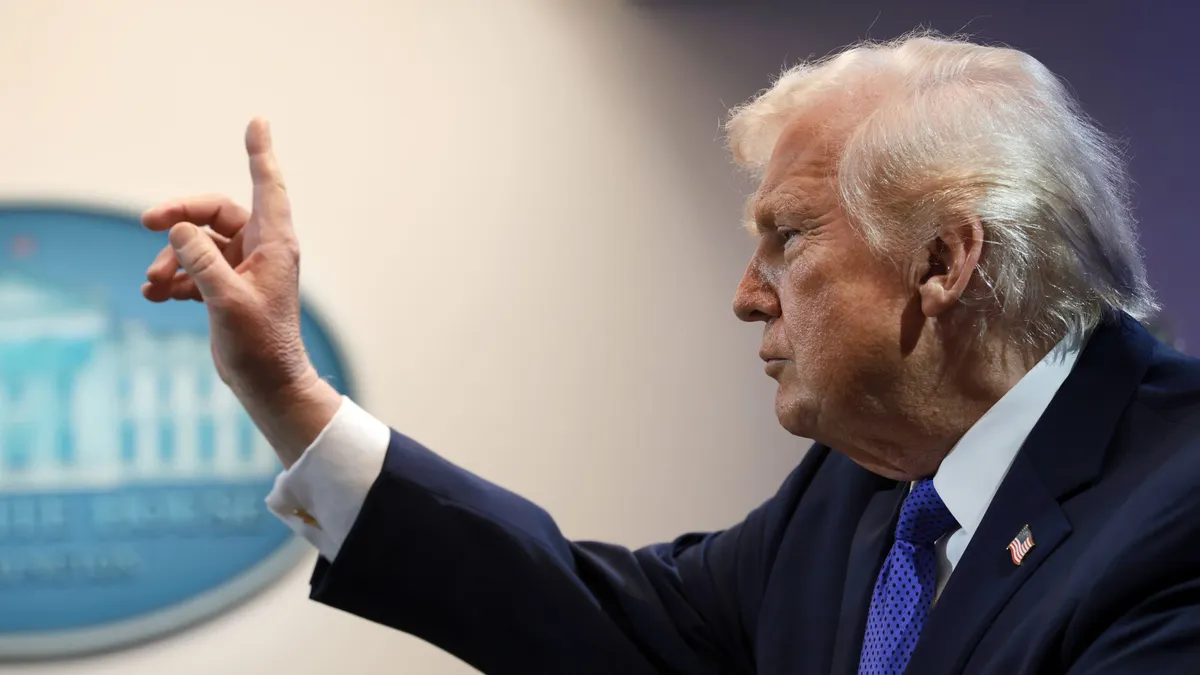
URGENT UPDATE: The U.S. Supreme Court has just announced a landmark decision that has shaken the manufacturing sector. In a decisive 6-3 ruling on October 6, 2023, the court invalidated the Trump administration’s authority to impose global tariffs under the International Emergency Economic Powers Act (IEEPA), leaving manufacturers scrambling for economic clarity.
The ruling’s immediate impact is profound. Following the court’s decision, former President Donald Trump indicated plans to implement a 10% surcharge on U.S. imports under Section 122, effectively replacing the previous blanket tariff. Trump hinted at raising this rate to 15% “effective immediately,” though no official documentation has been released yet.
“Today’s decision is ridiculous, but now the adjustment process begins, and we will do everything possible to take in even more money than we were taking in before!” Trump stated on Truth Social. This sentiment reflects a wave of uncertainty among manufacturers, who are calling for a more stable economic environment.
In a joint statement, Jay Timmons, President and CEO of the National Association of Manufacturers, and Blake Moret, Chairman of Rockwell Automation, urged policymakers to establish a consistent framework for trade, noting that “ongoing legal and policy uncertainty makes it more difficult to make the long-term decisions that drive American competitiveness.”
Manufacturers are particularly concerned as they navigate the complexities of new tariffs. The Supreme Court’s ruling does not affect tariffs imposed under Section 232, which are crucial for protecting U.S. national security, particularly in the steel and aluminum industries. The Steel Manufacturers Association reported that U.S. steel production has surged, surpassing Japan for the first time since the 1990s, thanks to tariffs that have spurred over $25 billion in investments.
However, the repercussions of the new ruling may lead many companies to take a “wait-and-see” approach. Aaron Cummings, a shareholder at Brownstein, mentioned that uncertainty could delay decision-making as companies seek clarity on future tariff policies.
Amidst these developments, thousands of businesses have filed lawsuits seeking refunds for tariffs collected under the now-invalidated IEEPA authority. Estimates from Yale University show that the administration collected about $142 billion under this authority. Cummings anticipates a surge of lawsuits in response to the Supreme Court’s decision, as companies aim to recover funds.
“We are confident in Customs and Border Protection’s ability to move quickly and provide clear guidance to American businesses on how to obtain refunds for tariffs that were unlawfully collected,” stated Steve Lamar, President and CEO of the American Apparel and Footwear Association.
As manufacturers and lawmakers respond to the Supreme Court’s ruling, the push for predictable and dependable trade policies is more urgent than ever. The path forward remains fraught with challenges, but the call for stability in the manufacturing sector is now louder than ever.
Stay tuned for updates as this developing story unfolds.