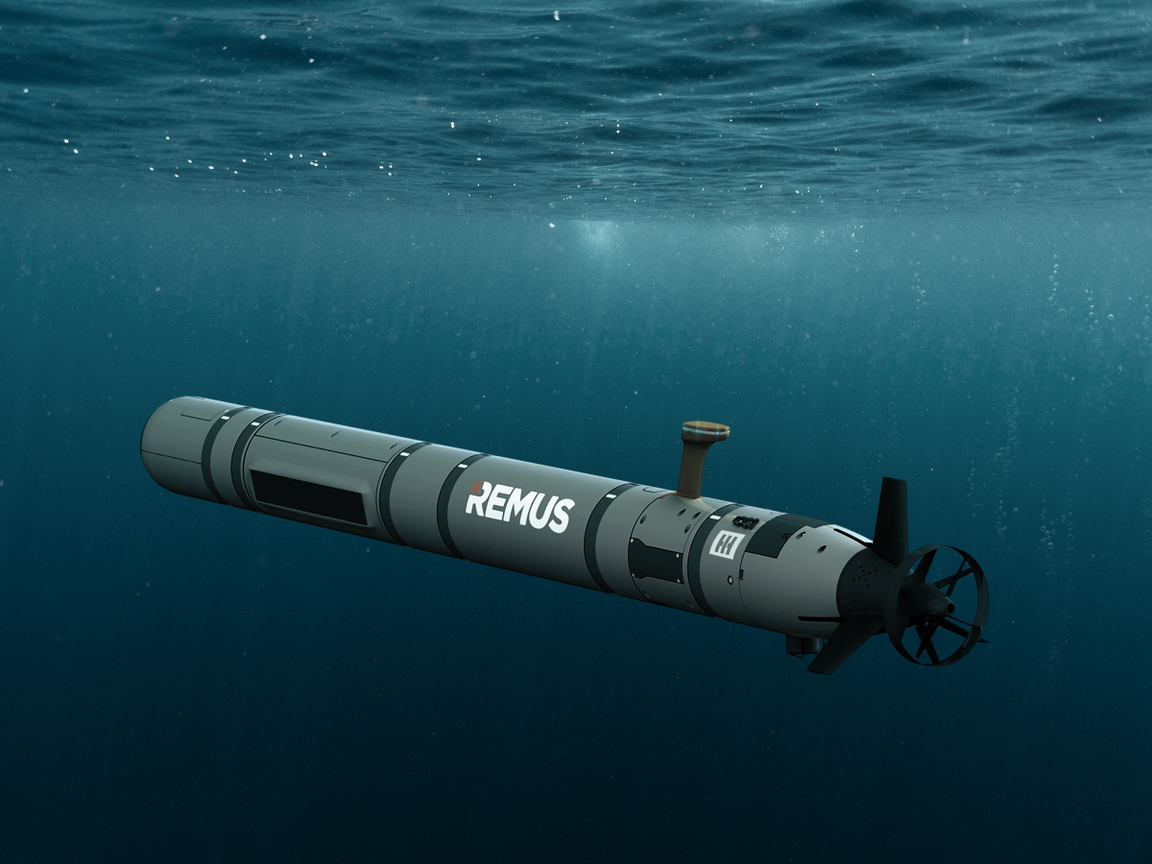
Huntington Ingalls Industries (HII) has significantly expanded its operations in the United Kingdom, doubling the size of its facility in Portchester. This move aims to bolster its efforts in the unmanned underwater vehicle (UUV) sector, servicing not only the Royal Navy but also other naval forces in western and northern Europe. The expanded site will facilitate the assembly of the Remus 620 medium-class modular UUV and increase the pace of training for allied navies, according to Nick Green, the facility manager.
The growing maturity of UUV technology has led to increased confidence among navies, which are now placing larger orders. Green noted that while previous orders typically consisted of one or two units, there has been a shift towards requests for ten or fifteen systems. This trend is particularly evident among European NATO members, including the UK, the Netherlands, and Belgium, as they transition from traditional crewed mine-hunting vessels to advanced unmanned systems capable of detecting and neutralizing sea mines.
“The demand is there, the requirements are there as the technology is improving, the sensors are improving, and the capabilities are improving, and ultimately that will see an increase in the market space,” Green stated during a briefing on January 12.
The Royal Navy, which acquired its first two Remus vehicles in 2001, now operates a diverse fleet of models designed for mine warfare. The new facility in Portchester will enhance HII’s ability to meet its maintenance contract obligations for the Royal Navy. Currently, HII’s Remus systems are deployed in over 30 countries, including 14 NATO members. European nations utilizing these systems encompass Germany, Norway, Sweden, and Estonia.
Duane Fotheringham, president of HII’s Unmanned Systems group, emphasized the strong interest in mine countermeasures and the influence of rising defense budgets on sales of unmanned systems. Fotheringham expressed confidence in HII’s preparedness to meet the challenges posed by increased competition in the UUV market. The modular design of the Remus vehicles allows for updates in both software and hardware, with partners contributing necessary sensors and payloads.
“We’ve been building vehicles for a long time, and those vehicles have stood the test of time,” he remarked.
While the primary application of these UUVs for UK and European clients is mine countermeasures, their long-range patrol capabilities are also becoming increasingly relevant. Green highlighted the importance of developing new payloads to address evolving seabed warfare requirements, particularly concerning the protection of critical infrastructure.
The expansion plan includes a focus on UK production, allowing for greater local involvement in the assembly of the Remus 620 and its launch and recovery systems. Green stated, “The intent is to try and put more emphasis onto what we can do within the UK, as we believe that UK content for UK contracts is becoming more important.”
HII has been testing torpedo-tube launch and recovery systems for the Remus 620, collaborating with Babcock, a British partner whose technology is already in use by the Royal Navy’s submarines.
The majority of repair and maintenance work for UK and many European customers will be centralized in Portchester, reducing the need to transport equipment between the US and Europe. HII has delivered over 750 UUVs from the Remus family, with the Remus 100 being particularly popular, having sold more than 400 units globally.
In addition to UUVs, the Portchester facility will serve as a support base for the Romulus family of unmanned surface vehicles. Fotheringham noted that HII is currently testing an intelligence, surveillance, and reconnaissance version of a Romulus platform in the United States, with plans to introduce a 190-foot Romulus model by the end of 2026. This new system will be demonstrated to the Royal Navy and other European naval customers.
The expansion of HII’s operations in the UK marks a significant step in enhancing the capabilities of unmanned systems within Europe, positioning the company as a key player in the evolving defense landscape.