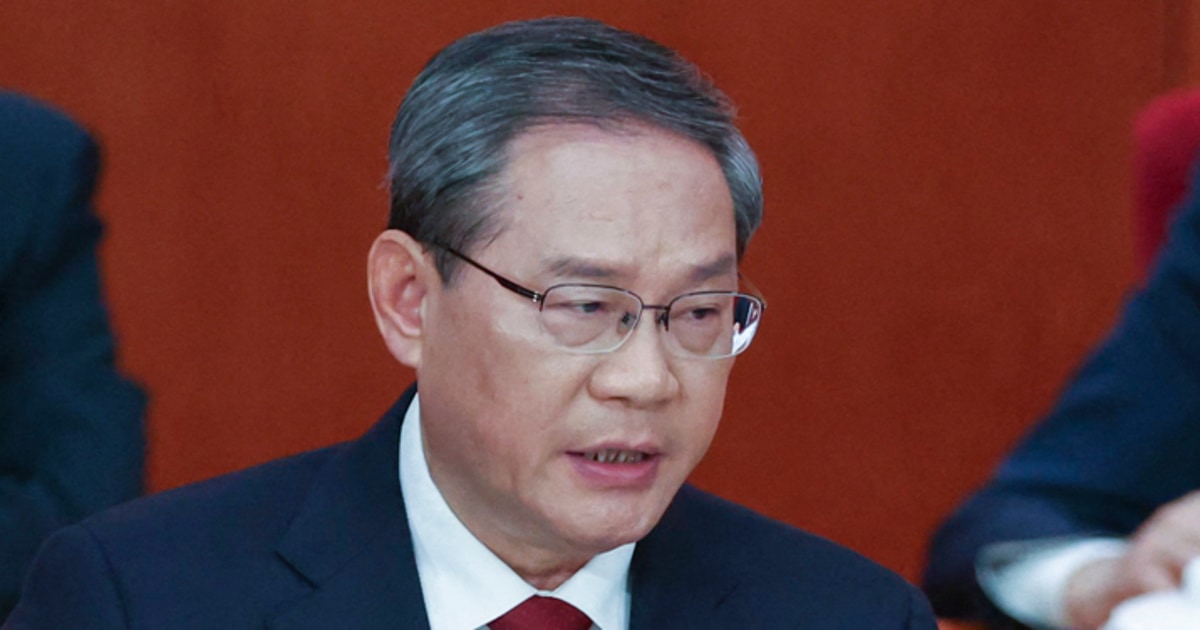
China has set its lowest economic growth target in 35 years, aiming for a gross domestic product (GDP) growth of between 4.5% and 5%. This announcement was made by Premier Li Qiang during a speech at the National People’s Congress in Beijing on March 7, 2024. The target marks a significant downgrade from last year’s goal of 5% and reflects growing challenges both domestically and globally.
In his address, Li acknowledged the difficulties faced by the world’s second-largest economy, stating, “While recognizing our achievements, we are also clear-eyed about the difficulties and challenges we face.” The National People’s Congress serves as an essential platform where the ruling Communist Party outlines economic goals and policies. This year’s congress is particularly pivotal as it comes ahead of a scheduled meeting between President Donald Trump and Chinese leader Xi Jinping on March 31, 2024, aimed at extending a fragile trade truce.
China’s economy is grappling with several structural issues, including a prolonged slump in the property market, significant industrial overcapacity, and rising local government debt. The government is working to transition from its historically export-driven model to one that stimulates domestic demand.
Li highlighted the government’s commitment to countering U.S. tariffs, which have fluctuated since the onset of the trade war initiated by Trump in 2023. Despite a sharp decline in exports to the U.S., China reported a record trade surplus of almost $1.2 trillion last year, indicating a shift in trade dynamics as it increases sales to other global markets.
In a separate budget report, China announced a 7% increase in defense spending, bringing the total to more than $275 billion. This increase aligns with China’s goals to modernize its military by 2035 amidst rising regional tensions, particularly concerning Taiwan. Li emphasized the importance of enhancing military training and readiness as part of this modernization effort.
The economic landscape is further complicated by geopolitical tensions, particularly regarding Iran. China has been a critical trading partner for Iran, purchasing around 80% of its crude oil imports, although these account for only about 13% of China’s total oil imports. The recent U.S.-Israeli military actions against Iran have raised concerns for Beijing, particularly regarding the Strait of Hormuz, through which one-third of China’s oil imports pass.
While China has accumulated substantial reserves to buffer against immediate supply disruptions, prolonged conflict in the Middle East could threaten its broader economic interests. The Iranian situation mirrors recent U.S. military actions in Venezuela, where the capture of President Nicolás Maduro has also drawn Beijing’s criticism.
Li’s speech also addressed demographic challenges facing China, including an aging population and declining birth rates. With over one-fifth of the population over the age of 60, the government is prioritizing initiatives to create a “childbirth-friendly society” over the next five years. This includes reforms in education and healthcare aimed at alleviating the burdens of raising children, as many young Chinese cite high costs and low job prospects as significant deterrents to starting families.
As part of its strategy to enhance services for older citizens, the government plans to expand sports programs and increase the number of beds in eldercare facilities.
Despite the lower growth target, China aims to project confidence in its economic resilience amid global uncertainties. The leadership is focused on maintaining stability in its relationships, particularly with the U.S., as it navigates the complex landscape of international relations and domestic challenges.