Rural Alabama Towns Fight to Connect as High-Speed Internet Expansion Crawls Forward
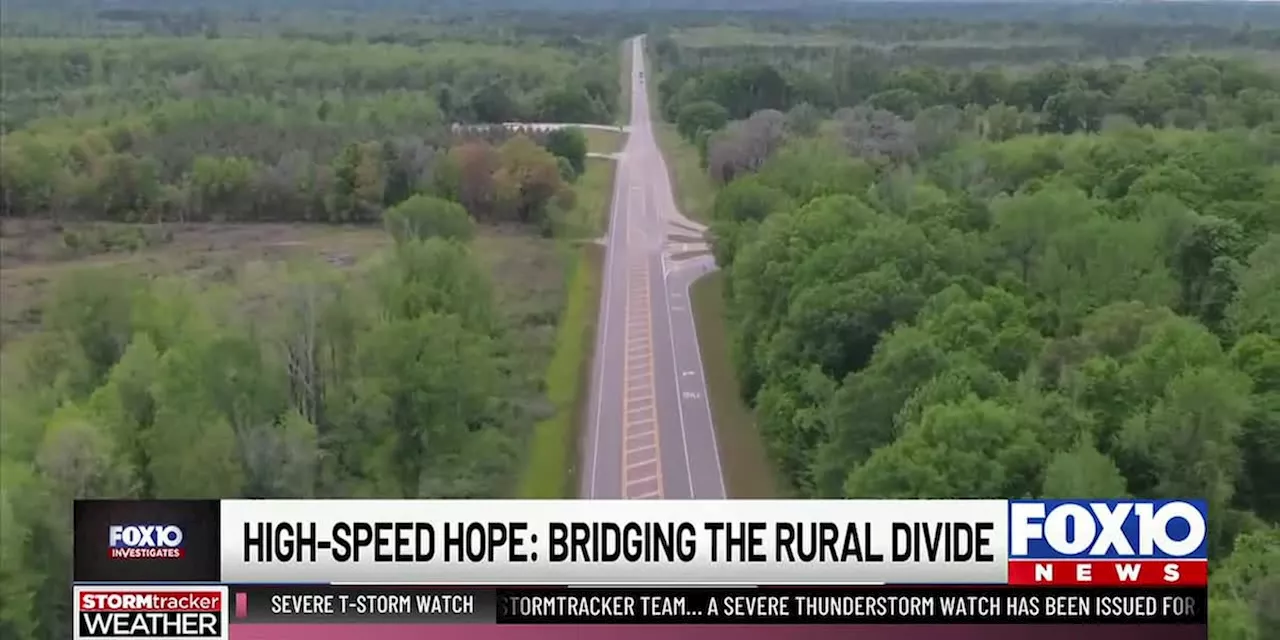
Residents in Millry and Chatom, two small towns in Washington County, Alabama, remain trapped in a broadband nightmare despite recent efforts to lay fiber-optic cables. This critical gap in high-speed internet access is crippling daily life, business operations, and even simple phone calls across the tight-knit communities.
More than just frustration, the slow rollout highlights a systemic issue faced by rural America, where each mile of fiber reaches fewer than five homes, making infrastructure investments costly and slow to deliver results.
Fiber Arrives but Access Remains a Challenge
Lonnie Guy, a lifelong Millry resident and co-owner of Nana and Papa’s Ice Cream and Sandwich Shop near Highway 17, recalls the days of dial-up internet—and how far the area still has to go. “Just a few months ago, fiber optic cable was finally laid to my home about 11 miles west of Millry,” Guy explained. “The difference was immediate — faster load times, better speeds, and more reliable internet for home and business.”
However, Guy’s new connection is the exception, not the rule. Many in Millry and surrounding communities like Yellow Bluff, Forkland, Peterman, and Boykin continue to struggle with unreliable service or no connection at all.
Rural Infrastructure Challenges Stall Progress
Chester Caulder, general manager at Millry Communications, a local internet provider, described the uphill battle facing rural internet expansion. “Because we are such a rural community, in our service area, we average about 4.7 homes per mile of fiber constructed,” Caulder said. “Fewer customers spread out over more land means slower and more expensive expansion.”
Despite these odds, Caulder remains focused on completing the fiber network rollout, promising, “If I can get fiber to you, I can deliver the full complement of internet speed that you are purchasing from the telephone company.”
Chatom Residents Face Daily Connectivity Woes
Just a few miles south, Chatom residents like Landis Waite say the slow internet is a constant burden. “Internet’s always been pretty much bad,” Waite said. “It’ll take a few hours sometimes for a webpage to pull up or anything like that.”
While crews have been laying fiber in Chatom over the past few years, locals are exasperated by the delays. “Fiber optic, we’ve heard, should make it better. But it’s just taking forever for us to get to that,” Waite said.
Frustrated residents recently took to social media, sharing outages that even disabled ATM machines. Waite expressed the personal cost: “When my internet’s down, I ain’t getting no notifications from nobody. No texts, no calls. I gotta go out to the yard.”
The broadband gap has even made routine communications difficult. “I gotta walk down to my grandma’s house just to get a hold of her cause I can’t call her off Wi-fi,” Waite said. “Internet, if you get it stationed at your house, you should have good service. At least enough for a phone call.”
Why Broadband Access Matters Nationwide
The struggle facing Millry and Chatom reflects a larger crisis spreading through rural America, including communities across Colorado and the wider United States. Reliable internet is essential for business growth, healthcare access, education, and emergency communication.
For towns like Millry, with fewer than 600 residents, and Chatom’s slightly larger population, the broadband deficiency means being cut off not only from the digital economy but also from everyday human connections.
Looking Ahead: Will High-Speed Internet Finally Arrive?
While fiber-optic installation progresses inch by inch, experts warn the journey will be long and costly. Federal and state programs are investigating ways to ease rural broadband expansion, but until then, communities like Millry and Chatom remain in the digital slow lane.
Locals hope that faster, reliable internet isn’t just a promise but an imminent reality. As Millry’s Lonnie Guy put it, “It’s life-changing when it comes — but too many are still waiting.”
The Colorado Daily will continue to monitor this developing story and report on rural broadband access nationwide as updates emerge.