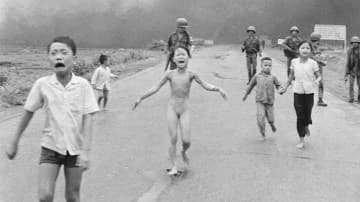
BREAKING: New revelations from a documentary titled The Stringer have emerged, casting doubt on the authorship of the iconic photo of Phan Thi Kim Phuc, the Vietnamese girl fleeing a napalm attack during the Vietnam War. This urgent update shines a light on a possible shift in credit away from famed photographer Nick Ut to a lesser-known freelancer, Nguyen Thanh Nghe.
The photograph, taken in 1972 during the North Vietnamese Easter offensive, crystallized the horrors of war. It depicts a naked Phuc running from a burning village, a haunting image that forever changed perceptions of the Vietnam War. Recent findings suggest that Nghe may have captured the moment, sending his film to the Associated Press (AP) in Saigon—not Ut, who received a Pulitzer Prize for the image.
The documentary reveals insights from Carl Robinson, a former AP staffer who worked under photo chief Horst Faas. Robinson disclosed decades of internal conflict over the photo’s attribution, stating, “I lived with what I saw as the falsehood of authorship for decades.” His revelations have ignited discussions about the ethics of photojournalism and the implications of misattribution.
This shocking development is crucial as it not only revisits a pivotal moment in history but also questions the narratives built around iconic images. The film features interviews with experts and archival footage that adds depth to the debate. It highlights the tragedy of that day while spotlighting the complex dynamics of war reporting.
The emotional impact of the original photograph remains profound. Phan Thi Kim Phuc, who survived the attack and now resides in Canada, serves as a goodwill ambassador for UNESCO. Her story emphasizes the human cost of conflict, reinforcing why this discussion is relevant NOW.
As audiences absorb these revelations, the film challenges viewers to reconsider what they know about the photograph and its legacy. While some prominent war correspondents, including Peter Arnett and Dave Burnett, continue to support Ut’s claim, the film presents a compelling argument for Nghe’s contribution.
What happens next? The debate is likely to intensify as more viewers encounter the documentary, prompting questions about the ethics of historical memory and recognition in journalism. As audiences reflect on these findings, the call for recognition of all contributors to war journalism grows louder.
This revelation is not just about a photograph; it’s about the ongoing struggle to understand and acknowledge the complex narratives of war. As the documentary gains traction, it serves as a critical reminder of the lasting impact of images and the responsibility of those who capture them.
Stay tuned as we continue to monitor this developing story and its implications for historical narratives surrounding the Vietnam War.