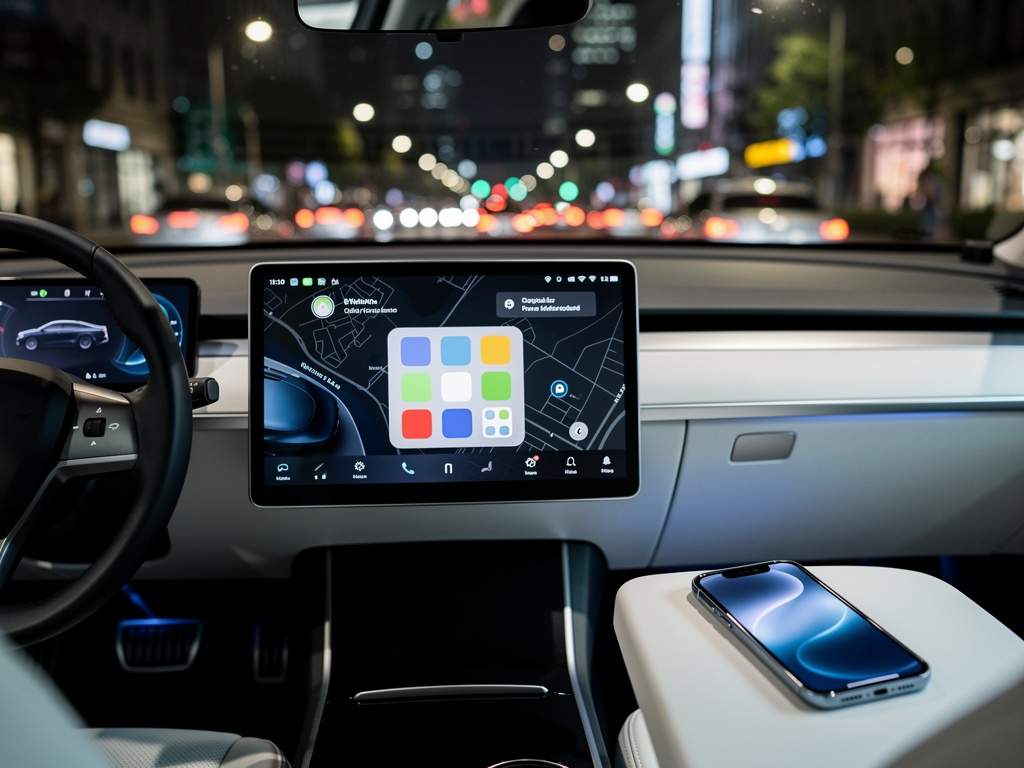
Tesla is reportedly developing integration for Apple’s CarPlay, a significant shift for the electric vehicle manufacturer that has traditionally resisted this feature. According to a report by Bloomberg published in mid-November, this potential integration is a response to growing customer demands and declining sales figures. If implemented, CarPlay could enhance the connectivity experience for Tesla drivers, allowing for seamless integration with iPhones while maintaining Tesla’s distinctive user interface.
As competition intensifies from both established car manufacturers and new entrants in the electric vehicle market, Tesla’s decision to consider CarPlay integration could be a strategic move to attract a broader customer base. The company’s proprietary infotainment system has received acclaim for its user-friendly design, which combines navigation, media, and vehicle controls into a single touchscreen. However, the absence of CarPlay has deterred some iPhone users who prefer Apple’s ecosystem for popular applications such as Apple Music and Maps.
Insiders suggest that the CarPlay feature, if introduced, would not completely replace Tesla’s existing interface but would function in a contained window, thereby preserving the Tesla operating system. This approach reflects Tesla’s commitment to maintaining its unique software experience while addressing customer preferences.
Shifting Dynamics in the EV Market
Tesla’s contemplation of CarPlay comes at a time when the company’s vehicle deliveries have faced challenges in recent quarters. Elon Musk, the CEO of Tesla, has previously dismissed CarPlay, arguing that the company’s software is superior. However, the current market conditions, including price cuts and model updates, suggest that adapting to consumer needs may be essential for revitalizing sales.
Reactions from the electric vehicle community have been mixed. Social media platforms, particularly X (formerly Twitter), have seen users express both enthusiasm and skepticism regarding the potential integration. Some view it as a significant win for consumer choice, while others argue it may dilute Tesla’s innovative reputation. This conversation highlights a broader industry debate about the balance between proprietary technology and standardized interfaces.
Analysts observe that Tesla’s reluctance to adopt CarPlay stems from its foundational philosophy that emphasizes a vertically integrated experience. Unlike traditional automakers that readily embrace CarPlay and Android Auto, Tesla has focused on over-the-air updates that enhance features such as Autopilot. Implementing CarPlay would require careful consideration to avoid conflicts with these existing systems.
Customer Preferences and Market Impact
The discussions surrounding CarPlay integration reflect the desires of Tesla’s customer base, with many users having transitioned from brands like Ford or General Motors, where CarPlay is standard. Feedback indicates that the familiarity of CarPlay could lower the learning curve for new Tesla drivers. Some industry experts believe that adding this feature could significantly boost sales by appealing to customers who view it as essential.
From a financial perspective, integrating CarPlay could help Tesla regain market share, particularly in regions where Apple products dominate. Recent sales data indicate a slowdown in Tesla’s growth, with competitors such as BYD and Rivian gaining ground with more adaptable ecosystems. Furthermore, analysts suggest that features like CarPlay could create additional revenue opportunities through software subscriptions or partnerships.
Implementing CarPlay is not without its challenges. Sources indicate that the feature would operate in a sandboxed environment to prevent interference with critical systems, such as battery management. This strategy would allow Tesla to maintain control over its systems while still satisfying customer demands for enhanced connectivity.
Looking ahead, the possibility of broader compatibility, including integration with Android Auto, may emerge, although no plans have been announced yet. Industry insiders speculate that Tesla’s willingness to consider such integrations indicates a maturing market where consumer preferences play a crucial role in shaping technology decisions.
The potential integration of CarPlay could have broader implications, influencing supplier relationships and partnerships. For Apple, expanding its presence in the automotive sector through Tesla’s extensive user base could accelerate the adoption of its next-generation CarPlay, which allows for customizable instrument clusters.
As Tesla navigates the challenges of integrating new technology, it must also consider the implications for data privacy and user experience. Balancing its telemetry-heavy approach with the minimal data collection of CarPlay will be critical, especially as regulatory scrutiny on autonomous technology intensifies worldwide.
In summary, Tesla’s potential adoption of CarPlay is a reflection of evolving dynamics within the automotive industry, where user-centric designs increasingly take precedence over traditional approaches. By embracing this change, Tesla may reinforce its position as an innovator while meeting the needs of a diverse and growing customer base.