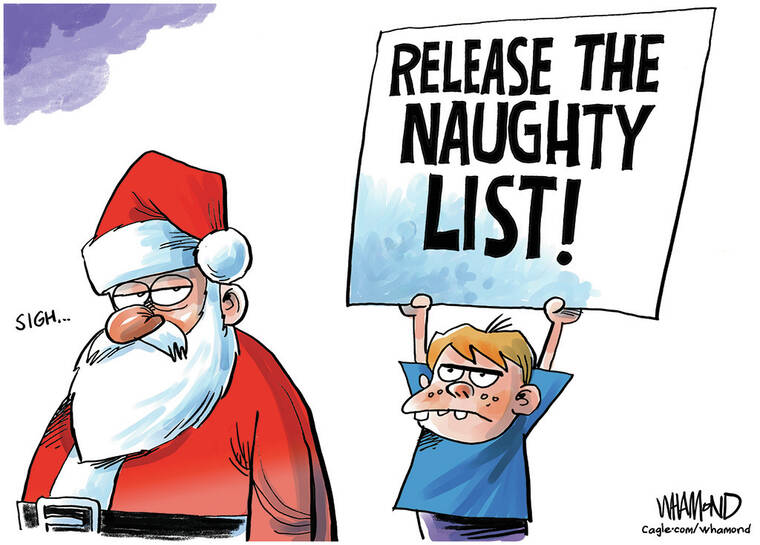
The editorial cartoon published on December 8, 2025, has sparked conversations across social media platforms and news outlets, highlighting pressing political issues through satire. This cartoon, which features notable political figures, aims to critique ongoing government policies and their impact on everyday citizens.
Public response to the cartoon has been significant. Many viewers have taken to platforms like Twitter and Facebook to share their interpretations, with some praising the cleverness of the satire while others express concern over its portrayal of sensitive subjects. The cartoon has become a focal point for discussions about the role of media in shaping public opinion.
Artistry Meets Commentary
The cartoon’s creator, whose identity remains under wraps, employs humor and exaggerated imagery to convey a serious message. Such artistic choices are common in political cartoons, which often aim to provoke thought and discussion. By using familiar faces in politics, the artist ensures that the message resonates with a broad audience, making the complex political landscape more accessible.
Critics of the cartoon argue that while satire is a powerful tool, it can sometimes oversimplify intricate issues. They suggest that the cartoon risks alienating those who may not share the same viewpoints or understand the underlying complexities. Nevertheless, defenders of the art form contend that it serves as a necessary check on power, allowing citizens to engage with politics in a more approachable manner.
The Impact of Political Cartoons
Political cartoons have a long history of influencing public discourse. They often reflect societal attitudes and can sway opinions on critical issues. This recent cartoon is no exception, drawing attention to the interplay between government actions and their consequences for ordinary people.
As discussions continue, the cartoon has prompted a resurgence of interest in political satire. Many hope that this will lead to greater engagement in political matters, inspiring individuals to voice their concerns and opinions more actively. In a time when political polarization is prevalent, the ability of art to provoke dialogue remains invaluable.
In conclusion, the editorial cartoon from December 8, 2025, underscores the enduring power of satire in politics. It invites both praise and critique, showcasing the potential for artistic expression to influence societal perspectives and encourage civic engagement. As audiences dissect its messages, the cartoon serves as a reminder of the critical role that media plays in our understanding of politics.