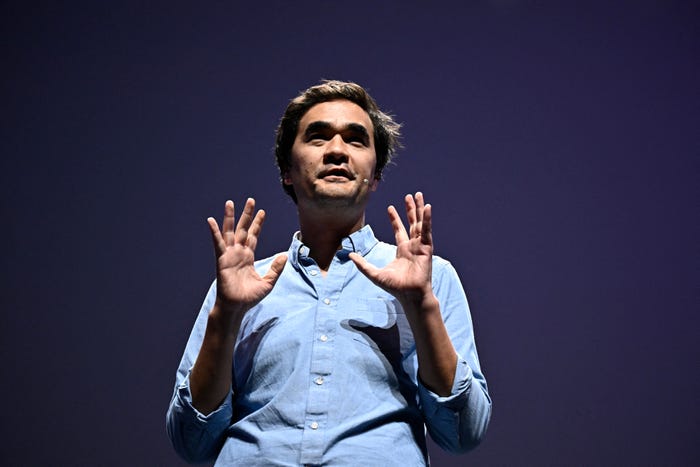
An executive from OpenAI has identified three job sectors likely to experience significant automation in the coming years. During a recent episode of the “Unsupervised Learning” podcast, Olivier Godement, the head of product for business offerings at OpenAI, discussed how advancements in artificial intelligence (AI) are set to transform roles in life sciences, customer service, and computer engineering.
Godement specifically pointed to the life sciences sector as a prime candidate for automation. He noted that pharmaceutical companies, such as Amgen, are already exploring ways to streamline their processes. The lengthy timeline from drug development to market can involve extensive administrative tasks that AI can potentially handle more efficiently. Godement explained, “The time it takes from once you lock the recipe of a drug to having that drug on the market is months, sometimes years. Turns out like the models are pretty good at that. They’re pretty good at aggregating, consolidating tons of structured, unstructured data, spotting the different changes in documents.”
Since joining OpenAI in 2023, Godement has drawn on his previous experience at Stripe, where he worked for eight years. He emphasized that while complete automation of white-collar jobs is not imminent, there are promising use cases emerging in areas such as software development and customer service. He stated, “The automation is probably not yet at the level of automating completely the job of a software engineer, but I think we have a line of sight essentially to get there.”
The discourse surrounding the future of software engineering has intensified as AI-assisted coding becomes integrated into more company workflows. A study conducted by Indeed in October revealed that software engineers, quality assurance engineers, product managers, and project managers were among the roles most affected during layoffs and organizational restructuring.
In addition to software engineering, Godement mentioned that customer-centric positions, particularly in sales and customer experience, are also at risk of automation. He highlighted collaborative efforts with T-Mobile, a major U.S. telecom provider, aimed at enhancing customer interactions. “We’re starting to achieve fairly good results in terms of quality at a meaningful scale,” he remarked. He expressed confidence that the next couple of years would reveal a surprising number of tasks that could be automated reliably.
The conversation around job automation is not limited to Godement. In a separate discussion, Geoffrey Hinton, often referred to as the “Godfather of AI,” shared his views on the future of work. He suggested that while AI is likely to excel in many intellectual tasks, certain fields, such as plumbing, might remain safer from automation for the time being. Hinton warned that “for mundane intellectual labor, AI is just going to replace everybody,” identifying paralegals as another profession at risk.
As automation technologies continue to evolve, the implications for the workforce remain significant. The potential changes to job roles in industries like life sciences, customer service, and computer engineering will require workers to adapt to new realities in the job market.