At the University of Delaware, English professor Matt Kinservik is transforming the traditional writing class by integrating artificial intelligence (AI) into the curriculum. Rather than banning AI tools like ChatGPT, Kinservik is teaching students how to use them ethically and critically, adapting the course to meet the demands of a rapidly evolving workforce.
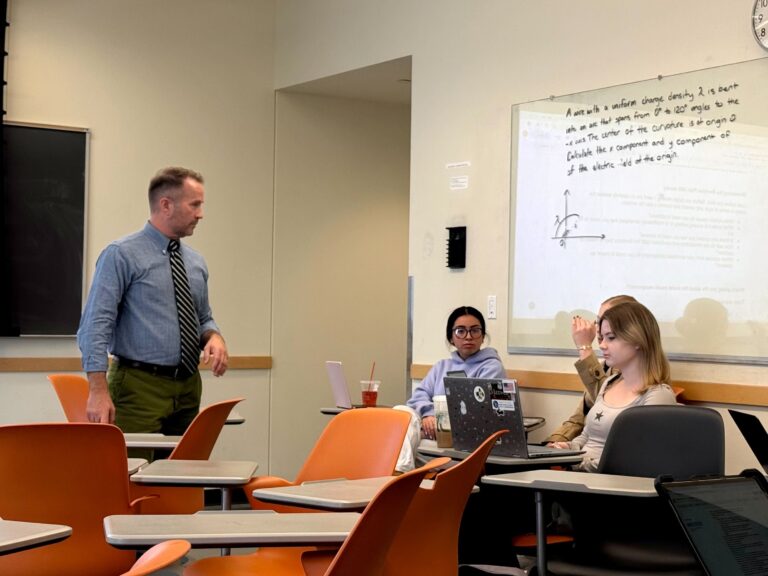
Kinservik, who has been teaching for 27 years, recognized the need for change as he entered his English 110 class this fall. He expressed concerns over the lack of formal instruction on generative AI for first-year students. “This course has to change to fit the times,” he stated. On the first day of class, when he asked how many students had received training on generative AI, not a single hand was raised. This lack of knowledge underscored the urgency for addressing AI in education.
The course is built around the central question: How will generative AI impact the careers students are preparing for? Kinservik aims to ground students in the realities they will face in the workforce. “They had to identify their major and the job they aspire to have, then research how AI will change that field,” he explained.
The semester-long project consists of two phases. Initially, students conduct research without the assistance of AI. They must compile a bibliography containing at least 12 reliable sources. In the second phase, they engage with AI to produce a 2,000-word essay based on their research question. Kinservik emphasizes that the students become the subject matter experts, guiding the AI’s output rather than relying on it entirely.
During a recent class, Kinservik observed students discussing their experiences with AI-generated essays. Most admitted that while the technology could assist in writing, it often produced inaccuracies. One student recounted how the AI fabricated citations, prompting a mix of laughter and concern among classmates. This highlights an essential lesson: AI can be a tool, but it does not replace the critical thinking and creativity that students must cultivate.
Freshman Isabella Abdmessih, initially skeptical of AI, found the course enlightening. She noted that understanding AI’s capabilities eased her anxiety about using it. “It was hard because it was like you weren’t in control of what you were writing,” she said, reflecting on the challenges of managing tone and audience engagement in her essay.
Similarly, sophomore Amber Sirrell expressed a sense of emotional disconnect when AI generated content on topics she was passionate about. “It really didn’t feel interpersonal,” she remarked, highlighting the gap between human creativity and AI-generated writing. Yet, she acknowledged that AI was already reshaping the finance industry, where she hopes to build her career.
Kinservik asserts that using AI should not be perceived as a shortcut. Instead, it often demands additional work, including fact-checking, editing, and rewriting. “AI isn’t replacing students’ work; it’s reshaping the skills they must master,” he explained. Skills like reading comprehension, critical evaluation, and synthesis are becoming crucial in modern writing.
He advocates for educators to embrace AI rather than resist it. “If we don’t change our instruction, we risk students becoming reliant on these tools without understanding their implications,” Kinservik said. His approach aims to motivate students to engage in their intellectual work actively and to assess AI’s role critically.
By integrating AI into the curriculum, Kinservik is preparing students for a future where these tools will be commonplace in their professional lives. His innovative teaching strategy serves as a model for other educators grappling with the challenges posed by emerging technologies in the classroom.
As the conversation around AI in education continues to evolve, Kinservik’s course at the University of Delaware stands out as a forward-thinking initiative that addresses the needs of today’s students. Emphasizing critical engagement with technology, he is paving the way for a new generation of writers who are equipped not only to adapt but to thrive in an increasingly AI-driven world.