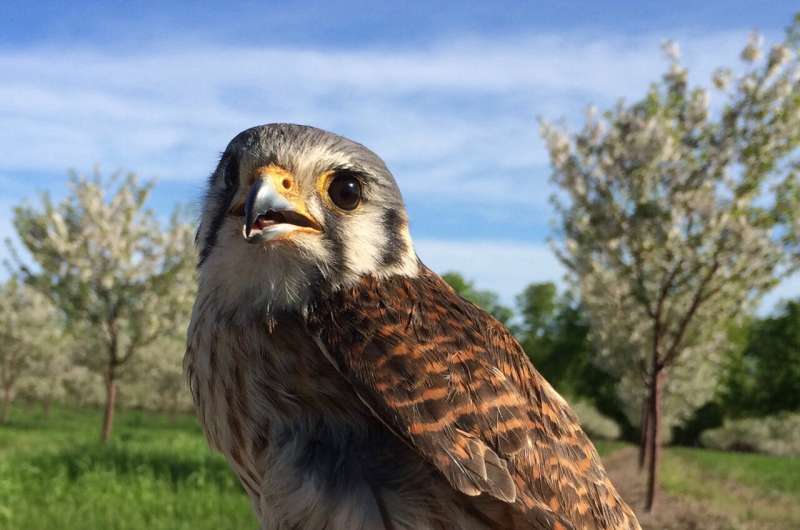
Cherry farmers in northern Michigan are discovering an unexpected ally in their quest for safer crops: the American kestrel, the smallest falcon in the United States. A recent study from Michigan State University highlights the dual role these birds of prey play in protecting cherry orchards, not only by deterring smaller fruit-eating birds but also by potentially enhancing food safety.
The research, published on November 27, 2025, in the Journal of Applied Ecology, indicates that kestrels contribute significantly to reducing crop damage and minimizing contamination risks from bird droppings. Lead author Olivia Smith, an assistant professor of horticulture, emphasized the aesthetic pleasure of watching kestrels in flight as they hover and scan for insects and small birds.
Impact of Kestrels on Crop Management
Farmers face a persistent challenge in keeping birds away from their crops, with losses ranging from 5% to 30% each year due to bird activity. Traditional deterrents like nets, noisemakers, and sprays can be expensive and often prove ineffective. The introduction of kestrels into cherry orchards presents a promising alternative.
Researchers installed nest boxes in eight sweet cherry orchards in northern Michigan, observing that kestrels readily occupied these spaces. Their presence significantly reduced visits from pest birds such as robins, grackles, and starlings, leading to a more than tenfold decrease in cherry damage.
Kestrels also play a crucial role in minimizing the risk of contamination. The study found that the presence of kestrels was linked to a threefold reduction in bird droppings on cherry trees. According to senior author Catherine Lindell, an associate professor emerita of Integrative Biology, the benefits of kestrels outweigh their own droppings.
Food Safety and Future Implications
The research further revealed that 10% of the droppings analyzed contained Campylobacter, a bacterium known to cause foodborne illnesses. While this does not directly implicate cherries in foodborne outbreaks, it underscores the potential of kestrels in enhancing food safety across various crops, particularly those that have previously been linked to contamination, such as leafy greens.
Smith noted that while kestrels won’t solve all bird-related issues, they represent a low-cost, low-maintenance option for growers seeking to manage bird populations. The researchers acknowledged that kestrels may be more prevalent in some regions than others, which could limit their effectiveness as a universal solution.
The findings suggest that utilizing natural predators like kestrels in agricultural practices could lead to healthier crops and increased profitability for farmers. As the cherry harvest season approaches, growers may find themselves looking to the skies—where these tiny raptors could make a significant difference.
This innovative approach not only highlights the importance of biodiversity in farming but also opens the door to further research on integrating natural solutions into agricultural practices. The study serves as a reminder of the intricate connections between wildlife and food safety, offering a glimpse into a future where nature plays a crucial role in sustainable agriculture.