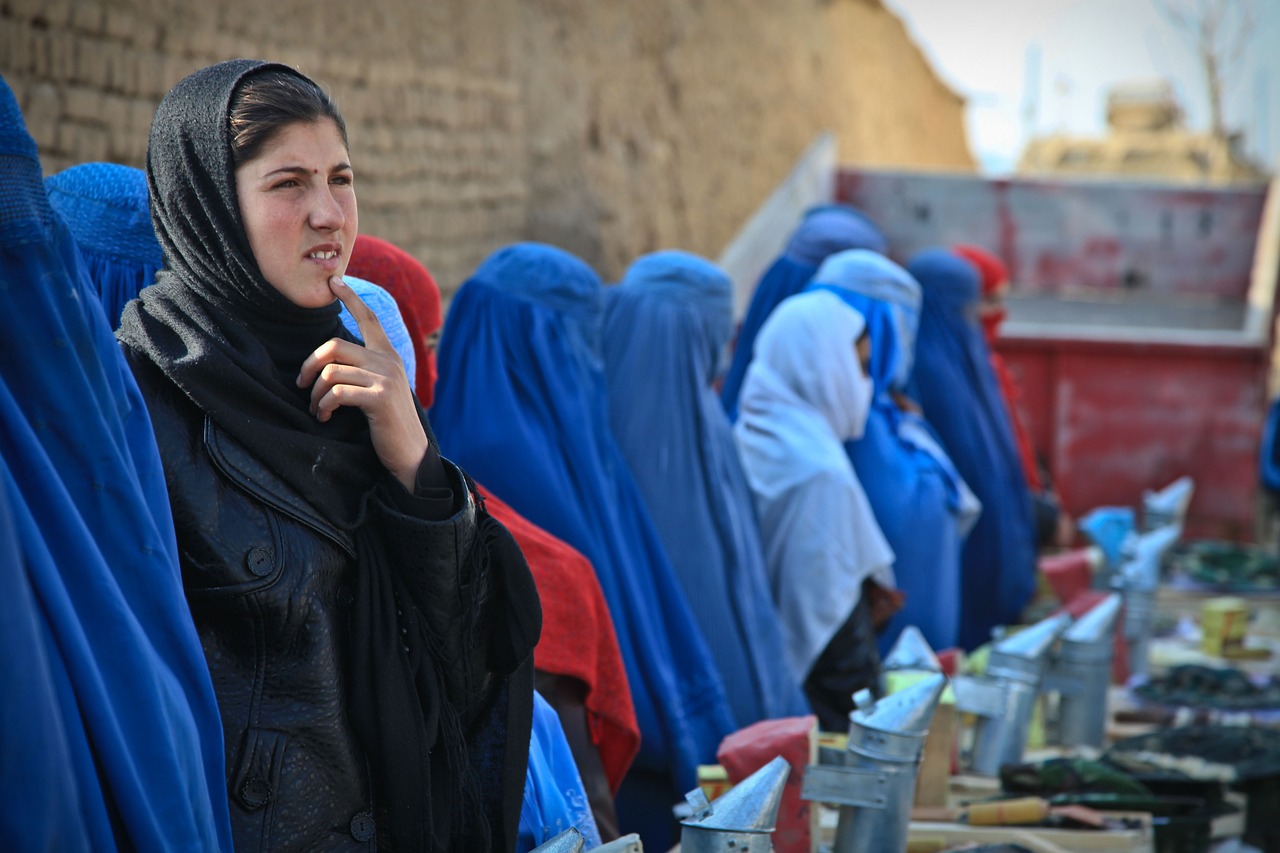
UN experts have urged member states to recognize gender apartheid as a crime against humanity during the drafting of the treaty on the Prevention and Punishment of Crimes Against Humanity. This call comes in light of the ongoing situation in Afghanistan, where the Taliban has systematically stripped women of their rights and erased their public presence.
The Working Group on discrimination against women and girls emphasized the importance of including the lived realities of Afghan women in this treaty. They highlighted that the Taliban has been depriving women of their right to education and work, asserting that incorporating gender apartheid into international law is essential for holding perpetrators accountable for the atrocities occurring in Afghanistan.
Richard Bennett, the United Nations Special Rapporteur on the situation of human rights in Afghanistan, has backed this appeal, underscoring the necessity of global recognition and action. Earlier in May 2024, the Working Group recommended that the UN Human Rights Council officially recognize gender apartheid as a distinct crime against humanity, alongside gender persecution.
Currently, gender persecution is defined as the “intentional and severe deprivation of fundamental rights contrary to international law by reason of sex characteristics.” The Working Group contends that this definition does not adequately capture the widespread or systematic nature of human rights violations faced by women.
Despite numerous human rights treaties explicitly advocating for gender equality, discriminatory regimes continue to persist. The Working Group argues that recognizing gender apartheid is crucial for addressing institutionalized gender-based oppression.
In a related development, Human Rights Watch (HRW) proposed in December 2025 the inclusion of gender apartheid and other gender-specific provisions, such as reproductive violence and forced marriage, in the draft treaty. According to international human rights lawyers Akila Radhakrishnan and Alyssa Yamamoto, as of May 2024, ten states expressed willingness to explore the codification of gender apartheid in the draft treaty.
The European Parliament also added its support in an October 2025 press release, stating that the European Union would advocate for the recognition of gender apartheid as a crime against humanity. The Parliament condemned the Taliban regime for its ongoing human rights violations against women and girls.
Since the Taliban’s takeover in 2021, various rights groups and international organizations have been documenting human rights violations in Afghanistan. In 2023, HRW stated that the systematic gender persecution perpetrated by the Taliban constituted a crime against humanity under the Rome Statute. In January 2025, 26 countries urged the Taliban to end all violations of the UN Convention on the Elimination of All Forms of Discrimination against Women.
The UN International Law Commission recognized the prohibition of crimes against humanity as a peremptory norm in 2019. The draft treaty represents a significant advancement toward ensuring accountability for such crimes. Notably, draft article 7 introduces the principle of universal jurisdiction, allowing member states to prosecute individuals accused of crimes against humanity within their territories, regardless of the individual’s nationality or the location of the alleged crime.
This ongoing discourse surrounding gender apartheid is critical in shaping the future of international human rights law and addressing the pressing issues faced by women globally, particularly in regions like Afghanistan.