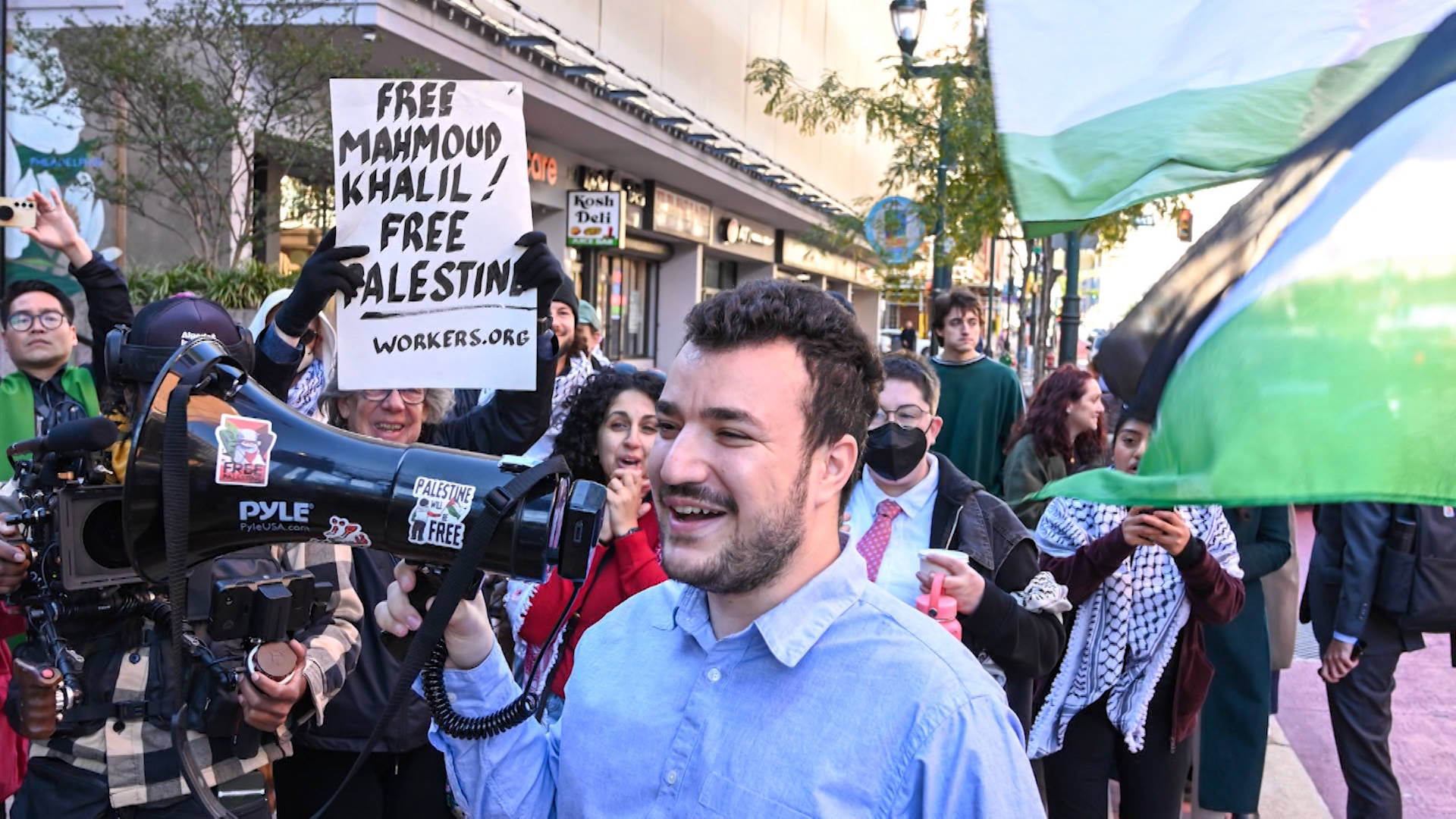
A federal appeals court has ruled in favor of the Trump administration regarding the deportation of Palestinian activist Mahmoud Khalil, raising concerns about his potential rearrest. The 3rd Circuit Court of Appeals delivered its decision on January 15, 2026, stating that Khalil should have first pursued his removal order in immigration court before seeking intervention from a federal judge.
Khalil, a graduate student at Columbia University, was apprehended in March for participating in campus protests advocating for Palestinian rights. His detention lasted several months, during which he missed the birth of his son, Deen. The activist expressed his dismay at the court’s ruling, stating, “The Trump administration is trying everything in its power to come after me, to put the full weight of the government to actually make an example out of me.” Khalil emphasized that no evidence had been presented to substantiate allegations of wrongdoing on his part.
The appeals court did not address the constitutional aspects of the case. Instead, it focused on procedural grounds, asserting that Khalil’s legal team should have initially challenged the removal order within the immigration court system. Khalil’s attorney, Baher Azmy, criticized this approach, arguing that immigration courts lack the independence typical of judicial systems. “What people need to understand is the immigration courts are not real courts,” he stated, emphasizing that such courts operate under the executive branch.
Khalil’s case gained attention as he was the first noncitizen student targeted by the Trump administration for his pro-Palestine stance. In June, a federal district judge in New Jersey had granted a habeas petition for Khalil, suggesting his constitutional rights may have been violated. This latest decision from the appeals court appears to significantly undermine that prior ruling.
The legal landscape surrounding Khalil’s case has become increasingly complex. He has vowed to explore all available legal avenues against the deportation attempts, stating, “We’re going to explore every avenue until we feel vindicated.” This determination reflects a broader resistance against what he describes as “weaponizing the legal system” by the administration.
The case has drawn significant public and legal scrutiny, with Khalil recently filing a $20 million lawsuit against the Trump administration for false imprisonment and malicious prosecution. The lawsuit highlights the perceived retaliatory nature of the government’s actions against him and other students involved in similar protests.
Khalil’s predicament has prompted reactions from various sectors, including political leaders. New York City Mayor Zohran Mamdani described the administration’s actions as an attack on constitutional rights, emphasizing the chilling effect on free speech. He stated, “Last year’s arrest of Mahmoud Khalil was more than just a chilling act of political repression.”
As the legal battle unfolds, Khalil remains steadfast in his advocacy for Palestinian rights. He noted that the administration’s actions divert attention from the ongoing humanitarian crisis in Gaza, where he has been protesting against U.S. foreign policy and financial support to Israel.
The situation highlights the intersection of immigration policy, civil rights, and political expression in the United States. Khalil’s case exemplifies the challenges faced by activists, particularly those advocating for contentious political causes, as they navigate a complex legal landscape. The appeals court’s ruling may not immediately affect Khalil’s status, but it certainly raises questions about the future of his activism and the broader implications for free speech in the country.