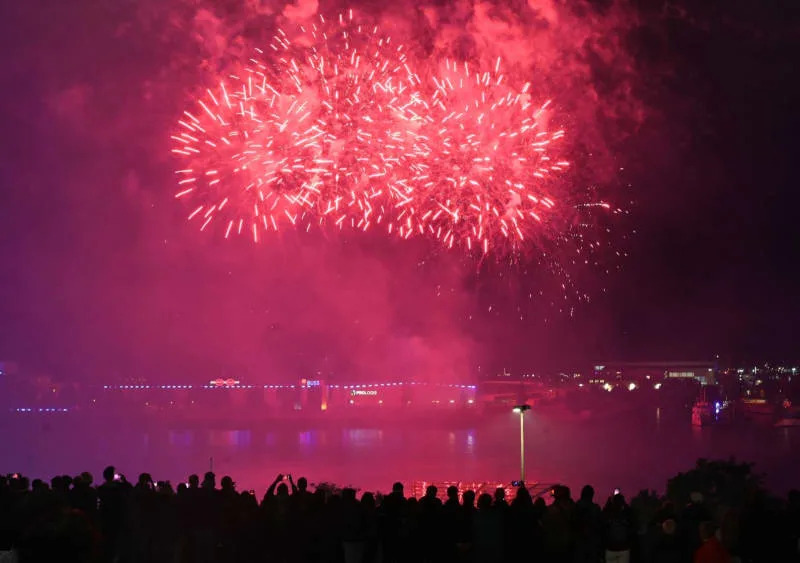
Growing demand for fireworks in Germany has emerged ahead of New Year’s Eve celebrations, despite increasing criticism regarding the environmental and safety impacts of these pyrotechnics. According to industry leader WECO, the supply of rockets, firecrackers, and other fireworks available in stores this year is approximately 10% higher than in 2022. Another manufacturer, COMET, has reported a modest increase in its offerings as well.
The German Association of the Pyrotechnics Industry predicts a continued rise in availability across the sector. Fireworks sales are permitted in Germany from December 29 to 31, and although unsold products can be returned to manufacturers, WECO noted that the return rate was lower than anticipated last year.
As the largest fireworks manufacturer in the country, WECO generates a turnover of over €136 million ($160 million) in the 2023-24 book year. With a workforce of around 260 employees located in Eitorf and Kiel, the company manufactures only 15% of its products domestically, sourcing the remainder primarily from China. Klaus Gotzen, the head of the pyrotechnics sector association, highlighted a trend toward combined fireworks displays, which allow for extended performances from a single ignition point.
Despite the industry’s growth, fireworks remain a contentious issue for many in Germany. Animal welfare and environmental groups have been vocal in their opposition, arguing that the noise and chaos generated by firecrackers can distress wildlife and waste natural resources. Reports from cities like Berlin describe New Year’s Eve celebrations as resembling “war zones,” further fueling the criticism.
Concerns have also been raised regarding safety, with the GdP police union advocating for a ban on private fireworks displays. The union has indicated that officers are increasingly facing aggression from individuals using fireworks irresponsibly. Additionally, debates among the interior ministers of Germany’s 16 states have resulted in conflicting regulations, including a recent court decision that overturned a ban on private fireworks on the North Sea island of Föhr.
In response to the prevailing criticism, WECO’s head of sales, Oliver Gerstmeier, argues that the rising demand reflects a strong desire among the public to continue the tradition of celebrating New Year’s Eve with fireworks. “Ringing in the New Year with a colourful firework is a beautiful thing for many people,” he stated, emphasizing the need to respect those traditions rather than continually debating bans.
The fireworks industry positions itself as a key component of New Year’s Eve festivities, asserting that the issues surrounding fireworks are largely attributable to a small number of troublemakers in urban areas. As the countdown to the new year approaches, the tension between tradition and criticism remains palpable in Germany.