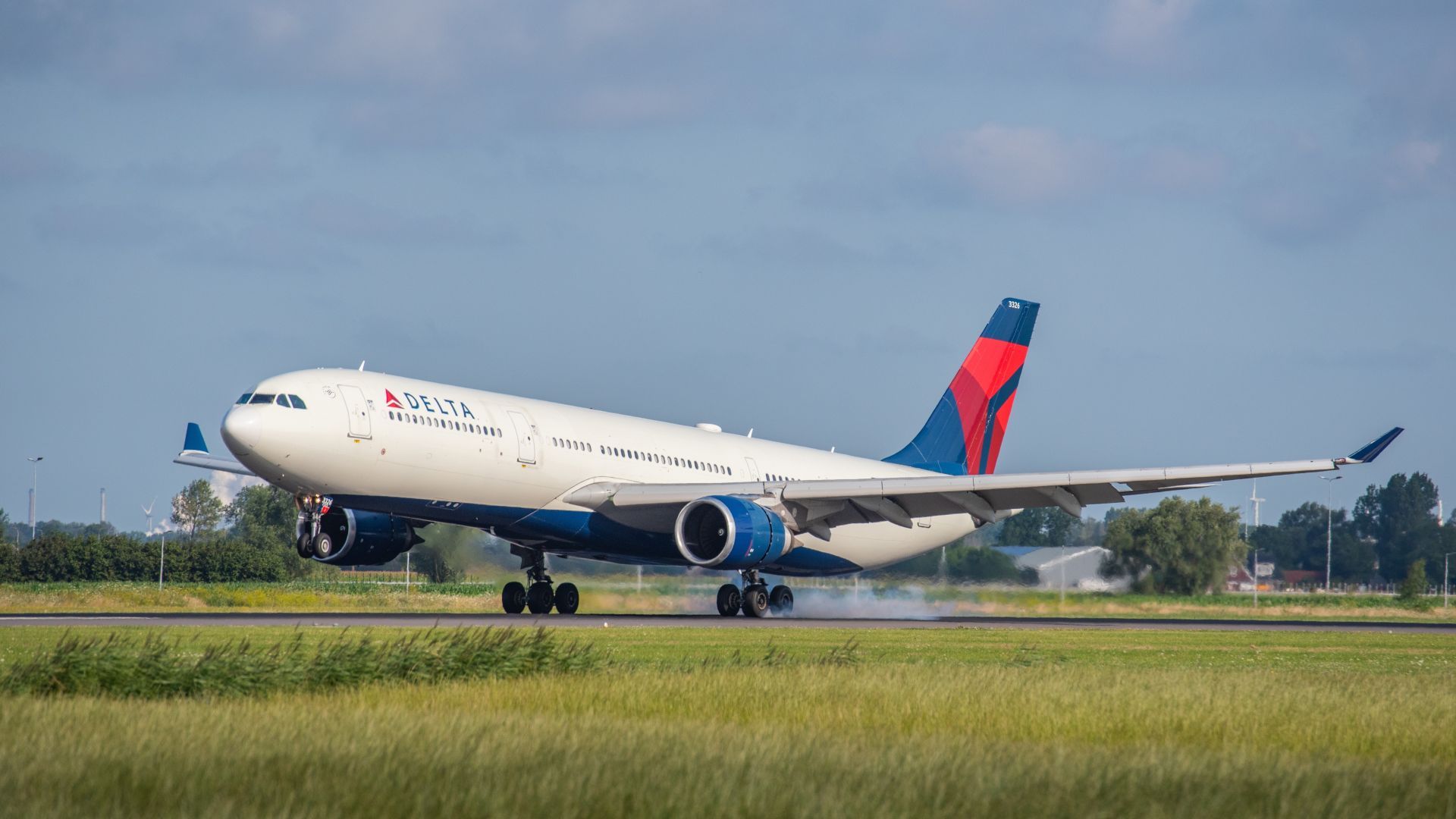
Delta Air Lines is set to enhance its long-haul capabilities with the introduction of the Airbus A350-1000, scheduled for delivery in 2026. This decision marks a significant shift in the airline’s fleet strategy, as it has primarily relied on Airbus aircraft for its widebody operations, contrasting with competitors such as American Airlines and United Airlines, which predominantly utilize Boeing jets.
The A350-1000 will be the largest aircraft in Delta’s fleet since the retirement of the Boeing 747 in 2017. The airline has placed orders for 20 A350-1000s and holds options for an additional 20 aircraft. Currently, Delta operates 39 A350-900s and has five more on order, bringing the total A350 family aircraft to 64 once the new models are integrated. Should the options be exercised, that figure could rise to 84, positioning Delta as the third-largest operator of the Airbus A350 globally, following Air France and Turkish Airlines.
The A350-1000 is designed to rival the Boeing 777-300ER in size, featuring a stretched fuselage and capable of carrying a higher payload. While the 777-300ER accommodates more passengers due to its ten-abreast seating configuration in economy class, the A350-1000 incorporates a more efficient interior layout, which helps to optimize space. This aircraft variant includes a larger wing and advanced Rolls-Royce Trent XWB-97 engines, allowing it to achieve a maximum takeoff weight of 322 tons and a range of up to 9,000 nautical miles (approximately 16,688 kilometers).
Expanding Routes and Enhancing Capacity
Delta’s strategic focus on expanding its Asian network will play a crucial role in determining the routes for the A350-1000. Currently, the airline operates A350 pilot bases at key airports, including Atlanta Hartsfield-Jackson International Airport, Detroit Metro Wayne County Airport, Los Angeles International Airport, and Seattle-Tacoma International Airport. Delta is reportedly considering new flights from New York JFK to Seoul, as well as potential services to Singapore and Manila, which are high-demand markets.
The introduction of the A350-1000 aligns with Delta’s broader objectives to enhance capacity and service quality on long-haul flights. The airline’s A350-900s, currently configured for 275 to 306 seats, will likely see a reconfiguration to better match customer demand. The A350-1000 is expected to feature a layout that includes over 300 seats, with speculation suggesting up to 310 passengers in a three-class configuration, which would encompass Delta One suites, Premium Select, and economy seating.
Competitive Positioning in the Market
As Delta prepares to introduce the A350-1000, it faces competition from American Airlines and United Airlines, which operate Boeing’s flagship 777-300ER. The A350-1000 will house 50 Delta One suites, with an interior design speculated to draw from Delta’s existing suite offerings. Although this number is lower than the business class capacities of its competitors—United’s 777-300ERs feature 60 Polaris seats—Delta continues to lead in premium economy offerings.
Delta’s long-haul strategy emphasizes funneling passengers through its joint-venture hubs at Incheon International Airport, Amsterdam Schiphol Airport, and Paris Charles De Gaulle Airport. The addition of the A350-1000 is expected to provide flexibility, allowing for both the introduction of new routes and the replacement of older aircraft on existing services.
While Delta’s growth strategy with only 20 A350-1000s will be gradual, the airline retains options for expansion should demand warrant it. By enhancing its fleet with the A350-1000, Delta Air Lines is poised to strengthen its competitive edge in the long-haul travel sector, catering to the evolving needs of international travelers.