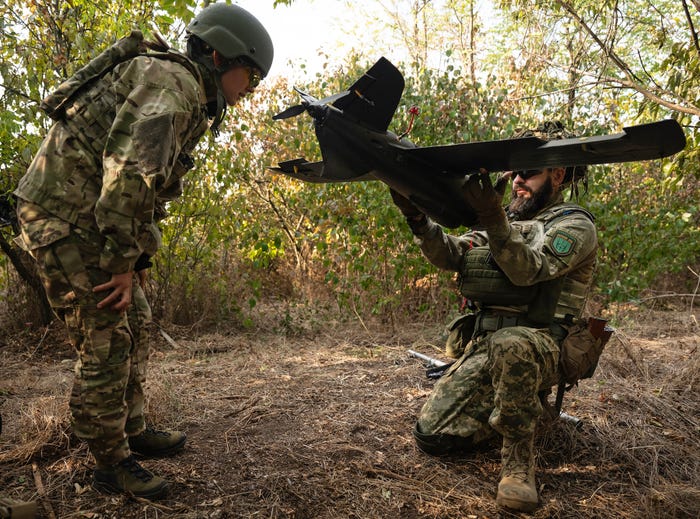
URGENT UPDATE: Ukrainian drone schools are rapidly rewriting their training programs as often as every two weeks to adapt to the evolving battlefield against Russia. This critical development highlights the urgent need for operators to master new tactics and technologies in a war where drone strikes dominate.
As the conflict intensifies, instructors from these schools are visiting the front lines regularly, engaging directly with soldiers to gather real-time insights. Tetyana, a Ukrainian veteran known by her call sign “Ruda,” heads the R&D department at Dronarium, one of the prominent training centers in Kyiv and Lviv. She stated, “The evolution of technology is moving forward at a very fast pace,” underscoring the necessity for swift adaptations in training.
16,000 students have passed through Dronarium’s programs, where instructors continuously modify their lessons based on battlefield experiences. Dmytro Slediuk, head of the education department at Dronarium, confirmed, “We continuously make changes to our training programs,” indicating that no two lessons are identical as they respond to the latest developments.
Vitalii Pervak, CEO of Karlsson, Karas & Associates, emphasized the importance of teaching relevant skills for combat, stating, “We do not teach things that will not be necessary in combat.” His school actively updates instructors’ knowledge through front-line visits to keep abreast of what is currently effective in the field.
Additionally, Viktor Taran, CEO of Kruk Drones UAV training center, described the collaborative communication between students and instructors via group chats, ensuring that vital information flows seamlessly. “Cadets go to the front line, type questions in those chats, or provide information about new enemy tactics,” he explained.
The rapid evolution of drone technology is reshaping warfare, with drone strikes now responsible for a significant portion of casualties on both sides. This shift in tactics necessitates constant adjustments to how drones are utilized, with new models frequently entering service.
Luke Pollard, the UK’s armed forces minister, highlighted the risks faced by Western militaries in keeping pace with this fast-evolving technology. He noted that drone warfare in Ukraine “iterates every two to three weeks,” while traditional military procurement processes lag significantly behind.
Companies involved in drone technology are also adapting swiftly. Matt McCrann, CEO of Droneshield, remarked on the accelerated weapon development cycles, transitioning from months to mere weeks. This shift reflects the urgent need for all stakeholders—manufacturers, soldiers, and training institutions—to stay competitive.
As Ukrainian drone operators maintain open lines of communication with manufacturers, they provide feedback to improve the technology and request necessary resources. This collaboration is crucial in a conflict where every advantage counts.
The stakes are incredibly high. With drone training centers facing challenges such as Russian attacks and funding shortages, they are not only racing to keep up with battlefield changes but are also fighting for their very survival. The urgency of their mission cannot be overstated, as they play a pivotal role in Ukraine’s defense strategy.
As drone warfare continues to evolve, the impact on training programs and battlefield tactics will be critical to watch. The situation remains dynamic, with updates expected as Ukraine’s fight against Russian aggression progresses. Stay tuned for the latest developments in this rapidly changing conflict.