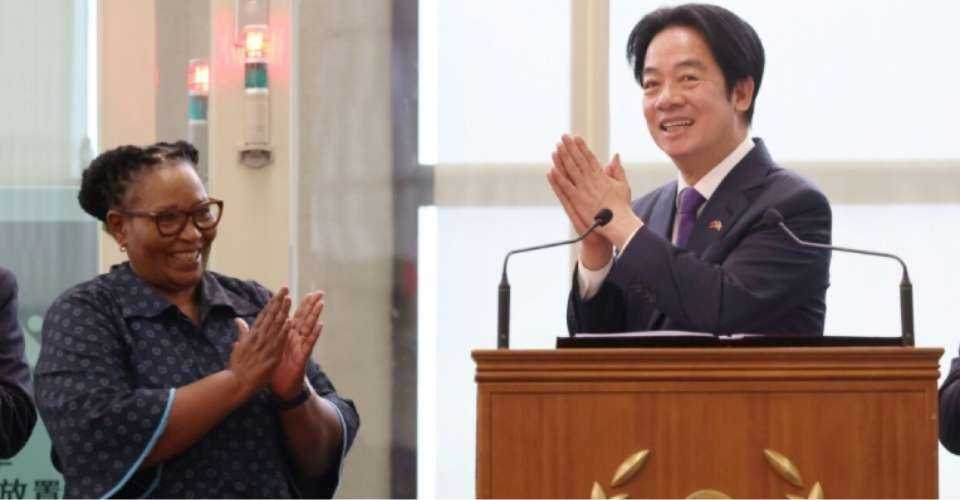
Taiwanese President Lai Ching-te boldly returned from a high-stakes diplomatic trip to Africa this week despite fierce Chinese efforts to block his visit, signaling Taiwan’s unwavering right to engage globally.
Arriving back in Taipei on May 5, Lai condemned what he called China’s “suppression” and “intense pressure” aimed at disrupting his original April 22-26 trip to Eswatini, Taiwan’s sole African ally. China reportedly pressured Seychelles, Mauritius, and Madagascar to revoke overflight permits, forcing the delay and unprecedented logistical hurdles.
“Taiwanese people have the right to engage with the world,” Lai told reporters at Taiwan Taoyuan International Airport shortly after landing on the plane of King Mswati III of Eswatini, who also provided crucial support for this trip. “Mutual visits between heads of state should be the most ordinary thing… a basic right of every country.”
The delay did not deter Lai, who embarked on the Africa trip on May 2, accompanied by Eswatini Deputy Prime Minister Thulisile Dladla, who traveled with him back to Taiwan. This marks a significant diplomatic moment as China’s influence and coercion tactics in Africa face increasing scrutiny.
China Accused of Economic Coercion Against African Nations
Taiwanese officials charged that China threatened to withdraw “substantial debt relief,” halt financing, and impose further economic sanctions on the three African countries that refused to cooperate with Taiwan’s flight plan. These aggressive measures highlight Beijing’s ongoing campaign to isolate Taiwan from the international community.
China’s foreign ministry dismissed the allegations, calling them “baseless accusations.” On May 2, Beijing publicly mocked Lai’s eventual arrival, describing his journey as a “stowaway-style escape farce” and accusing him of turning into an “international laughing stock.”
Meanwhile, the U.S. government condemned China’s “intimidation campaign,” emphasizing American support for Taiwan’s democratic right to engage with global partners amid rising geopolitical tensions.
Why This Matters Now
Taiwan’s diplomatic outreach to Eswatini, one of just 12 countries worldwide still officially recognizing it, underscores the escalating battle for global influence between Taipei and Beijing. China’s strategy to isolate Taiwan has intensified recently as the island steps up efforts to secure stronger international ties.
Lai’s visit coincided with the 40th anniversary of King Mswati III’s accession and his 58th birthday celebrations, intensifying the political significance of the trip. Taiwan’s Foreign Minister Lin Chia-lung had to fill in for Lai during the original April window, but Lai’s successful departure and return this week underscore Taiwan’s resilience.
This visit comes amid broader geopolitical shifts, including increasing U.S. backing for Taiwan and pronounced Chinese aggression that has included attempts to block Taiwanese leaders’ travel and participation in international bodies. Notably, Lai was reportedly denied transit through New York on a previous Latin America trip, although Taiwan’s foreign ministry denied the blockade.
Looking Ahead
Taiwan is expected to maintain its push for greater international engagement despite ongoing challenges. Lai’s defiance in completing this Africa visit sends a strong message that Taiwan will not back down amid pressure from China’s global campaign to isolate it diplomatically.
Observers will monitor how China’s tactics evolve and whether other countries will resist Beijing’s economic leverage to limit relations with Taiwan. This may also affect U.S. foreign policy decisions, especially concerning support for Taiwan amid increasing regional tensions in the Indo-Pacific and beyond.
For Colorado readers and U.S. audiences, Taiwan’s struggle exemplifies the complex geopolitics shaping global alliances and democratic resilience in the face of authoritarian pressure.