URGENT UPDATE: The Supreme Court is set to hear arguments today, October 3, 2023, in a pivotal case challenging Hawaii’s law that prohibits carrying guns onto private property open to the public without explicit permission from the property owner. This case, Wolford v. Lopez, arises amidst a broader national debate over gun rights following the court’s expansive interpretation of the Second Amendment in its landmark 2022 ruling.
This law aims to limit firearms in retail spaces and public venues, reflecting a growing concern over gun safety. Gun control advocates argue that the law reinforces property rights, allowing owners to dictate what is permissible on their property. They assert that it shifts the legal landscape from a presumption of permission to a default prohibition on firearms, a move that they claim aligns with historical practices.
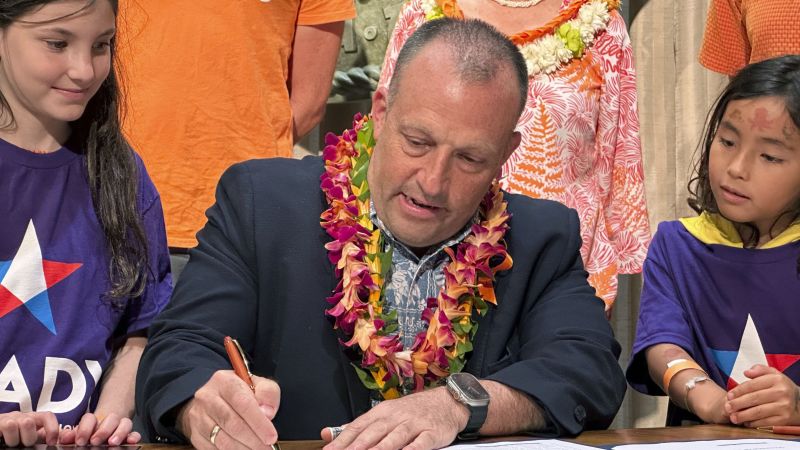
“Since our founding as a nation, private property rights have been foundational to American identity,” stated Douglas Letter, chief legal officer at the gun control group Brady.
The Hawaii statute, enacted in response to the Supreme Court’s previous ruling, mandates that individuals with concealed carry permits must obtain consent from property owners to carry firearms in public spaces. This requirement has drawn criticism from gun rights proponents, who argue that it effectively bans guns in most public areas and contradicts the Bruen decision.
In their challenge, the plaintiffs—concealed carry permit holders and a gun rights organization—claim that Hawaii’s law openly defies the Supreme Court’s previous ruling by imposing a default prohibition on firearms. They emphasize that the consent requirement undermines their constitutional right to bear arms.
“The right to prohibit firearms belongs to the property owner, not the State,” the challengers stated in court filings.
Hawaii’s government, represented by Attorney General Anne Lopez, argues that the law does not infringe on Second Amendment rights and adheres to the standards set by the Bruen decision. Historical precedents from both the 18th and 19th centuries, including a law from 1865 Louisiana, are cited to support their position, although critics note that this law was associated with discriminatory practices.
As the Supreme Court prepares to weigh in, the implications of their decision could reshape gun ownership rights across the nation. The 9th Circuit Court of Appeals previously sided with Hawaii, leading to a stay on the enforcement of the law pending this high-stakes review. The outcome could set a critical precedent for similar regulations in other states, including California, New York, New Jersey, and Maryland, which have enacted comparable measures.
Observers are keenly aware that the Supreme Court has yet to clarify which historical periods should guide the assessment of gun laws’ constitutionality. The stakes are high as the court navigates this contentious issue, which could redefine the balance between property rights and the right to bear arms.
The arguments are expected to unfold today, and the legal community is poised for the court’s ruling, which will undoubtedly evoke intense public reactions and could influence future legislation across the country.
Stay tuned for live updates on this developing story as it unfolds in the Supreme Court.