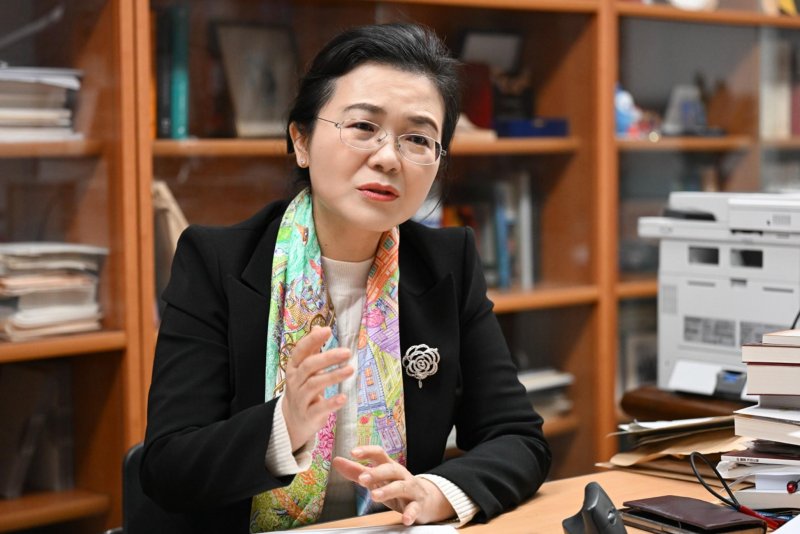
URGENT UPDATE: A prominent law professor from Korea University has issued a stark warning regarding a series of judicial reform bills proposed by South Korea’s ruling party. Cha Jin-ah, a constitutional law expert, claims these reforms could dangerously weaken judicial independence and erode the separation of powers. Speaking on December 17, 2023, she emphasized that “unchecked power leads to dictatorship.”
Key proposals from the ruling party include expanding the number of Supreme Court justices, creating a new appellate court, and establishing a special court for treason. Cha expressed her support for certain reforms, like a limited increase in Supreme Court justices, but voiced serious concerns over the sweeping nature and political motivations behind the proposals.
Cha highlighted the potential for political appointments, stating, “Increasing by 12 justices would double the full bench,” which she describes as a blatant attempt to consolidate power. The proposed court petition system, she argues, could overwhelm the Constitutional Court with frivolous cases, undermining its ability to maintain checks on government actions.
In a revealing interview, Cha further critiqued the ruling party’s plans for a special treason court, labeling it unconstitutional. She stated, “Fair trials become meaningless,” raising alarms over the potential manipulation of treason and insurrection trials to politically target opponents.
The proposed crime of “distorting the law” sparked outrage as well. Cha compared it to archaic measures used in Nazi Germany, warning that it could be exploited to suppress dissent: “To avoid criminal punishment, officials will feel pressure to submit to the political authorities. That is dictatorship.”
Cha also tackled the plan to abolish the court administration office, insisting it undermines judicial authority. “Judicial power includes not only adjudication but also judicial administration,” she stated, reinforcing the need for courts to maintain their administrative autonomy.
As the ruling party holds a majority, concerns mount over the passage of these controversial bills. Cha urged the public to remain vigilant: “Only public opinion can stop a legislative rampage.” She emphasized that democracy is an ongoing responsibility, not just a function of election day.
The developments surrounding these judicial reforms are critical for the future of South Korea’s democracy. Citizens are urged to engage in dialogue and hold their representatives accountable as the situation evolves.
As tensions rise, what happens next in this unfolding crisis will be crucial for the balance of power in South Korea. Stay tuned for further updates on this urgent situation.