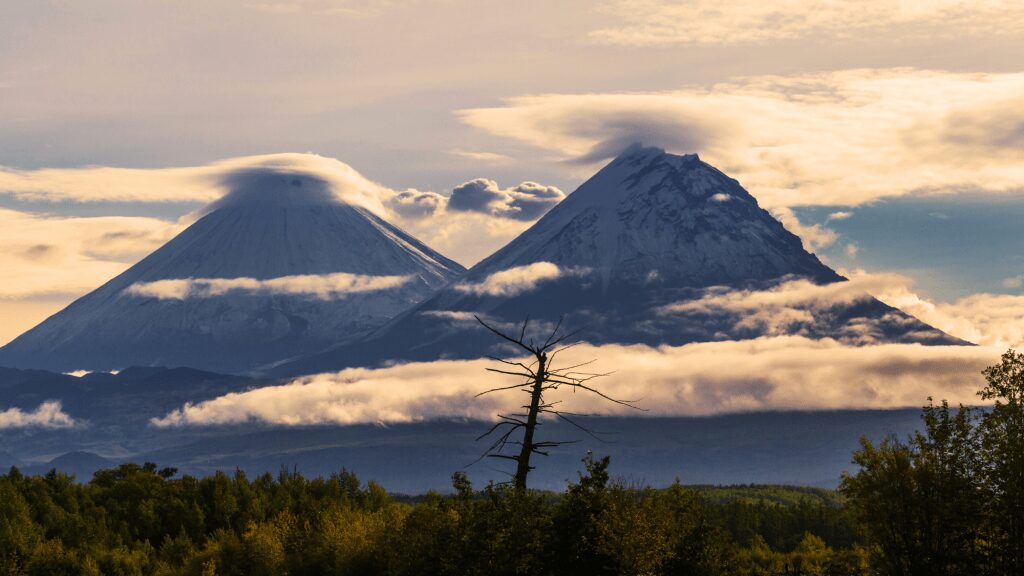
UPDATE: Russia’s Bezymianny volcano is making headlines as it nearly completes a remarkable recovery 69 years after its catastrophic eruption. Recent developments reveal that the volcano has sent an ash plume soaring up to 32,800 feet into the atmosphere, marking a significant milestone in its regrowth journey.
Located on the Kamchatka Peninsula in the Russian Far East, Bezymianny’s resurgence is both breathtaking and alarming. The latest ash cloud, released in November 2023, represents another chapter in a long history of volcanic activity that scientists have been monitoring closely. The Institute of Volcanology and Seismology confirms that this event further propels the mountain’s recovery, which has seen it nearly rebuild its summit since the devastating eruption in 1956.
Before its collapse, Bezymianny towered at least 10,213 feet above sea level. The 1956 eruption obliterated the summit, creating a horseshoe-shaped crater. Almost immediately, a lava dome began to form inside this cavity, gradually restoring the volcano’s classic cone shape through numerous eruptions over the decades.
A 2020 study analyzed aerial photographs from 1949 to 2017 and revealed that Bezymianny added an impressive average of 26,400 cubic meters of rock daily. Researchers estimate that the volcano could reach its pre-collapse height sometime between 2030 and 2035. Co-authors Alexander Belousov and Marina Belousova noted, “the most surprising thing was the fast growth of the new volcanic edifice.”
While the volcano’s recovery is astonishing, it carries a geological warning. Volcanoes with a similar history of horseshoe craters can collapse again, potentially triggering another explosive eruption. The growth process, while impressive, keeps volcanologists on alert.
Bezymianny’s resurgence has not been limited to explosive ash emissions. Ongoing fieldwork and aerial surveys indicate decades of effusive lava flows beginning in 1977. As the lava’s composition shifted to become less viscous, it spread more easily, layering and restoring the volcano’s height and symmetry.
Monitoring efforts continue through various means, including satellites, ground stations, webcams, and repeated survey flights. Belousov and Belousova stress that this extensive record of collapse and regrowth aids scientists in predicting the long-term behavior of other volcanoes with similar histories, such as Mount St. Helens.
As Bezymianny continues its extraordinary recovery, experts anticipate more growth and reshaping in the near future. The volcano’s ongoing transformation is a powerful reminder of nature’s dynamic forces and the urgency for scientists to stay vigilant.
Stay tuned for more updates on Bezymianny as this remarkable geological comeback unfolds in real time.