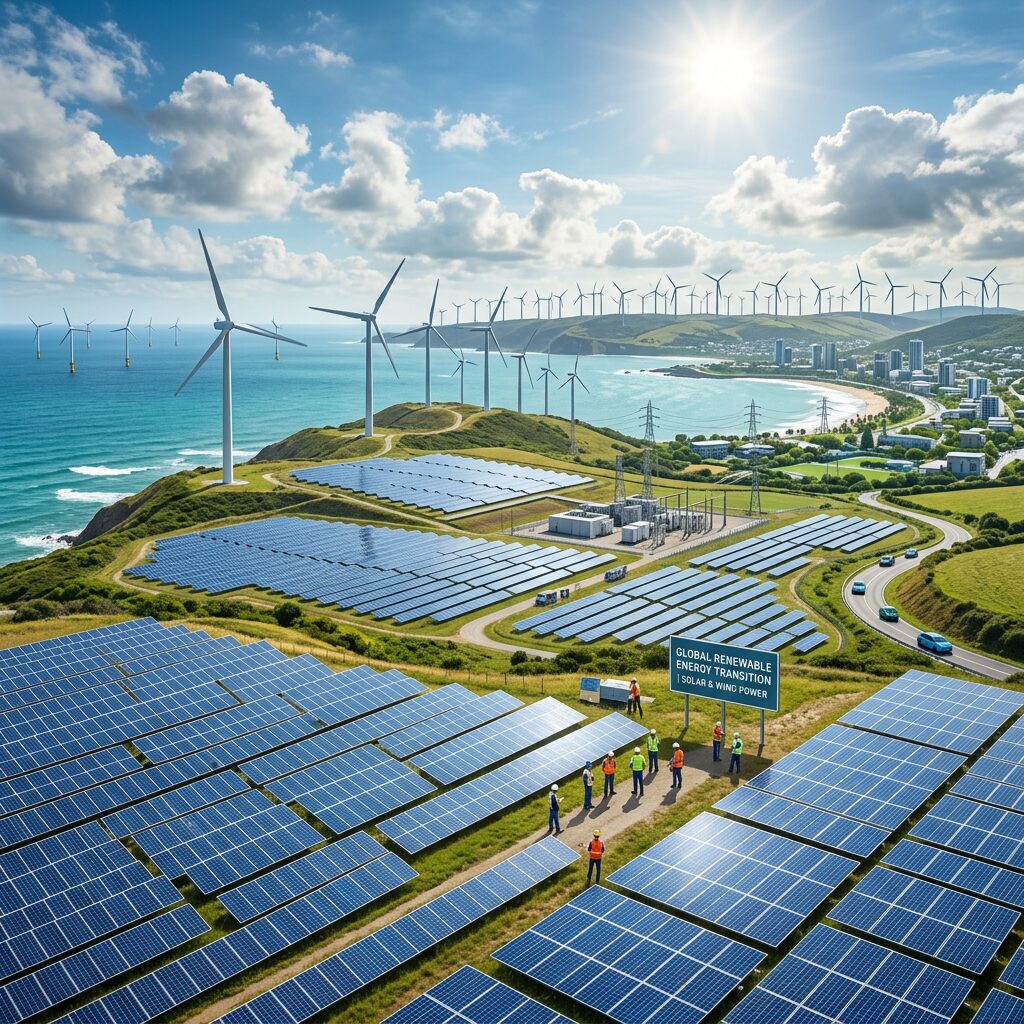
IRENA Demands Immediate Global Pivot to Renewable Energy Amid Rising Energy Crisis
The International Renewable Energy Agency (IRENA) has issued a stark policy advisory urging nations to overhaul their energy systems now to avoid escalating economic and social impacts from the global energy crisis. The advisory highlights urgent steps governments must take over the next three years to build resilient energy infrastructures based on renewables.
With ongoing conflicts in the Middle East severely disrupting global oil and gas supplies, sudden price spikes are wreaking havoc on international food systems, transportation, and economic stability. IRENA’s report makes it clear: the fastest way to shield economies from these shocks is a rapid, comprehensive shift to renewable energy. The agency’s recommendations cover immediate, medium, and long-term actions, emphasizing how countries can protect essential services now while laying the groundwork for sustainable energy security.
Immediate Steps Focus on Protecting Vulnerable Communities and Boosting Renewables
For the next zero to six months, governments are urged to deploy small-scale solar PV and battery mini-grids, especially in remote and vulnerable areas, to cut reliance on costly diesel fuel. Such systems can safeguard critical sectors like healthcare and agriculture during energy disruptions. Public campaigns promoting energy-saving behaviors are also recommended to ease demand pressures.
Removing trade barriers on renewable equipment imports—including solar panels and batteries—is identified as a key measure to rapidly accelerate deployment. These immediate responses offer quick relief from fossil fuel price shocks and lay the groundwork for a cleaner energy future.
Medium-Term Actions Aim to Strengthen Infrastructure and Expand Clean Energy Use
Between six and twelve months, the advisory calls for national-level task forces to guarantee ongoing funding for renewable projects and grid upgrades. Increasing system flexibility through expanded battery storage and smarter electricity demand management is vital. The report further highlights accelerating clean heating solutions like heat pumps and biogas systems, alongside faster approvals for electric vehicle (EV) charging stations to promote clean transportation.
Long-Term Policies to Secure Investment and Domestic Manufacturing
Over the next one to three years, IRENA stresses the need for stable, predictable policies to attract private investments to renewables. Boosting domestic manufacturing and supply chains for solar, batteries, and EV infrastructure will reduce dependence on imports and enhance national energy sovereignty.
The report also calls for conditional financial support to fossil fuel industries, tying aid to measurable progress on renewable energy targets—a move designed to phase out fossil dependency sustainably.
Renewables Offer Clear Economic Edge and Crisis Resilience
Highlighting the financial benefits, the advisory details that by 2024, 91 percent of new renewable power projects globally were cheaper than fossil fuel alternatives. Since 2010, solar power costs have plunged 87 percent, while battery storage prices have dropped 93 percent. This sharp decline positions renewables not only as an environmental imperative but also as the smartest economic choice.
Latest data through early 2026 underscore that countries with high renewable energy adoption are better equipped to weather ongoing energy shocks. The European Union saved billions by cutting fossil fuel use with solar and wind. Spain and Portugal have notably lowered natural gas dependency driving their electricity prices.
China’s minimal reliance on oil and gas has insulated it from price turmoil, while Pakistan and India are expanding solar and electric cooking to help households manage rising energy costs. The surging adoption of electric vehicles, especially in China and Vietnam, further buffers populations against fuel price hikes.
What Colorado and the U.S. Should Watch
Colorado’s abundant solar and wind resources position the state to benefit from these global trends, with recent initiatives expanding EV infrastructure and battery storage technologies. The push for small-scale solar and mini-grids could also improve energy access in Colorado’s rural areas.
Nationally, accelerating renewable deployment aligns with federal goals to cut emissions and enhance energy independence, a key strategic move given the volatile global fossil fuel market.
As IRENA’s report makes clear, governments and industries must act decisively now. The difference between protecting populations from economic fallout and enduring worsening crises lies in how swiftly renewable policies and projects are initiated.
“A faster transition to renewable energy is essential to ensure affordable, reliable, and secure energy for everyone,” IRENA stresses.
The Colorado Daily will continue tracking developments in renewable energy policy and crisis responses that impact Colorado and the nation. Readers can expect updates on new government programs, investment trends, and technology deployments aimed at solving today’s energy challenges and building resilience for tomorrow.