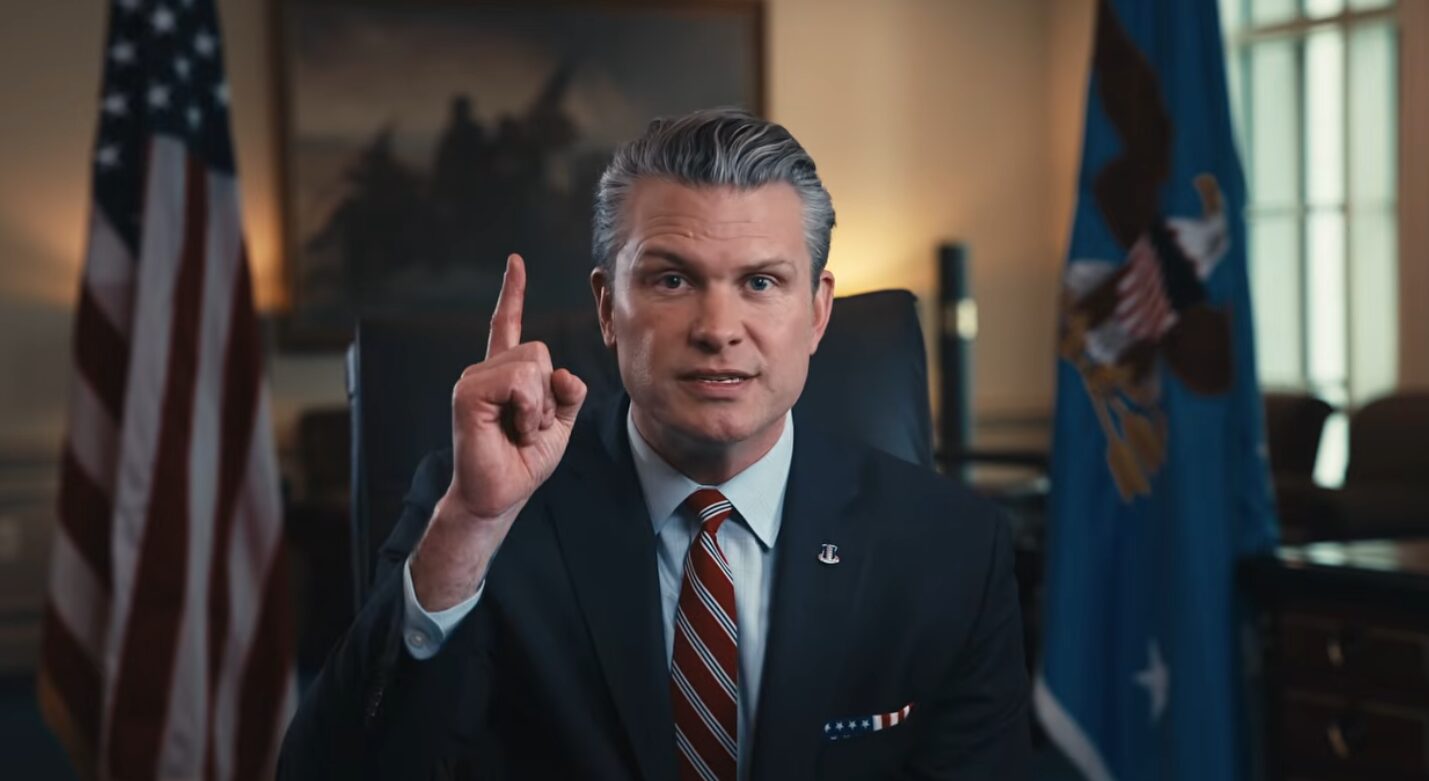
UPDATE: Defense Secretary Pete Hegseth has just announced the formation of a new task force aimed at conducting a sweeping review of the United States’ war colleges. This urgent move, revealed in a video on X last night, underscores a significant shift in the Pentagon’s approach to military education, now targeting its own institutions alongside civilian universities.
The task force has 90 days to produce a comprehensive report identifying deficiencies within the war colleges, ensuring they remain focused on critical national security issues. This announcement comes just weeks after Hegseth banned military attendance at more than a dozen elite universities and severed all Pentagon ties with Harvard University, marking a pivotal escalation in his campaign to reshape military education.
Hegseth emphasized the need for military leaders who are “critical thinkers” grounded in the principles upon which the United States was founded. He stated that the task force will prioritize “meritocracy and high standards” to prevent any issues seen in civilian institutions from infiltrating military education.
The move reflects a broader reorientation of the Pentagon’s educational strategy, which has intensified over the past several months. Hegseth’s previous decisions included the complete cancellation of military attendance at institutions such as Princeton, Columbia, and MIT, which he described as “breeding grounds of toxic indoctrination.”
The war colleges, including the Army War College, Naval War College, and Air War College, are critical in training high-ranking military officers and civilians on joint operations and national security strategy. Graduates of these institutions often occupy the most senior ranks within the military and are essential in advising the President and the Joint Chiefs.
Critics within the defense community have voiced concerns about Hegseth’s strategy. Some argue that civilian universities provide access to cutting-edge research and capabilities crucial for military advancement. A source familiar with the situation noted that this policy creates “extensive uncertainty” regarding essential programs in law, medicine, and engineering that the military historically relies on civilian partnerships to fill.
As the 90-day task force begins its work, the implications for the future of military education could be profound. A report on the war colleges’ effectiveness is expected by mid-June, which may lead to significant structural changes or confirm the current system’s integrity.
In the meantime, institutions like the Harvard Kennedy School have initiated contingency plans for admitted service members, offering extended deferrals and connecting them with partner schools, including the University of Chicago and Tufts University.
For prospective students, especially those in ROTC programs or considering a military career, the landscape of graduate education is undergoing rapid transformation. It remains to be seen whether these changes will cultivate stronger military leaders or narrow their perspectives significantly.
Stay tuned for further updates as this developing story unfolds.