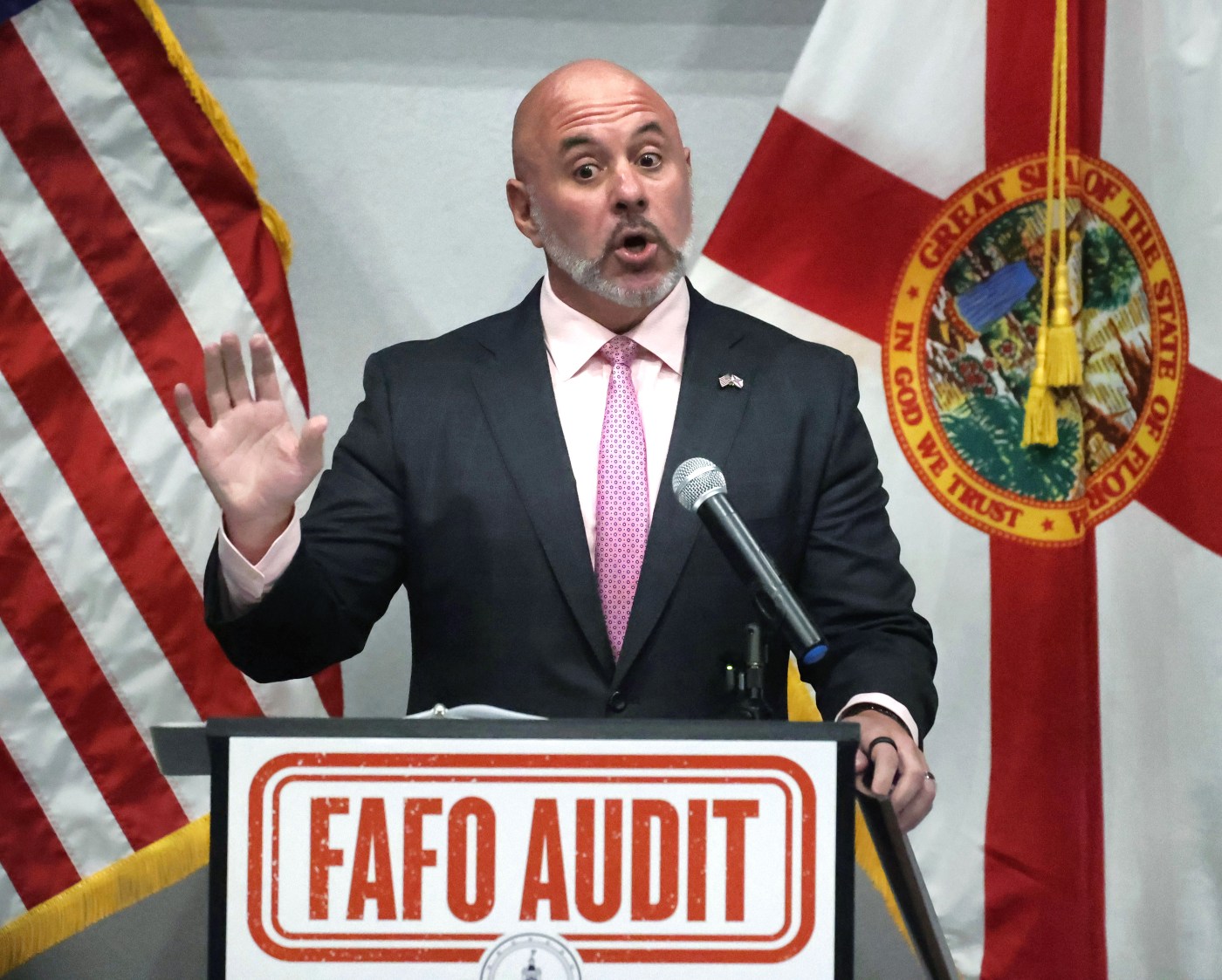
UPDATE: Florida Chief Financial Officer Blaise Ingoglia has just announced a bold proposal aimed at increasing transparency in local government budgets across the state. Speaking at the Winter Park offices of Americans for Prosperity on October 12, 2023, Ingoglia called for legislation that will mandate cities and counties to publicly post their budgets online at least 14 days before public hearings and keep them accessible for a minimum of five years.
This urgent proposal aims to empower residents by allowing for greater scrutiny of local spending practices. Ingoglia emphasizes that transparency is critical, stating,
“What we noticed is that…only some of them keep historical budget information on their website. We think it should be standard and transparent.”
In addition to the online posting requirements, the legislation will require local governments to identify 10% of their budgets that could potentially be cut, although it will not compel them to implement those cuts. This legislation will be championed by Collier County Republican state Rep. Yvette Benarroch, who criticized current practices, saying,
“Too often, local budgets are passed in a way that regular people cannot follow. The information is hard to find, hard to read…that’s not transparency. This bill is gonna fix that.”
Ingoglia, appointed by Governor Ron DeSantis earlier this year, has traveled the state advocating for budget reforms. He claims to have uncovered over $1.86 billion in wasteful spending across just 11 local governments. His recent findings assert that Orange County overtaxes its residents by $148 each, while overspending by $200 million annually.
The CFO’s method for assessing local budgets has sparked controversy, as some officials argue that his calculations overlook state mandates that require funding for essential services. In Seminole County, officials reported a 71% increase in mandated costs since 2020. Critics of Ingoglia’s approach, including Orange County Mayor Jerry Demings, argue that the county’s status as a major tourism destination contributes significantly to its budget pressures.
Meanwhile, Ingoglia’s recent audit revealed that Palm Beach County has allegedly overspent by over $344 million this year, the largest figure identified in Florida to date. He also estimates that Broward County overspent by approximately $190 million in the same period.
As this legislation moves forward, the implications for local governance and taxpayer accountability could be profound. Residents will want to stay tuned as the bill is filed and discussions intensify.
With budget transparency at the forefront of this initiative, the potential for a shift in how local governments operate is significant. The public’s ability to scrutinize and understand spending could lead to more responsible fiscal management and ultimately, taxpayer savings.
Keep an eye on developments as Florida officials push for a more transparent approach to budgeting that could set a precedent for other states across the nation.