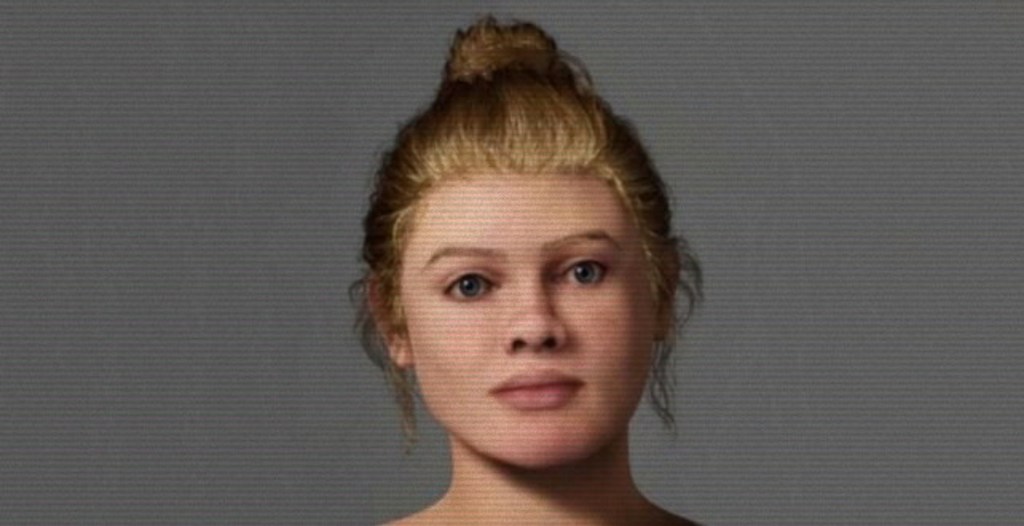
BREAKING: New DNA analysis has just solved the decade-long mystery of the “Beachy Head Woman,” revealing she was not a migrant from Africa or the eastern Mediterranean, but rather a local inhabitant of southern England. This urgent discovery was announced by researchers at London’s Natural History Museum and published in the Journal of Archaeological Science.
For over ten years, the skeletal remains, unearthed in a box in southern England and dating back to Roman-occupied Britain, sparked intense speculation about her origins. Initially dubbed the “first Black Briton,” her ancestry was thought to trace back to sub-Saharan Africa—a theory now debunked by cutting-edge DNA sequencing.
According to the researchers, the Beachy Head Woman, who lived between 129 and 311 CE, exhibited a genetic profile closely matching that of individuals from rural Roman-era Britain and modern Britons. Notably, there is no evidence of African ancestry in her genetic makeup. This finding sheds light on her likely appearance: she probably had light hair, blue eyes, and a skin tone that ranged between pale and dark.
In an era when scientific tools were limited, earlier theories relied on craniometric analysis—an approach rooted in pseudoscience and racial bias. These methods have now been shown to lack accuracy, highlighting how past assumptions can be distorted by contemporary biases.
The Beachy Head Woman is believed to have been between 18 and 25 years old and stood just under five feet tall. Her diet primarily consisted of seafood, and she had survived at least one serious leg injury. This compelling historical figure serves as a reminder of the perils of misinterpretation in archaeology, particularly when modern views are projected onto ancient societies.
As science continues to advance, this breakthrough offers a new perspective on identity and heritage, challenging long-held beliefs. The findings not only enrich our understanding of the past but also emphasize the importance of using rigorous scientific methods over outdated and flawed theories.
Stay tuned for more updates as researchers continue to explore the implications of this groundbreaking discovery.