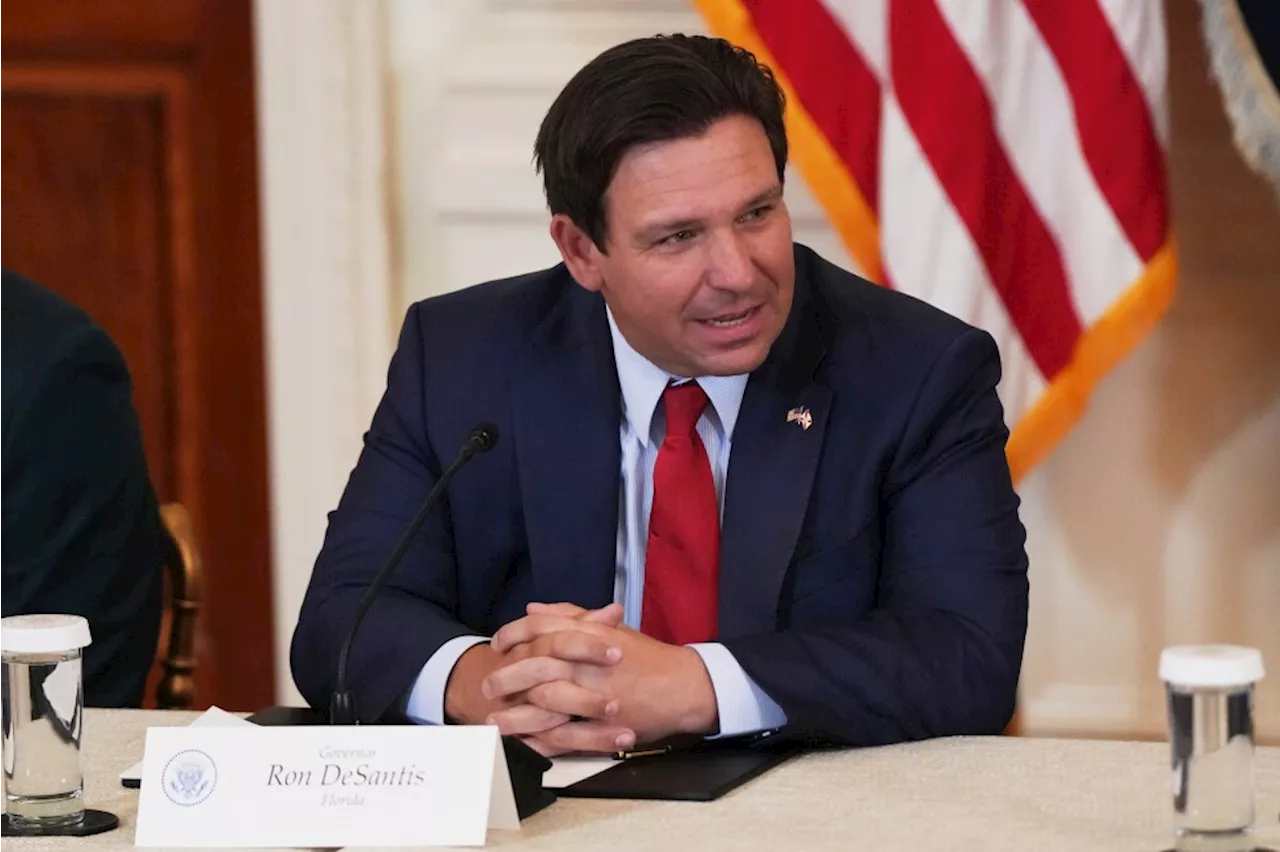
Florida Gov. Ron DeSantis is back at the center of a fierce political battle as he pushes lawmakers to redraw the state’s congressional map, aiming to secure four additional Republican seats ahead of the November midterm elections.
This special legislative session, which begins this week, marks a critical moment for DeSantis as his second term winds down. It’s one of his last major chances to demonstrate he remains a heavyweight in the Republican Party and a potential future national leader – even as former President Donald Trump continues to dominate the GOP spotlight.
High-Stakes Redistricting Fight
DeSantis unveiled his proposed congressional map on Monday, sharing it initially with the media before distributing it broadly to Florida lawmakers. His plan redraws districts chiefly in Democratic strongholds around Orlando and Tampa Bay, while concentrating Democratic voters into fewer seats in South Florida. The current congressional delegation favors Republicans 20-8; DeSantis’ map would widen that gap to 24-4 if approved.
The move mirrors expected Democratic seat gains in Virginia but also risks backlash. Some Republicans worry that narrowing Republican margins in newly drawn districts could hand seats to Democrats, especially if there’s a strong anti-Trump voter turnout this fall.
Karl Rove, former adviser to President George W. Bush, warned, “If Republicans get too aggressive, they may lose a seat or two.”
Internal GOP Tensions Simmer
The aggressive push puts DeSantis at odds with some Florida Republicans, including House Speaker Daniel Perez and Senate President Ben Albritton. Both leaders have publicly deferred to DeSantis but voiced concerns about constitutional limits and the need to avoid blatantly partisan maps.
DeSantis’ map threatens seats held by notable Democrats, including Reps. Jared Moskowitz and Debbie Wasserman Schultz, raising stakes for the midterms and intensifying internal party negotiations.
Meanwhile, DeSantis is pushing other polarizing initiatives alongside redistricting. He proposes strict regulations for artificial intelligence, demanding parental consent for children interacting with chatbots and blocking AI from producing harmful material for minors. On vaccines, he advocates adding a conscience exemption to public school requirements, aligning with anti-vaccine segments within Trump’s base.
DeSantis vs. Trump and GOP Future
Though Trump is barred constitutionally from a third presidential term in 2028, DeSantis faces rivals like Vice President JD Vance and Secretary of State Marco Rubio in any GOP primary showdown. Political analysts see DeSantis’ window to claim party leadership as “reasonably narrow,” according to pollster Whit Ayres, who advised him in his 2018 gubernatorial run.
Relations between DeSantis and Trump remain tense following their 2024 presidential primary battle. Trump famously nicknamed him “Ron DeSanctimonious,” though DeSantis ultimately endorsed Trump after exiting the race. The feud extends to Trump’s longtime ally and DeSantis’ former campaign manager, Susie Wiles, deepening the divide within GOP leadership circles.
“Donald Trump has a long memory, and Susie Wiles has a longer one,” DeSantis acknowledged, highlighting the uphill path he faces to become the party’s future standard-bearer.
What’s Next for Florida and National Politics
The special session is set to test DeSantis’ ability to rally Republican lawmakers and public support for his ambitious agenda before the midterm elections. Observers are closely watching whether DeSantis can deliver a redistricting victory that strengthens the GOP or whether pushback within the legislature will stall his plans.
For Colorado and the wider U.S., Florida’s redistricting battle is a bellwether for GOP strategies nationwide. If DeSantis succeeds, Republicans could cement key advantages in one of the country’s fastest-growing and most politically influential states heading into the 2026 midterms.
Meanwhile, the evolving power dynamics between DeSantis and Trump could shape the direction of the Republican Party and its presidential prospects beyond 2028.