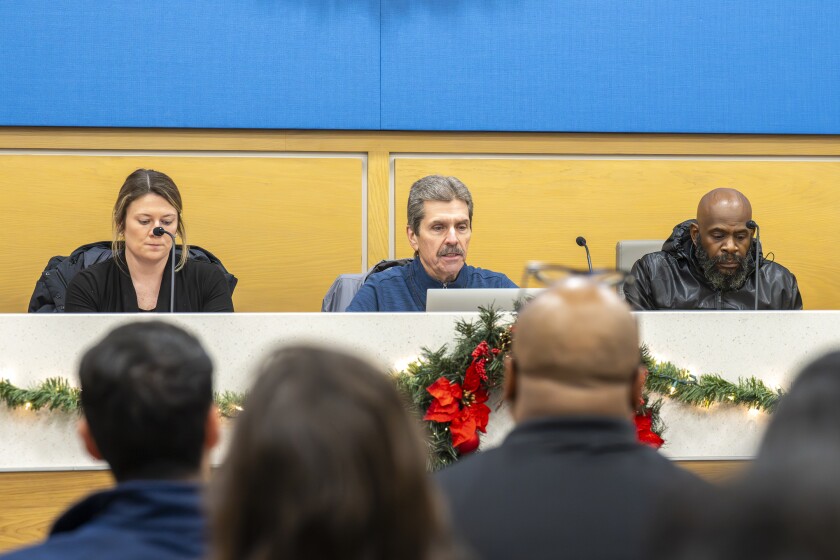
UPDATE: The Village of Broadview’s Zoning Board of Appeals has just rejected a controversial proposal aimed at restricting the expansion of U.S. Immigration and Customs Enforcement (ICE) property. The decision, made during a heated meeting on Thursday, October 12, 2023, has sparked significant public concern and confusion over the implications for local immigration policies.
During the meeting, residents packed the village hall, expressing skepticism about the proposal’s effectiveness. Many were unclear on whether the ordinance would actually prevent or facilitate ICE’s expansion in Broadview, a location already facing protests over its existing detention center. The proposal, recommended by Broadview Building Commissioner and Economic Director David Upshaw, was designed to regulate detention centers by requiring a special use permit and prohibiting their placement within 1,000 feet of residential areas, schools, daycares, cemeteries, parks, senior living facilities, and public housing.
“This ordinance places restrictions,” stated resident Allisan Galvan, “but nowhere does it outright prohibit private prisons or detention centers.” Residents fear that the language merely allows ICE to continue its operations while imposing conditional limits. Another local resident, Janelle Miller, criticized the lack of transparency from the village government, stressing that clearer community engagement is essential before any vote takes place.
Despite the Zoning Board’s unanimous rejection, officials noted that the proposal could still be passed by the Village Board with a supermajority vote. This potential for further action has left many residents anxious about the future of immigration enforcement in their community.
The meeting highlighted a growing divide among residents regarding ICE’s presence and the local government’s approach to its operations. Many believe that the proposal does not go far enough to protect the community from ICE’s expansion. “We have to be part of the process,” Miller added, pointing out the need for more inclusive discussions around such significant issues.
The situation continues to evolve, and the community remains on high alert as they await the Village Board’s next steps. Residents and activists are encouraged to stay engaged and voice their opinions as this critical matter unfolds in Broadview.
As the debate intensifies, the implications for local residents are clear: the future of immigration enforcement in Broadview is far from settled, and public opinion will play a crucial role in shaping the outcome.