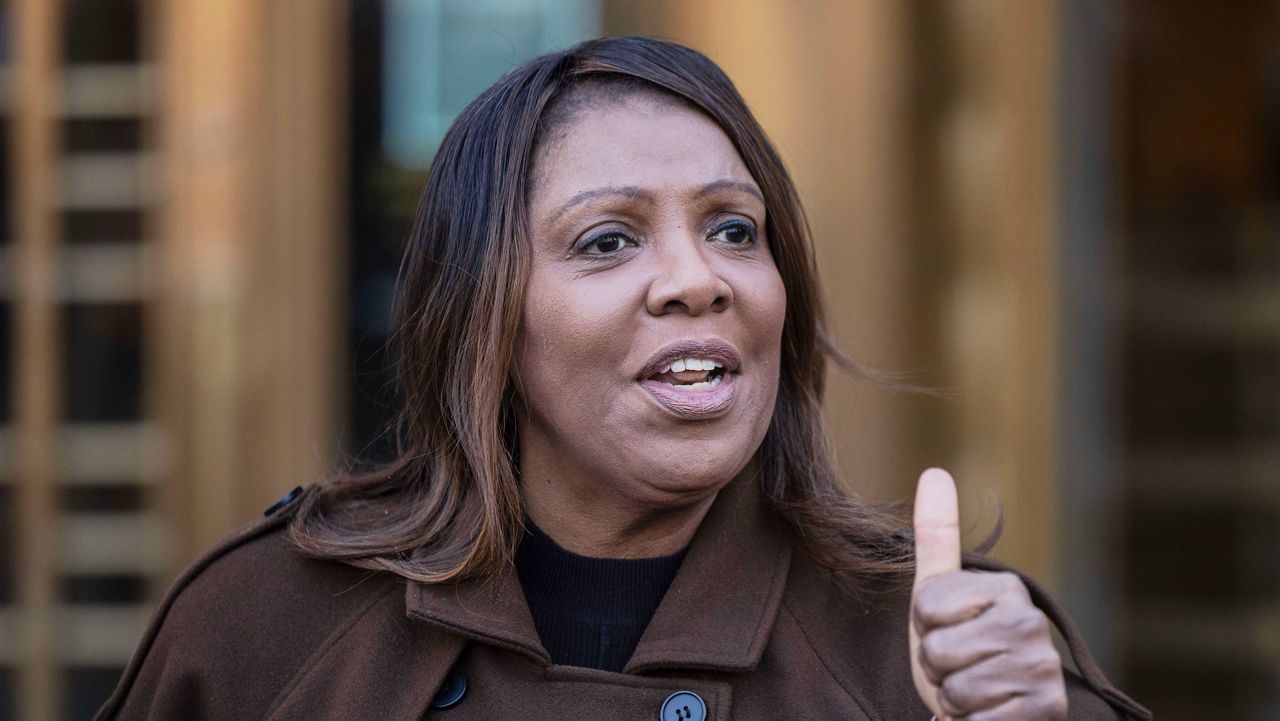
UPDATE: New York Attorney General Letitia James is spearheading an urgent fight against federal restrictions on state-level artificial intelligence (AI) laws. Earlier today, James led a bipartisan coalition of 36 attorneys general urging Congress to reject proposed language in the National Defense Authorization Act that threatens to block states from enacting or enforcing laws governing AI.
This decisive move comes as Congress considers legislation that would preempt state AI regulations, alongside discussions by President Donald Trump about issuing an executive order to establish a task force on AI governance. James and her coalition assert that preventing states from regulating AI poses serious risks to public safety and security.
“Every state should be able to enact and enforce its own AI regulations to protect its residents,” James stated. “Certain AI chatbots have been shown to harm our children’s mental health, and AI-generated deepfakes make it easier for people to fall victim to scams.” She emphasized that state governments are best equipped to address the dangers posed by AI technologies.
New York is intensifying its regulatory framework. As of this month, new regulations require AI companion operators to implement safety features that interrupt prolonged user engagement and provide protocols for users expressing suicidal thoughts, including referrals to crisis centers. A significant bill is also advancing to Gov. Kathy Hochul’s desk, mandating large AI companies to publish safety protocols and disclose potential dangers of their AI models.
The proposed Responsible AI Safety and Education Act (RAISE Act) aims to hold developers accountable for public safety threats and prevent the misuse of AI for bioweapons. Despite the uncertain federal landscape, New York is balancing safety concerns with economic development pressures.
Justin Wilcox, executive director of Upstate United, is advocating for a “smart” approach to AI regulations. He highlights the need for investments in the power grid and a diverse energy portfolio, stressing that current climate laws hinder these necessary changes. “Reliability margins are diminishing because we’re losing energy sources faster than we’re replacing them,” Wilcox warned.
Additionally, other bills in the New York legislature are seeking to impose limits and reporting requirements on energy consumption by data centers, adding another layer of complexity to the state’s AI and energy discussions.
Dr. Michael Mandel, vice president and chief economist at the Progressive Policy Institute, has developed a toolbox for states crafting AI policies. His strategies include enhancing energy grids and fostering educational partnerships, like Empire AI, to drive job growth. He also calls for robust tax incentives to attract innovation, stating, “Studies show a positive economic effect from tax incentives. These must be smart incentives that truly benefit the public.”
As the debate unfolds, the future of AI regulation remains a critical issue for states and their residents. The coalition led by Letitia James is determined to ensure that state voices are not silenced by federal overreach, aiming to protect the well-being of communities across New York and beyond.
Stay tuned for updates on this developing story as the implications for AI regulation continue to evolve.