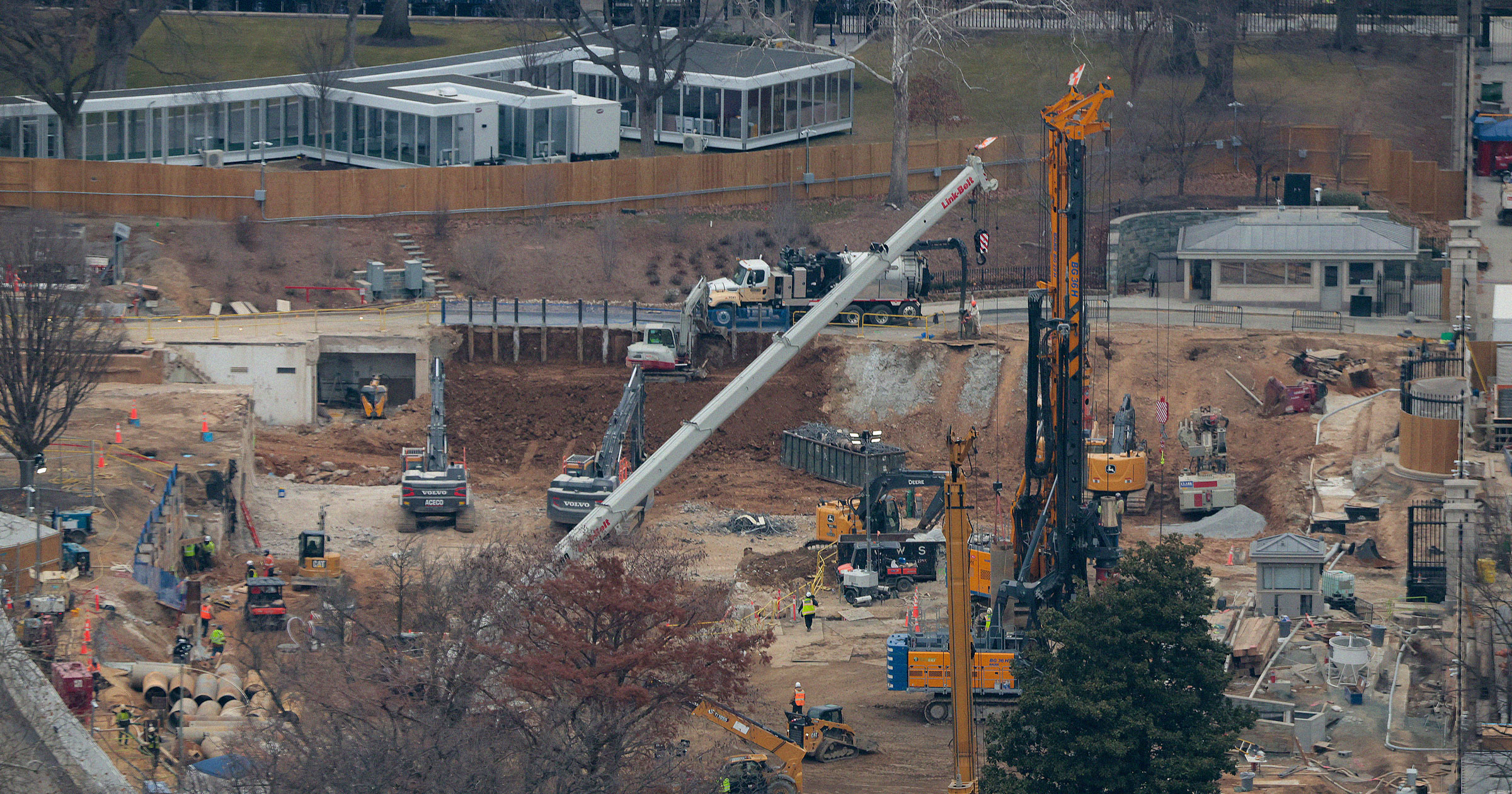
Plans by the Trump administration to construct a highly secretive underground facility beneath the East Wing of the White House have raised significant concerns. This initiative comes on the heels of a controversial project to create a new ballroom, which has already drawn scrutiny from Congress, lawsuits, and the media. A U.S. District Court is currently evaluating a request from a preservation group aimed at halting the estimated $400 million ballroom expansion.
As reported by CNN, the administration is moving forward with plans to replace the existing Presidential Emergency Operations Center (PEOC), a bunker established after the attack on Pearl Harbor in 1941. This facility had served as a critical location for safeguarding senior officials during major national crises, including the September 11 attacks in 2001 and unrest during the 2020 George Floyd protests.
Secrecy Surrounds New Bunker Construction
Details about the new bunker remain largely undisclosed, reflecting the current political climate marked by unrest. A source familiar with the situation indicated that the upgraded facility will incorporate “new technology to counter evolving threats.” This aligns with statements made by Joshua Fisher, the White House director of management and administration, who emphasized the need for “necessary security enhancements” and “resilient, adaptive infrastructure.”
Fisher noted that certain aspects of the project involve “top-secret” elements. He stated, “That does not preclude us from changing the above-grade structure, but that work needed to be considered when doing this project, which was not part of the [National Capital Planning Commission] process.” The PEOC was originally designed to withstand major attacks, including potential nuclear threats, making its modernization a priority for the administration.
Historical Significance and Modern Challenges
The existing PEOC is described as a “very complicated submarine” built in the 1940s, featuring separate power, water, and air filtration systems. However, sources confirm that all subterranean structures, including the bunker, have been extensively renovated. This raises questions regarding the cost and funding of the new construction. While President Trump has assured that private donors will cover expenses, the exact financial implications remain unclear.
Former U.S. Secret Service agent Jonathan Wackrow highlighted the challenges of estimating costs for emerging technologies and infrastructure. He explained, “If you think about trying to mitigate the threats today and the threats for tomorrow, you’re really talking about emerging technologies, emerging infrastructure — stuff that may not be commercially available.” This uncertainty complicates the budgeting process and the overall financial transparency of the project.
As developments unfold, the intersection of security, historical preservation, and governmental oversight will continue to be scrutinized. The administration’s approach to enhancing infrastructure in a politically charged environment underscores the delicate balance between security needs and public accountability.