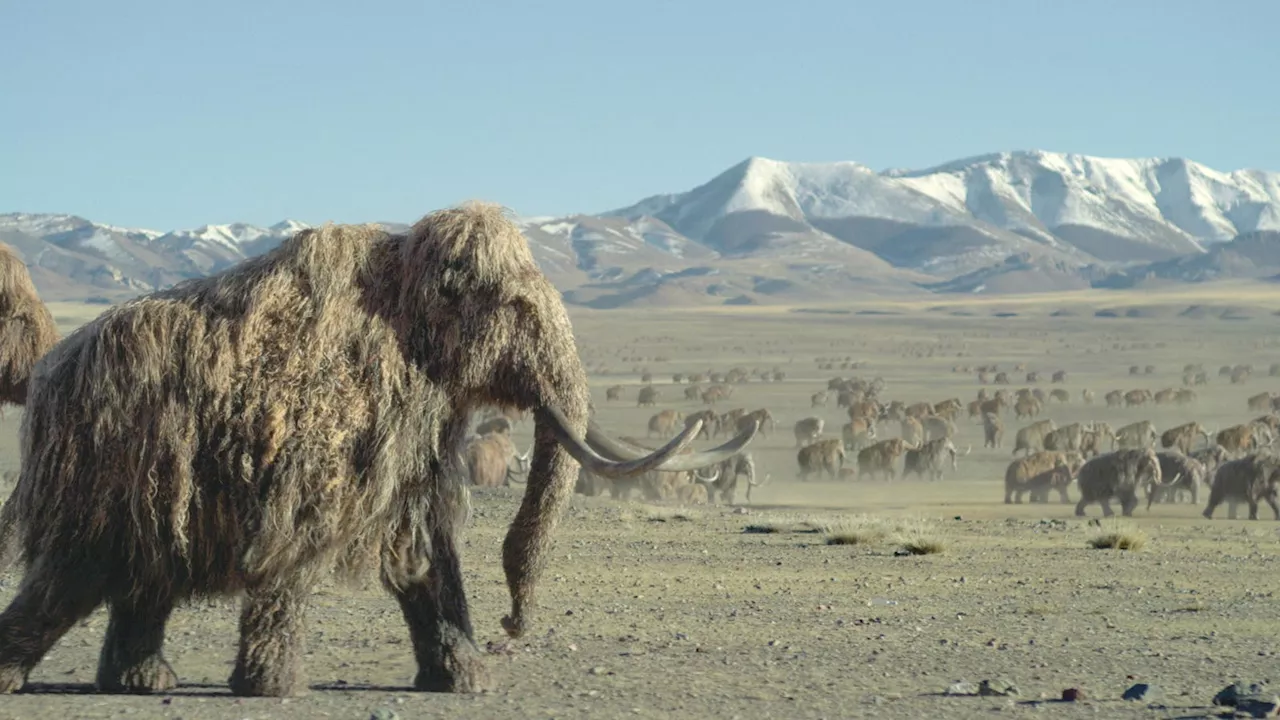
“Prehistoric Planet: Ice Age,” a groundbreaking series now streaming on Apple TV+, utilizes advanced technology to vividly recreate the Pleistocene era. This latest installment brings to life iconic Ice Age creatures such as woolly mammoths and dire wolves, showcasing a dynamic world shaped by climate extremes and evolving ecosystems.
The series premiered on November 26, 2023 and marks a significant departure from its dinosaur-centric predecessors, diving into a period marked by dramatic environmental shifts. Executive producer Mike Gunton emphasized the importance of this era, stating, “This great turmoil was going on… nature was having to respond in remarkable ways.” The show captures the essence of a time when our ancestors coexisted alongside massive creatures like giant sloths and marsupial lions.
Blending Science and Storytelling
The production team aimed to represent Ice Age animals not merely as relics but as living beings with social interactions and survival challenges. Gunton expressed a desire for viewers to feel as though they were stepping out of a time machine, witnessing real animals in their natural habitats. This focus on behavior rather than just biology enhances the storytelling, portraying migrations, hunts, and the harsh realities of seasonal changes.
Equipped with cutting-edge technology, the series employs a blend of visual effects (VFX) and scientific methodologies. High-resolution photogrammetry was used to scan real landscapes across 15 countries, while drone mapping assisted in choreographing animal movements and interactions. Full-scale puppets were constructed to provide animators with tangible references, allowing for more realistic animations that resonate with viewers.
The production also drove new scientific inquiries, as animators sought to understand how certain species would behave under specific conditions. For example, questions about how a giant kangaroo might pivot mid-stride were directed back to researchers, ensuring that the portrayal of these ancient creatures remained grounded in reality.
Realism and Relevance
The Ice Age’s proximity to the present day necessitates a high degree of realism. Animals in the series move and behave in ways familiar to contemporary audiences, raising poignant questions about current environmental challenges. Gunton noted the parallels between the slow, gradual changes of the Ice Age and the rapid shifts we experience today, prompting viewers to reflect on the implications for our planet.
The series cleverly integrates real footage with CGI, creating a seamless viewing experience that keeps audiences engaged. This technique not only enhances the storytelling but also serves to ground the fantastical elements in a familiar context.
“Prehistoric Planet: Ice Age” ultimately conveys a powerful narrative about adaptability. It illustrates how some species thrived while others vanished, emphasizing the interconnectedness of ecosystems. By leveraging advanced technologies—from VFX to biome modeling—the show transforms the Ice Age from an abstract concept into a vibrant, living system.
The series does not preach but instead invites viewers to draw their own conclusions about the lessons of the past. As it illuminates the responses of life to dramatic environmental changes, “Prehistoric Planet: Ice Age” serves both as entertainment and a reminder of the precarious balance of our ecosystems. Through its innovative approach, the series underscores the importance of understanding how past events can inform our current and future challenges.