Physicists at the University of Toledo are advancing solar cell technology specifically for outer space applications. This effort is part of a large-scale research project backed by the Air Force Research Laboratory. The team is focusing on overcoming significant challenges that affect the efficiency and longevity of solar cells in extreme space environments.
Innovative Research on Antimony Compounds
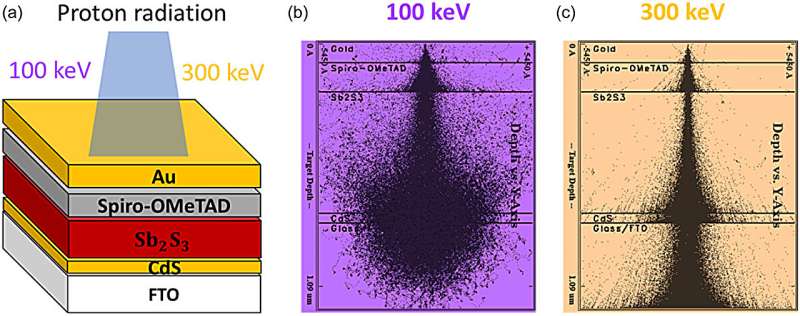
Recent research highlights the potential of using antimony compounds as light-absorbing semiconductors in solar cells. A collaborative group of faculty and students from the University of Toledo published a groundbreaking assessment in the journal Solar RRL. This study, which appears on the journal’s front cover, explores the promising characteristics of antimony chalcogenide-based solar cells for space applications.
According to Alisha Adhikari, a doctoral student in physics and co-leader of the research team, “Antimony chalcogenide solar cells exhibit superior radiation robustness compared to the conventional technologies we’re deploying in space.” Despite this advantage, she acknowledges that these cells need to achieve greater efficiency to be considered viable alternatives for future space missions.
Team of Experts Driving Innovation
The research team, led by Dr. Randall Ellingson, who holds the Endowed Chair at the Wright Center for Photovoltaics Innovation and Commercialization, aims to explore new methods of harvesting solar energy under extreme conditions. These conditions include high temperatures and intense particle radiation, which pose significant challenges for solar energy collection in space.
Other key contributors to the research include postdoctoral researcher Dr. Vijay Karade and doctoral student Scott Lambright, both of whom co-led the project alongside Adhikari. Additionally, Dr. Yanfa Yan and Dr. Zhaoning Song are involved in this innovative research effort.
The findings from this project reflect a growing interest in antimony compounds as essential materials for constructing future solar cells. The exploration of these materials holds the potential to revolutionize solar energy technology, particularly in the demanding environment of outer space.
As the quest for efficient and durable solar energy solutions continues, the work being done at the University of Toledo could pave the way for more effective solar technology in future space missions.
This research could significantly impact the efficiency of solar cells deployed in space, contributing to the sustainability of future exploratory missions and potentially revolutionizing energy solutions beyond our planet.