NASA’s Perseverance rover has made a groundbreaking discovery by capturing sounds of electrical discharges in dust devils and storms on Mars. This phenomenon, previously theorized but unconfirmed, has been documented through audio and electromagnetic recordings collected by the rover’s SuperCam microphone. The findings were published in the journal Nature on November 26, 2024.
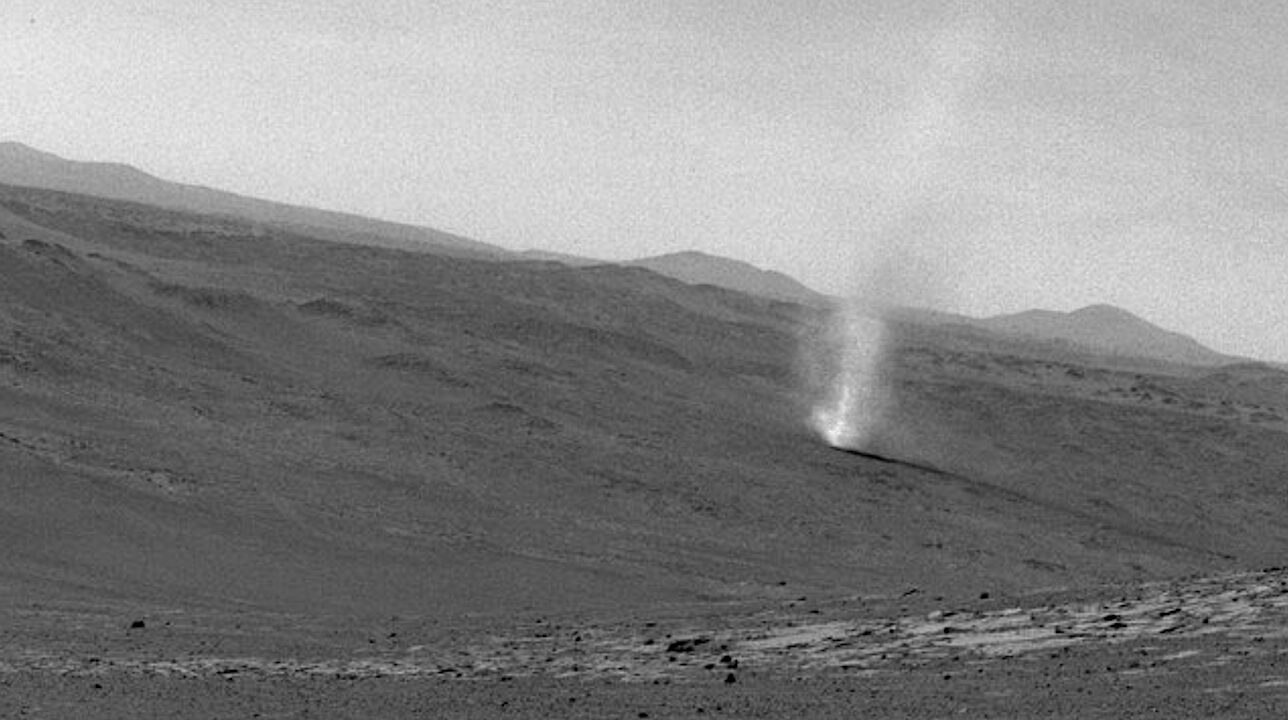
Dust devils are common on the Red Planet, forming from rising and rotating columns of warm air. As heated air near the surface rises through cooler layers, it creates a rotating effect. This process not only generates the characteristic whirlwinds but also leads to the triboelectric effect, where dust particles rubbing against each other build up an electrical charge. This effect is similar to generating a spark when touching a metal doorknob after walking on a carpet in socks.
On October 12, 2024, the SuperCam microphone recorded the sounds of electrical discharge as a dust devil passed over the rover. This event marked a significant moment in the mission, with the instrument capturing three distinct crackles between the powerful winds of the dust devil.
Over its mission, the SuperCam has recorded a total of 55 distinct electrical events, beginning on the rover’s 215th Martian day or sol in 2021. Sixteen of these events occurred when dust devils directly passed over the rover. Coauthor and Perseverance scientist, Ralph Lorenz, based at the Johns Hopkins Applied Physics Lab, expressed excitement about the clarity of the recordings: “We got some good ones where you can clearly hear the ‘snap’ sound of the spark.”
The research team identified that electrical discharges were not only linked to dust devils but also occurred during the passage of convective fronts associated with regional dust storms. These fronts create intense turbulence that enhances triboelectric charging, which is crucial for generating static electricity.
Interestingly, the study revealed that electrical discharges did not increase during the Martian seasons when dust storms are prevalent. This suggests that localized turbulence, rather than high dust density, plays a more critical role in generating these electrical phenomena.
The presence of electrical discharges on Mars has profound implications for our understanding of the planet’s atmosphere. These discharges can activate chemical reactions, producing highly oxidizing compounds like chlorates and perchlorates. Such substances can break down organic molecules, raising questions about the potential for life on Mars and the environmental challenges it may face.
The discovery also offers insights into how dust transport operates on Mars, a critical factor influencing the planet’s climate. Understanding the role of electrical charges in dust movement may help scientists better comprehend Martian weather patterns and atmospheric dynamics.
The Perseverance rover, managed by NASA’s Jet Propulsion Laboratory in Southern California, is part of the agency’s Mars Exploration Program. Its findings not only enhance our knowledge of Martian atmospheric chemistry but also inform the design of future missions, including potential human exploration of the Red Planet.
For more information on the Perseverance mission and its discoveries, visit NASA’s official page: https://science.nasa.gov/mission/mars-2020-perseverance.