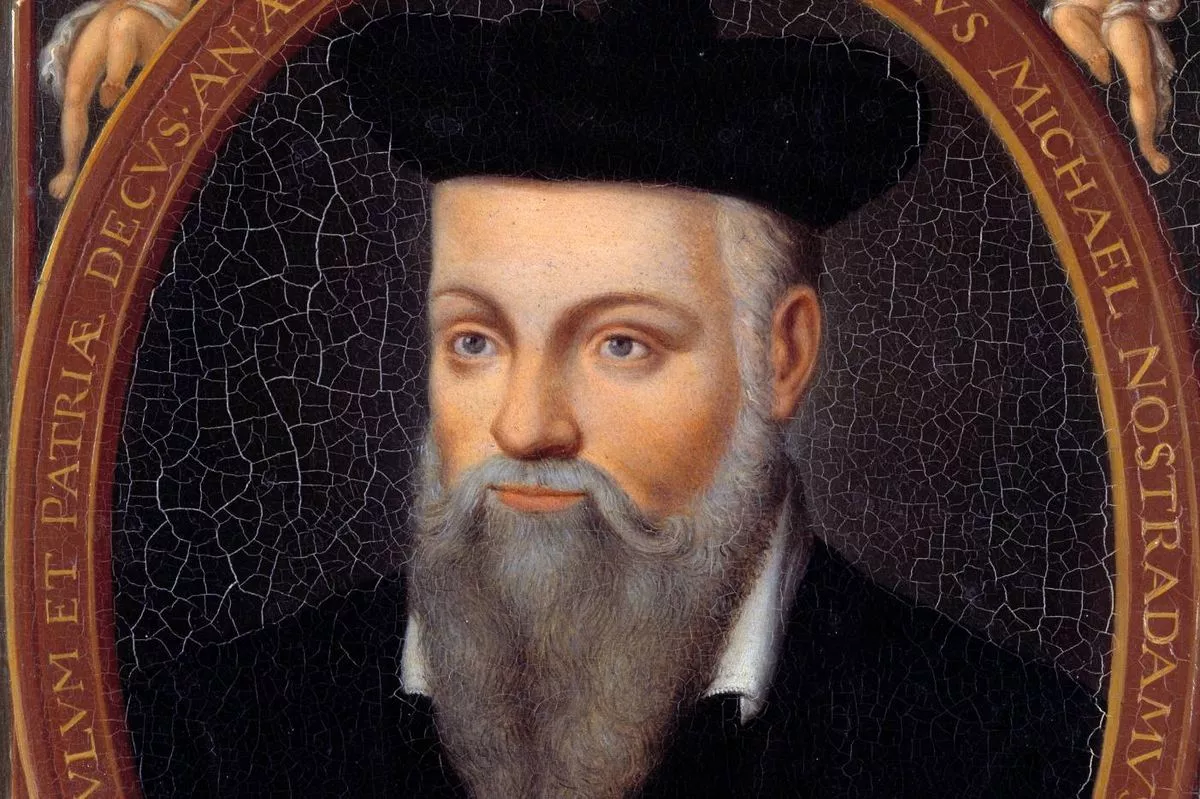
The renowned 16th-century French astrologer Nostradamus has made chilling forecasts for the year 2026, capturing the attention of those intrigued by his prophetic insights. His cryptic verses, primarily found in his 1555 work, The Prophecies, contain predictions that some interpret as ominous warnings about future global events.
Among the notable predictions is a quatrain that suggests a significant conflict, stating, “Seven months great war, people dead through evil/ Rouen, Evreux the King will not fail.” Many interpret this as a possible reference to the ongoing conflict between Russia and Ukraine. Nostradamus has long been associated with foretelling wars, with another line suggesting, “Within two cities, there will be scourges the like of which was never seen,” which some believe hints at the atomic bombings of Hiroshima and Nagasaki during World War Two, as reported by the Mirror.
Predictions of Natural and Personal Catastrophes
Another intriguing prediction involves a “great swarm of bees” arising from a night ambush, which some speculate may occur in 2026. This particular line, associated with the number 26, raises questions about its symbolism. The idea of a massive swarm inflicting damage seems improbable, leading to varied interpretations of what Nostradamus could have meant.
In a more dramatic forecast, Nostradamus predicts that “the great man will be struck down in the day by a thunderbolt.” This could refer to a prominent figure, potentially a celebrity or world leader, experiencing a shocking event. Enthusiasts of his work might envision a stormy day at a high-profile event, raising anticipation for what might transpire.
Another grim prediction specifically mentions Switzerland‘s Italian-speaking region, stating, “Because of the favour that the city will show… the Ticino will overflow with blood.” This ominous line suggests potential disaster, whether through mass casualties, a plague, or natural calamity. The specificity of this location has led to increased scrutiny regarding its implications for the future.
Interpreting Nostradamus’ Legacy
Skeptics of Nostradamus’ predictions often point to the ambiguity of his writings. His use of Middle French and intentionally vague Latin phrases complicates interpretations. Various manuscripts, spelling inconsistencies, and differing translations over the centuries have led to significant debate about his true intentions.
Despite the uncertainty surrounding his prophecies, Nostradamus remains a figure of fascination. As 2026 approaches, many will undoubtedly reflect on his predictions, considering their relevance to contemporary events and the potential for future occurrences. Whether viewed as mere coincidence or genuine foresight, his quatrains continue to spark both intrigue and apprehension in equal measure.