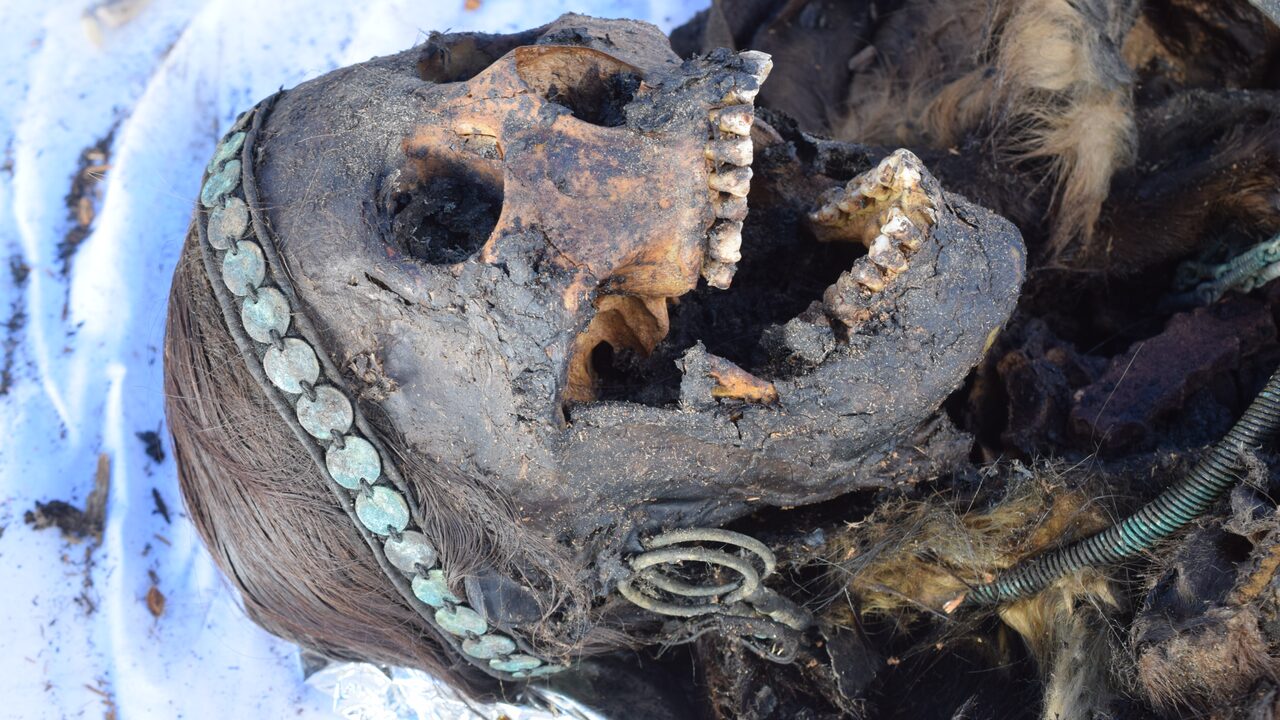
Researchers have unveiled significant insights into the genetic history of Indigenous Siberians through a detailed analysis of ancient remains. A recent study highlighted a female shaman, known as UsSergue1, who lived in the 18th century and was buried in a distinctive red woolen dress. This finding, among others, sheds light on the genetic lineage of the Yakuts, a group that inhabited the region long before and during Russia’s conquest of Siberia.
The study, published in the journal Nature, stems from nearly 16 years of archaeological research in Yakutia, a northeastern part of Siberia characterized by its harsh climate. Researchers uncovered the remains of over 100 Indigenous individuals buried between the 14th and 19th centuries. They aimed to explore how the Russian conquest, which began in 1632, influenced the genetics of the Yakuts.
The analysis revealed that the genetic roots of modern Yakuts trace back to the 12th and 13th centuries, affirming their oral histories. Unlike other Indigenous populations subjected to colonial rule, such as those in the Americas, the Yakuts did not exhibit notable population decline or significant intermixing with Russian settlers. According to Perle Guarino-Vignon, a postdoctoral researcher at the Saint-Antoine Research Center in Paris, “The analyses show that Yakut genetic heritage has remained stable from the 16th century to today.” This stability suggests that the environmental challenges of Siberia may have hindered extensive settlement and demographic changes.
In addition to genetic findings, researchers examined the Yakuts’ oral microbiome, a community of microorganisms found in the mouth, through analysis of teeth and dental plaque. Surprisingly, despite the introduction of new foods by Russian settlers, including barley and tobacco, the Yakut microbiome demonstrated remarkable consistency over time.
Shamanism has been an integral part of Yakut culture, and the remains of UsSergue1 provide a glimpse into this tradition. Discovered in central Yakutia, she was interred in a tree-trunk coffin adorned with multiple layers of clothing, including a traditional Yakut ushanka hat and leather leg warmers. Her burial included several symbolic items, such as a “bride’s belt,” typically associated with shamans.
The findings also revealed that UsSergue1’s parents were closely related, possibly as half-siblings or other second-degree relatives. Ludovic Orlando, a molecular geneticist at the French National Center for Scientific Research, noted that while her high level of inbreeding was unexpected, it does not imply that being closely related was a requirement for becoming a shaman. The research team found multiple other shaman burials without similar kinship patterns.
UsSergue1’s grave also contained a pit with three horse skeletons, suggesting a significant ritual importance. Researchers interpret her as a representation of her clan, embodying their spiritual and cultural traditions at a time when Russian attempts at Christianization were increasing.
The preservation conditions in Yakutia have been exceptional, allowing for detailed studies of both biological and cultural artifacts. Éric Crubézy, a biological anthropologist involved in the study, emphasized the unique opportunity to conduct autopsies on well-preserved remains and analyze the accompanying clothing and jewelry.
The research provides a comprehensive view of Yakut life across centuries, illustrating not only their resistance to external influences but also the continuity of their cultural practices. The legacy of figures like UsSergue1 endures, highlighting the profound connection between identity, tradition, and resilience in the face of change.