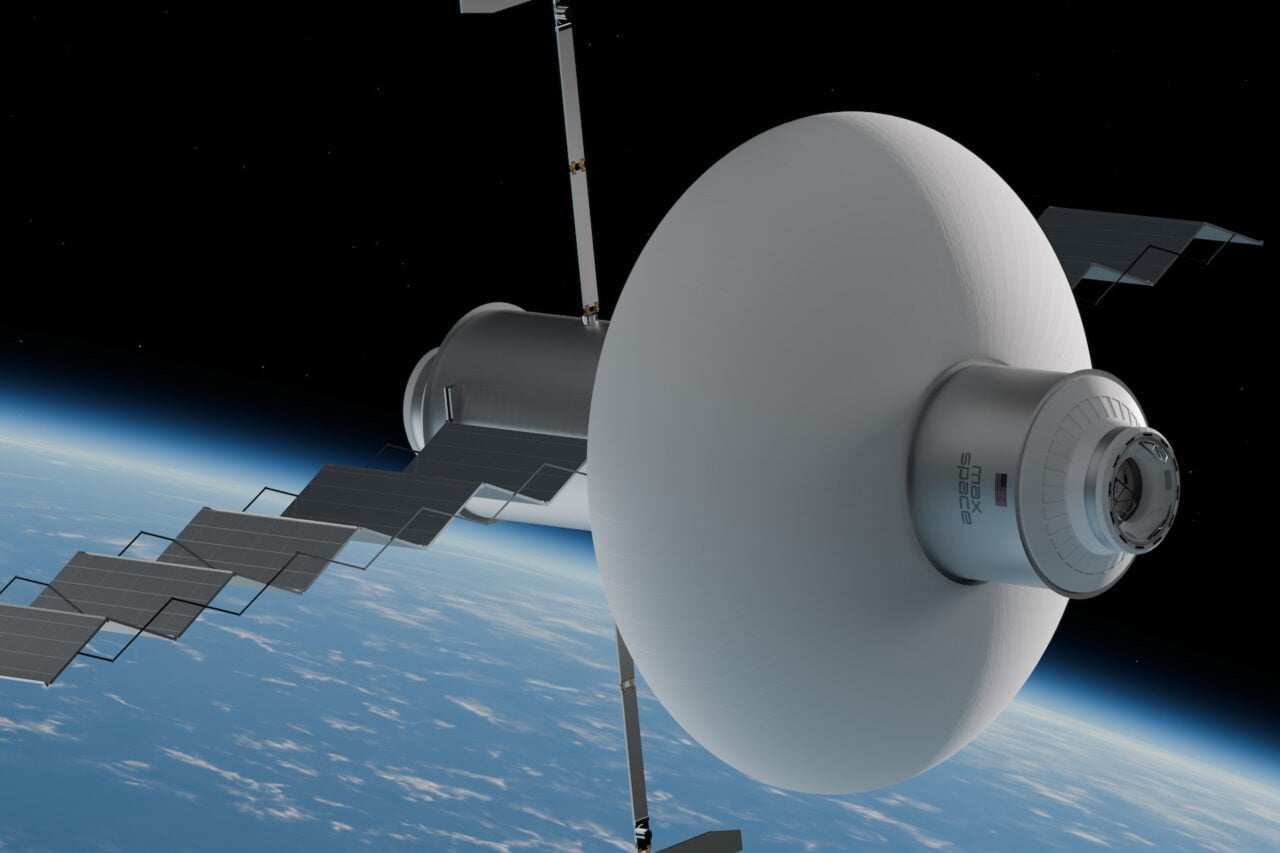
A Florida-based startup, Max Space, has revealed plans to launch a prototype of its commercial space station, named Thunderbird, by 2027. The innovative design of this single-module space station incorporates expandable habitat technology, which aims to streamline the construction of orbital labs by reducing the number of launches required.
This week, it was announced that a smaller prototype, called Mission Evolution, will be part of a SpaceX ride-share mission in early 2027. The mission will focus on testing critical systems such as orbital debris protection and environmental control, as well as life support capabilities, according to a report by SpaceNews.
Revolutionizing Space Habitat Design
Founded in 2023, Max Space initially did not intend to develop its own space station. However, a shift in NASA‘s approach to its Commercial Low Earth Orbit Destinations (CLD) program prompted a change in strategy. With the International Space Station slated for retirement by 2030, NASA is now seeking commercial alternatives and has introduced smaller, more affordable Space Act Agreements to foster the development of new space stations.
“It was pretty clear that was an opportunity for us to put a proposal forward to show how these modules can really be used for human habitation,” stated Saleem Miyan, the chief executive of Max Space.
The unique feature of Thunderbird is its expandable structure, which distinguishes it from other inflatable space habitats. The station can expand to a volume of 12,360 cubic feet (approximately 350 cubic meters) once in orbit. This design allows for a flexible interior, enabling the crew to shift living spaces to accommodate various activities, including scientific experiments in low Earth orbit.
Future Plans and Applications
Designed to support a crew of four astronauts, Thunderbird can be launched aboard a medium-lift vehicle like the Falcon 9 rocket. The commercial space station is envisioned for a range of applications, including research and the orbital manufacturing of pharmaceuticals and other materials.
Looking ahead, Max Space aims to have its space station operational by 2029. There are also plans to adapt Thunderbird for future missions to the Moon and Mars, potentially serving as a habitat for astronauts exploring beyond Earth.
As the landscape of commercial spaceflight evolves, Max Space is positioning itself as a key player in the development of sustainable and efficient space habitats.