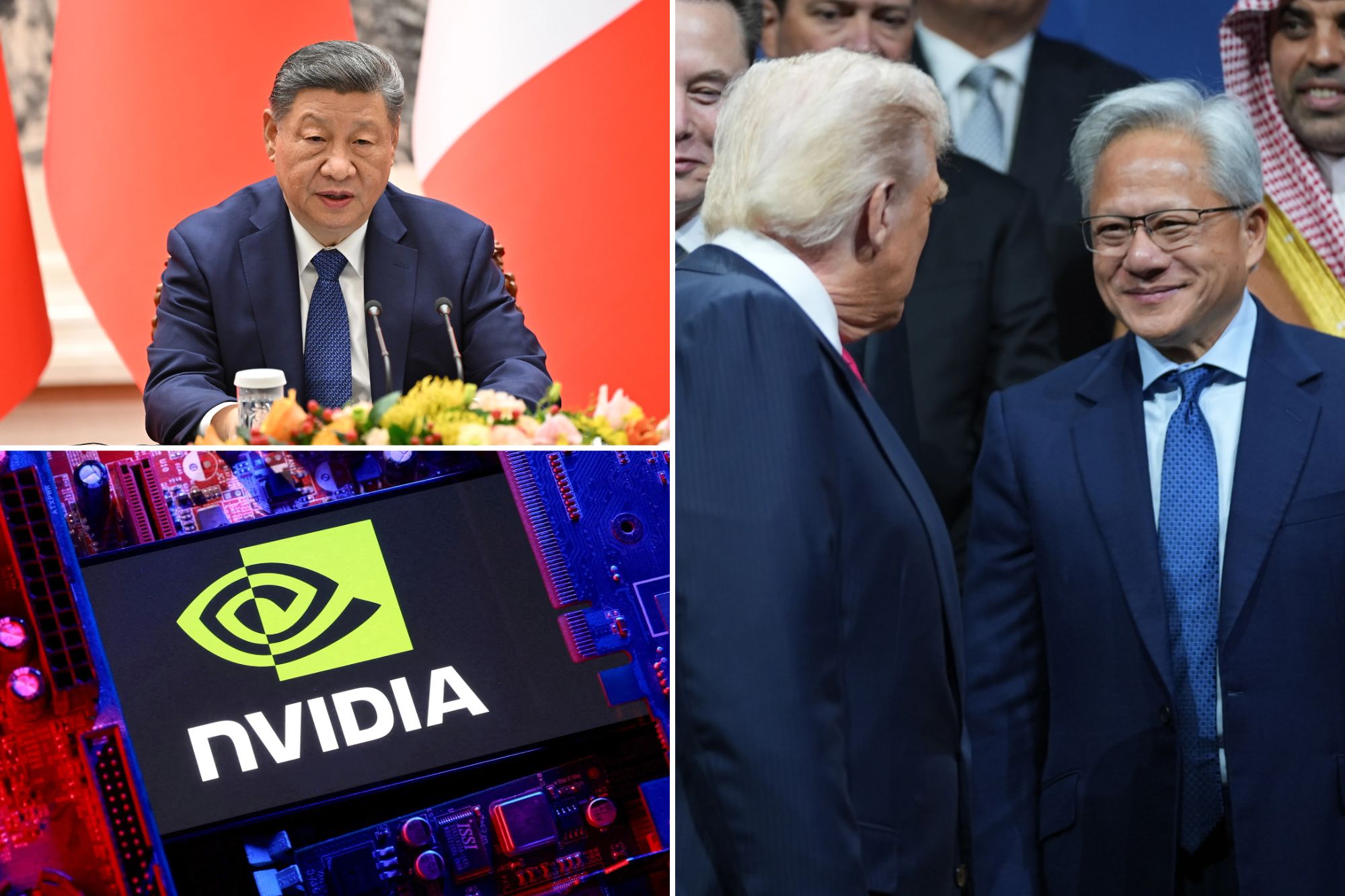
The United States government will permit Nvidia to export its powerful H200 artificial intelligence chips to China, a decision announced by former President Donald Trump on November 6, 2023. This move has raised concerns over national security, yet it also signifies a potential thaw in the ongoing trade tensions between the two nations. Following Trump’s announcement on Truth Social, Nvidia’s shares rose by 1.2% in after-hours trading, building on a previous 3.16% increase after reports of possible approval emerged.
Trump indicated that he had discussed the decision with Chinese President Xi Jinping, stating that Xi responded positively to the news. In his post, Trump noted that a 25% fee would be paid to the United States for each chip exported to China. He mentioned that the Commerce Department is currently finalizing the details of this arrangement, which is expected to extend to other AI chip manufacturers such as Advanced Micro Devices and Intel.
Implications for US-China Relations
This approval could suggest a more conciliatory approach toward China, especially following a recent meeting in Busan, South Korea, where Trump and Xi brokered a temporary truce in their trade and technology disputes. Administration officials view this decision as a compromise that allows Nvidia to export its latest chips while still addressing national security concerns. They believe that blocking all exports could inadvertently strengthen Huawei and its efforts to advance AI capabilities within China.
Despite the approval, there are lingering fears among US lawmakers that these advanced chips could enhance China’s military capabilities. Critics argue that selling such technology may provide Beijing with the tools needed to bolster its defense strategies, concerns that initially prompted the Biden administration to impose restrictions on chip exports. In response to earlier media reports about H200 export approvals, Senator Elizabeth Warren voiced strong opposition, linking the decision to Nvidia CEO Jensen Huang’s connections with Trump and expressing fears that it could jeopardize US national security.
The H200 Chip and Its Capabilities
The H200 chip, which was unveiled two years ago, features significantly more high-bandwidth memory compared to its predecessor, the H100, enabling faster data processing. According to a report by the Institute for Progress, the H200 chip is projected to be nearly six times more powerful than the most advanced AI semiconductor currently permissible for export to China, the H20. This capability could enhance the performance of Chinese AI laboratories, allowing them to build supercomputers comparable to leading US technology, albeit at a higher cost.
Earlier in 2023, Trump had considered imposing new restrictions on technology exports to China in response to Beijing’s stringent controls on rare earth minerals. These minerals are vital for producing various tech products. Ultimately, he opted for a more lenient approach concerning most tech exports.
The decision to allow Nvidia to ship AI chips to China has sparked a significant debate about the broader implications for US economic and national security. As the situation evolves, it remains to be seen how this arrangement will impact the delicate balance of power in the global technology landscape.