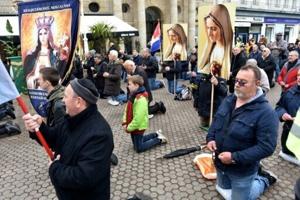
More than 60,000 individuals have signed a petition urging the Croatian government to ban public prayers conducted by Catholic men in city squares. Delivered on October 25, 2023, this petition highlights growing concerns about the promotion of patriarchal authority through these public displays.
The initiative comes as part of a broader movement advocating for gender equality and the separation of church and state in Croatia. Many signatories argue that these prayers undermine the principles of inclusivity within the public sphere. The petition reflects a significant societal response against what many perceive as a reinforcement of traditional gender roles.
According to the petition organizers, the public prayers often attract large crowds and create an atmosphere that some believe marginalizes women and other groups. They contend that such displays of religious authority in public spaces contradict efforts towards a more egalitarian society.
The movement has garnered attention from various social and political groups, highlighting the intersection of faith, politics, and gender issues in Croatia. Advocates for the petition assert that the government should take action to ensure that public spaces are welcoming for all citizens, regardless of their gender or belief systems.
In response to this growing sentiment, local government officials are now facing pressure to address the concerns raised by the petition. The Croatian government has not yet issued an official statement regarding the petition’s demands, but the public discourse surrounding the issue is becoming increasingly prominent.
The outcome of this petition may have implications for how religious practices are integrated into public life in Croatia. As the nation continues to navigate its identity within the context of modern European values, the debate over the place of religion in public spaces remains a contentious topic.
Public prayers, particularly those associated with the Catholic Church, have long been a part of Croatian culture. However, as societal values evolve, the demand for a reexamination of these traditions is gaining traction. The petition serves as a reflection of changing attitudes towards gender and authority in an increasingly diverse society.
As the discussion unfolds, it is clear that the voices of the signatories are amplifying a call for change. This movement marks a significant moment in Croatia’s ongoing journey towards balancing tradition with contemporary social values. The future of public religious expressions in city squares may hinge on the government’s response to this powerful grassroots initiative.