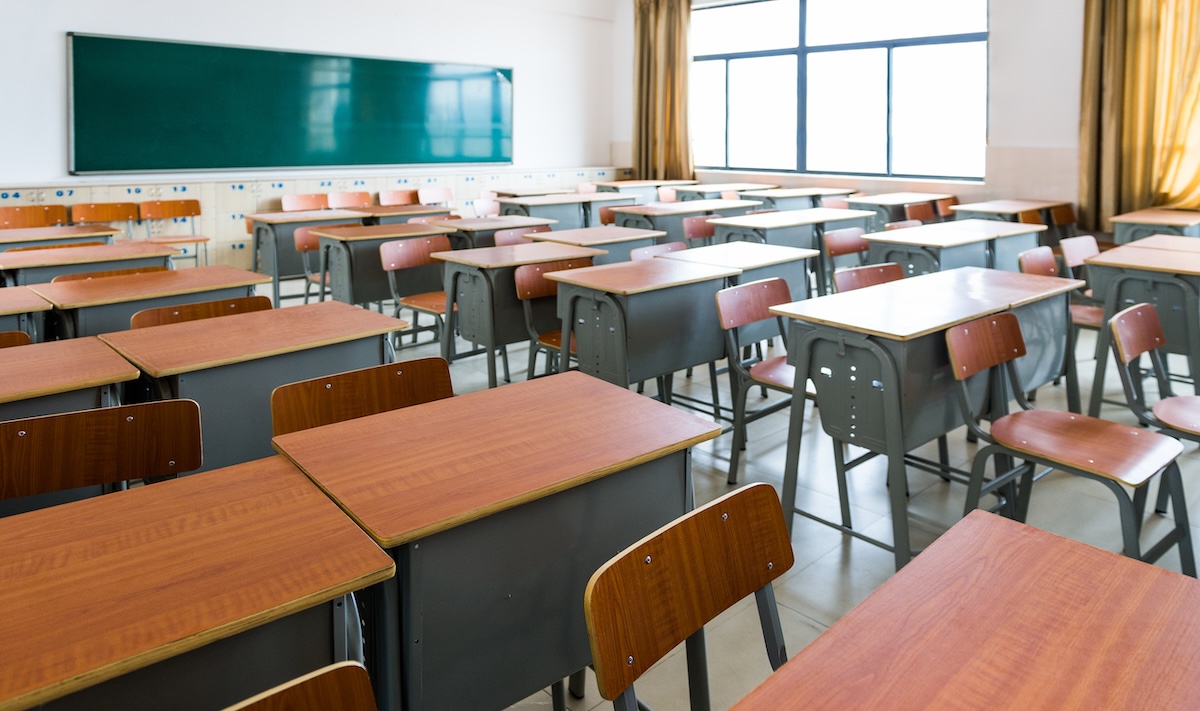
Florida lawmakers are moving forward with a bipartisan initiative aimed at enhancing safety in special education classrooms. The proposed legislation, known as House Bill 859 (HB 859), would allow the installation of cameras in these classrooms to monitor interactions between students and staff, particularly benefitting nonverbal students who may be vulnerable to mistreatment.
The bill, sponsored by Republican Representative Chase Tramont from Port Orange and Democratic Representative Kevin Chambliss from Homestead, successfully passed its first two committee reviews last week. It still requires approval from one more committee before it can be presented to the full House. In discussing the bill, Chambliss emphasized the importance of safety, stating, “This is a situation that is a safety concern and, in this House, safety is one of the things we think is a top priority.”
In parallel, the Senate has introduced a companion bill, Senate Bill 1170 (SB 1170), sponsored by Republican Senator Alexis Calatayud of Miami. That version of the legislation also advanced through its initial committee, receiving unanimous support at every stage thus far.
The proposed laws would empower parents to request camera installations in classrooms where a majority of students are receiving special education services. Once a request is approved, schools would have 30 days to set up the cameras. Each parent could submit one request per student each school year.
Advocates for the legislation, including Elizabeth Bonker, who serves on a federal autism research committee appointed by Robert F. Kennedy Jr., have voiced strong support. Bonker, who uses a text-to-speech program to communicate, addressed the Senate Education Pre-K-12 committee, stating, “SB 1170 is vitally important to protect voiceless children. Speaking children can come home and tell you if they have been locked in a closet, but a nonspeaking child cannot.”
Despite broad support among lawmakers, some critics have raised concerns about potential overreach into classroom environments. Nonetheless, Bonker argued for the necessity of the bill, highlighting that cameras could save school districts significant amounts in potential legal fees stemming from abuse allegations. She referenced a troubling incident reported by Fox 13 News in January, which involved a Hillsborough County school bus aide accused of hitting a 9-year-old student with autism, an act captured on camera.
The U.S. Department of Education Office for Civil Rights reported in 2022 that students with disabilities often face disproportionate disciplinary measures due to a lack of appropriate support and services. The findings indicated that these students can experience discrimination in disciplinary actions, which further underscores the need for monitoring in special education settings.
While the current proposals do not allocate specific funding for camera installations in schools, lawmakers have the option to include funding in the state budget if the bills pass. In 2021, a pilot program in Broward County provided cameras in classrooms at a cost of $774,194 for 320 cameras over three years.
As Florida continues to debate these important issues, the outcome of HB 859 and SB 1170 could significantly impact the safety and monitoring of special education environments across the state.