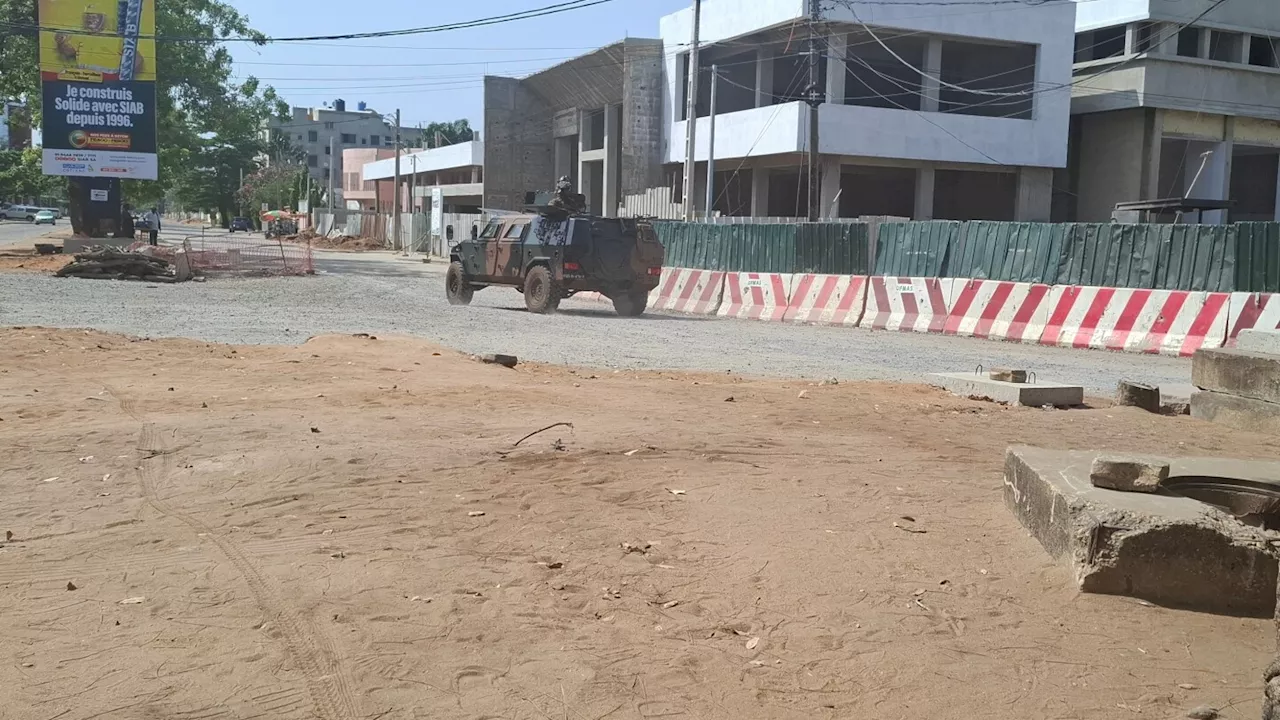
Benin’s President Patrice Talon condemned a foiled coup attempt on December 7, 2025, which was thwarted by the nation’s armed forces. This incident occurred in the administrative capital, Cotonou, where sporadic gunfire was reported, raising concerns about the stability of the West African nation. In a televised address, Talon expressed his condolences to the victims of the attempted coup and assured the public that efforts would be made to ensure the safety of those taken hostage by the mutineers.
A group identifying itself as the Military Committee for Refoundation announced the dissolution of the government on state television earlier that day. Interior Minister Alassane Seidou later confirmed that the military effectively countered the coup and secured control of the situation. Seidou characterized the incident as a mutiny aimed at destabilizing the state and its institutions.
Response from Regional Forces and Arrests
In response to the coup attempt, the Economic Community of West African States (ECOWAS) ordered the deployment of troops from member nations including Nigeria, Sierra Leone, Ivory Coast, and Ghana to assist in maintaining constitutional order. This collaborative effort underscores the region’s commitment to stabilizing governance amidst a backdrop of recent military takeovers in West Africa.
According to a statement from the Nigerian government, the loyal forces managed to regain control after several hours, flushing out the coup plotters from the national television station. Local reports indicated that at least 13 soldiers involved in the coup had been arrested, although the status of their leader, Lt. Col. Pascal Tigri, remained uncertain.
Despite the tensions, Cotonou has returned to relative calm following the incident, although soldiers continue to patrol certain areas of the city. The military committee had previously claimed that Tigri was appointed as its president during the attempted coup.
Historical Context and Upcoming Elections
Benin has a history marked by political instability, with multiple coups occurring since gaining independence from France in 1960. However, since 1991, the country has enjoyed a period of relative political stability, largely attributed to the governance of former President Mathieu Kérékou and subsequent leaders.
President Talon, who has been in power since 2016, is set to step down in April 2026, following the upcoming presidential elections. His party’s candidate, former Finance Minister Romuald Wadagni, is currently favored to win. Opposition candidate Renaud Agbodjo was disqualified by the electoral commission due to insufficient sponsorship.
The recent coup attempt highlights the fragility of democracy in the region and the ongoing challenges faced by governments in West Africa. As the nation moves closer to its presidential election, the political landscape remains uncertain, with the potential for further unrest as rival factions vie for power.