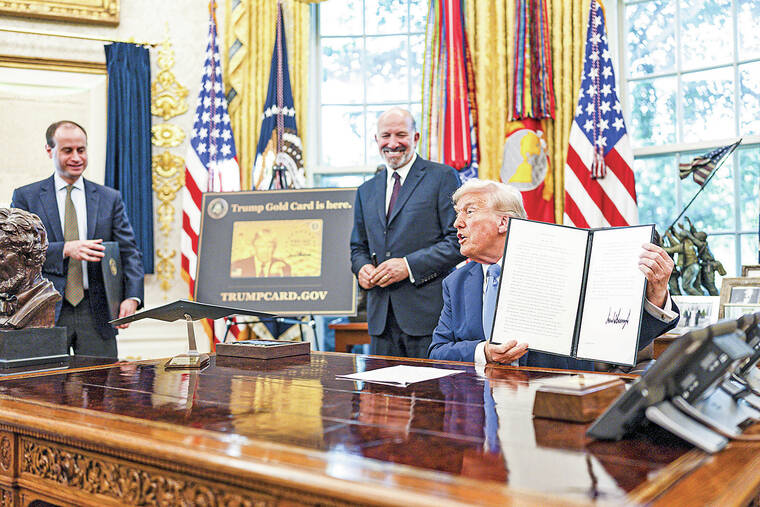
The attorneys general of 20 states, including California and New York, have initiated legal action against the Trump administration over its recently imposed fee of $100,000 on H-1B visas for skilled foreign workers. This fee was established through a proclamation signed by President Donald Trump in September 2025. The administration argues that certain employers have misused the H-1B program, leading to lower wages for American workers. The policy took effect on September 21, 2025, prompting the states to seek a federal court ruling to declare the fee unlawful and prevent its enforcement.
The H-1B visa program enables employers to hire foreign workers with specialized skills when qualified U.S. workers are unavailable, particularly in sectors such as science and technology. California and Massachusetts serve as lead plaintiffs in this lawsuit, which was filed in the U.S. District Court for the District of Massachusetts. Major California-based tech companies like Meta, Google, and Apple have ranked among the largest employers of H-1B visa holders this year, according to the U.S. Citizenship and Immigration Services. Additionally, educational institutions utilize this program to recruit educators and researchers from abroad.
Attorney General Rob Bonta of California expressed concerns about the implications of the fee, stating, “The $100,000 visa fee is devastating for all states, including California, and threatens the quality of education, health care and other core services available to our residents.”
Earlier, in October, a coalition of unions, higher-education professionals, and religious organizations filed a separate challenge against the fee. They argued that the increased cost would adversely affect hospitals, churches, schools, and small businesses that rely on skilled foreign workers.
The new fee has created a divide among Trump’s supporters, with those in the tech industry expressing opposition while immigration hard-liners support the measure. Proponents of the fee believe it will encourage companies to prioritize hiring American workers. Critics, particularly from tech startups, argue that this fee will hinder their ability to fill essential roles and maintain competitiveness. Health care organizations have also warned that this policy could worsen physician shortages in the United States.
Employers must navigate a complex application process to acquire H-1B visas on behalf of foreign workers. This process is highly competitive, given that Congress has capped the number of H-1B visas issued annually at 85,000. The addition of the $100,000 fee significantly escalates the costs for companies considering the program, further compounded by legal fees and administrative expenses.
The states joining California, Massachusetts, and New York in the lawsuit include Arizona, Colorado, Connecticut, Delaware, Hawaii, Illinois, Maryland, Michigan, Minnesota, Nevada, North Carolina, New Jersey, Oregon, Rhode Island, Vermont, Washington, and Wisconsin.
As of now, the Department of Homeland Security, along with the State, Labor, and Justice departments, has not responded to requests for comment regarding the lawsuit. The outcome of this legal challenge could have significant implications for the future of the H-1B visa program and the hiring practices of companies across the United States.