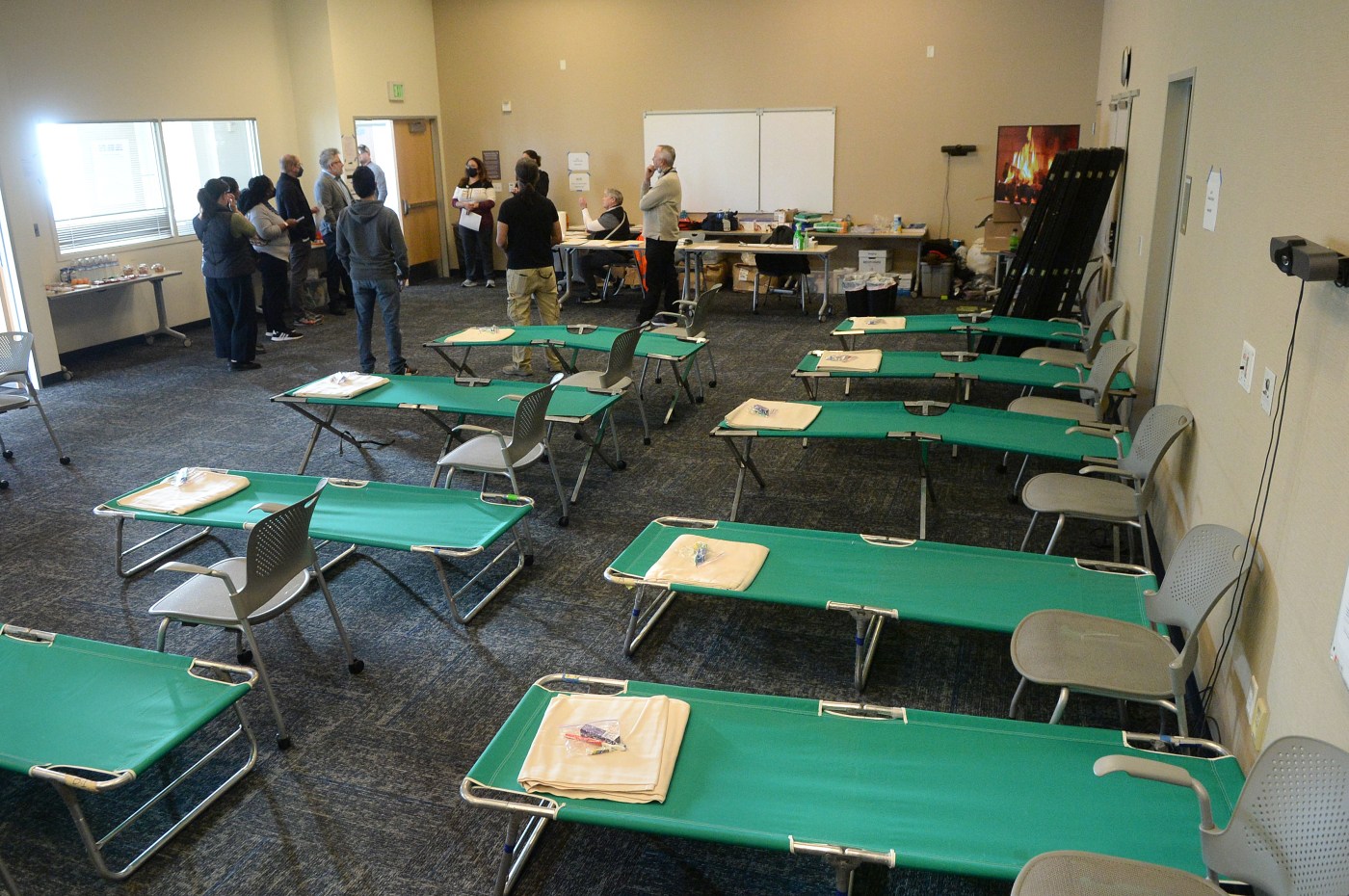
A coalition of nonprofits in Marin County is taking steps to address the shortcomings in the current emergency winter shelter program for homeless individuals. This initiative arises from dissatisfaction with the county’s limited efforts, prompting organizations to explore their own solutions.
Mark Shotwell, chief executive officer of the Ritter Center in San Rafael, emphasized that while the county has participated in planning meetings, it has yet to lead the effort or commit any resources. In response, nonprofit representatives are discussing the launch of an independent shelter to provide refuge during inclement weather. So far, this program is in its pilot phase, with a trial activation occurring at a church in Novato during adverse weather conditions.
“This shelter is proposed to open during rainy, cold, or extreme heat events that do not meet the county’s severe weather emergency shelter (SWES) criteria,” said Shotwell. He noted that all participating partners are volunteering their staff, facilities, and resources, as no funding has been secured yet. The Ritter Center, in collaboration with the Marin chapter of Voluntary Organizations Active in Disaster (VOAD), is currently applying for a small grant to support their efforts. This grant would help fund the position of Adriana Rabkin, who is organizing the initiative.
The newly proposed program aims to supplement, rather than replace, the existing emergency shelter services. The planning team consists of several organizations, including the St. Vincent de Paul Society of Marin, Community Action Marin, and the Bolinas Cavalry Presbyterian Church. Rabkin explained that the motivation behind this inclement weather shelter program is to assist unhoused communities by offering shelter and necessary resources directly in the areas where they reside.
“The goal is to remove transportation and geographic barriers by bringing services directly into these communities, which include Marin’s rural and coastal regions,” Rabkin stated in an email.
In a related move, Marin County supervisors recently approved a contract worth $161,534 with Episcopal Community Services to operate the county’s SWES during the fiscal year spanning July 1, 2025, to June 30, 2026. This contract is part of a broader strategy to ensure continuity in services as the Department of Health and Human Services prepares for contract renewals.
According to Gary Naja-Riese, a county homelessness official, the contract was placed on an “extension list” to mitigate service interruptions. “The extension allows the contract to continue under the previous terms approved by the Board of Supervisors while the department prepares a fiscal 2025-26 contract renewal,” Naja-Riese wrote.
Currently, homeless residents can find shelter overnight at the Marin County Health and Wellness Campus located at 3240 Kerner Blvd. in San Rafael, where they are admitted at 17:00 and must depart by 06:00 the following day. The program includes provisions for a hot dinner and a takeout breakfast for participants, along with transportation to the St. Vincent de Paul dining room each morning.
The county activates its emergency shelter under specific conditions. The program is triggered when temperatures are forecast to drop below an average nighttime low of 36 degrees for at least three consecutive days, or below 45 degrees over two days combined with one inch of nightly rain or hazardous conditions such as high winds. In 2024, the criteria for activation were revised, lowering the three-day temperature requirement from 38 degrees to 36 degrees.
Kieawnie Clar, director of the Marin Interfaith Homeless Chaplaincy, expressed concerns regarding the strict criteria. “We have such extreme weather. It is either very cold and rainy or extremely hot. In both cases, people need a place to go, but the criteria do not always reflect the reality of these conditions,” she noted.
Despite the county’s contract continuing at last year’s amount, the number of shelter openings has been limited. “The emergency shelter opened just twice in the 2024-25 fiscal year due to an unusually mild winter season,” a county report indicated. Nonetheless, San Rafael recorded over 15 inches of rain from October 1, 2024, to January 12, 2025, with temperatures dropping to 36 degrees on the last day of 2024.
During the 2023-24 fiscal year, the emergency shelter was operational for 23 nights and served 357 individuals, averaging approximately 16 people per night. This contrasts sharply with the REST (Rotating Emergency Shelter Team) program, which operated from 2008 to 2018 and frequently accommodated up to 40 men and 20 women per night.
Naja-Riese clarified that SWES and REST are distinct programs with differing criteria and operations that should not be directly compared. He added that under the current emergency shelter program, community organizations contracted with the county can provide bus passes to those in need.
A count conducted on January 23, 2024, revealed that Marin County had 1,090 individuals experiencing homelessness, with 788 entirely unsheltered. Among them, 24% were aged 55 or older, and 7% were 65 or older. Tragically, county health officials reported that 47 unhoused individuals died in the county last year. Data shows that homeless individuals in the United States tend to live nearly 30 years less than the average American, reflecting a dire situation that requires immediate attention and action.