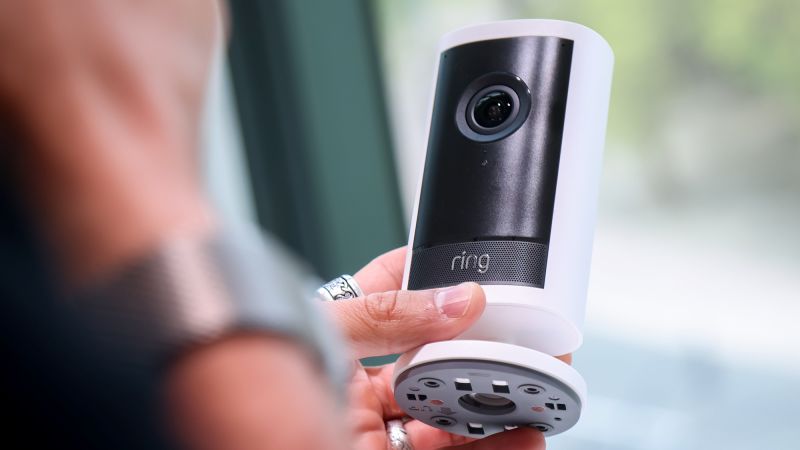
Ring, the video doorbell subsidiary of Amazon, has officially terminated its partnership with Flock Safety, a technology firm specializing in license plate reading cameras. This decision, announced on March 7, 2024, comes after significant public backlash and privacy concerns surrounding the collaboration, particularly following Ring’s Super Bowl advertisement promoting a feature aimed at helping users locate lost pets.
The partnership intended to integrate Flock’s technology into Ring’s Community Requests feature, which allows local law enforcement to request video footage from users for investigations. However, Ring stated that the integration would require more time and resources than initially expected, leading to the mutual decision to cancel the collaboration.
Josh Thomas, chief communications officer at Flock, acknowledged the decision during an interview with CNN, describing it as a joint resolution. Both companies have faced scrutiny over their affiliations with law enforcement. A report last year from independent publication 404 Media revealed that Flock’s technology had been utilized in immigration investigations, raising alarms among privacy advocates. While Flock disputes these claims, many users expressed alarm on social media, particularly after the Super Bowl ad aired.
The concerns were heightened by a viral post on the platform X, which inaccurately claimed that Immigration and Customs Enforcement (ICE) could access Ring cameras. The post amassed nearly 2 million views and prompted some users, including long-time customer Thomas Allison, to cancel their subscriptions. Allison remarked, “That flyer made it sound like Ring signed an agreement that ICE could access your cameras. That really disturbs me.”
Both Ring and Flock have consistently stated that they do not have a direct relationship with ICE. Ring spokesperson Emma Daniels clarified that only local law enforcement can submit requests for video through the Neighbors app, and federal agencies like ICE are prohibited from making Community Requests. Users are not obligated to share their footage and can choose to ignore requests or adjust their settings to turn off Community Requests altogether.
Since the integration with Flock was never implemented, no videos were shared with the company. Once a user submits footage, it is securely transferred to Ring’s third-party partner, Axon Evidence, which then delivers the information to the requesting public safety agency. The agency is responsible for managing access to the video, while users are informed of the terms before sharing their clips.
Flock maintains that it does not have a relationship with ICE and emphasizes that federal agencies cannot access its cameras or systems. “Flock’s role is not to encourage or discourage collaboration with any federal entity,” the company stated. Nonetheless, the company acknowledged a past incident where local police agencies reportedly used Flock’s system for immigration-related searches.
The Danville, Illinois, police department confirmed that officers had documented searches related to immigration, although they denied acting on behalf of ICE. Following these revelations, Flock conducted an internal audit and revoked access to its data from 47 agencies found to be conducting searches for impermissible reasons under Illinois law.
When asked about privacy concerns associated with Flock’s technology, CEO Garrett Langley previously stated that community trust in law enforcement is crucial. He argued that traditional surveillance methods are less intrusive compared to the data collected by personal devices like smartphones. “If you don’t trust law enforcement to do their job, that’s actually what you’re concerned about,” Langley remarked.
As Ring navigates the complexities of privacy and law enforcement partnerships, the cancellation of its collaboration with Flock is a significant step in addressing customer concerns and reinforcing its commitment to user privacy.