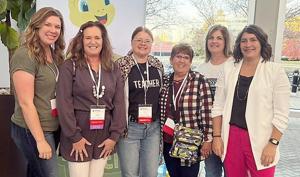
During the first week of November, child care educators from the Columbus area presented innovative strategies at the Midwest Pyramid Model Summit held at Northern Illinois University. Their aim was to showcase the application of the Pyramid Model in various educational settings, emphasizing its effectiveness in enhancing children’s social-emotional development.
The team, affiliated with the initiative Rooted in Relationships, consists of four main presenters who discussed their experiences implementing evidence-based practices in child care settings across Platte and Colfax Counties. This summit marked the first opportunity for their branch to participate in this regional event, highlighting the progress made in early childhood education in Nebraska.
Empowering Child Care Providers
Rooted in Relationships is dedicated to improving child care practices through a structured three-year program. Each year, the initiative trains 15 providers, focusing on professional development and collaboration among participants. These cohorts meet bi-monthly to discuss various topics, including the Pyramid Model, which provides a framework for promoting healthy social-emotional development in children from birth to age eight.
At the summit, each presenter contributed a workshop aimed at sharing their findings with peers. Cheryl Drozd, coordinator of Rooted in Relationships for Platte and Colfax Counties, led a workshop titled “Teaching Feelings and Behavior Through Daily Encounters: A Day with Mrs. Drozd.” This session illustrated how daily interactions can be leveraged to teach children about emotions and appropriate behaviors.
“From the moment students enter the classroom, they learn to treat one another with respect and understand their feelings,” Drozd explained. Participants were particularly engaged, with many expressing enthusiasm about implementing the strategies discussed. “It was uplifting to see everyone eager to return to their own classrooms with new ideas on Monday,” she added.
Expanding the Pyramid Model’s Reach
Another significant contributor was Shelby Czarnick, a licensed therapist with Essential Life Tools, who presented two workshops focused on adapting the Pyramid Model for diverse needs, including children with learning differences. Her workshops, “The Pyramid Model, Reinvented: For Therapy Rooms, Living Rooms and Programs” and “The Pyramid Model, Reimagined for ADHD, Autism and Beyond,” emphasized that the model should not be seen as one-size-fits-all.
Czarnick underscored the importance of recognizing individual strengths behind each child’s struggles. “Building relationships is crucial for effective implementation of the Pyramid Model,” she stated. Her practical strategies aimed to create an inclusive environment that promotes emotional safety and supports sensory needs.
In a collaborative workshop titled “Parents, Let’s Not Just Involve Them, Let’s Engage Them,” Lynn Vollbracht, director at Immanuel Lutheran Daycare and Preschool, stressed the significance of involving parents in the educational process. She outlined three core principles for fostering strong relationships with families: respect and responsiveness, effective communication, and trust.
“Parents are the first teachers for their children,” Vollbracht remarked. She provided actionable strategies for educators to enhance parent engagement, including offering bilingual communication and creating take-home educational projects. Her insights highlighted the impact of family involvement on children’s social, emotional, and cognitive outcomes.
Lastly, Shannon Stutzman, a child care provider, led a workshop emphasizing the implementation of the Pyramid Model in family child care homes. She discussed the necessity of establishing clear rules and expectations, as well as the importance of positive reinforcement. “Highlighting what children do well builds self-esteem and encourages pro-social behavior,” Stutzman explained.
The successful participation at the Midwest Pyramid Model Summit has opened doors for the Rooted in Relationships team, leading to invitations to present at various other conferences focusing on different facets of child care. Drozd expressed gratitude for the opportunity to share their work, stating, “What matters most is teaching and helping others, and if our experiences can make a difference in someone else’s practice, then we have succeeded.”
As communities continue to embrace the Pyramid Model, the Rooted in Relationships initiative aims to foster meaningful growth in child care practices, ensuring that children receive the best support for their social-emotional development.