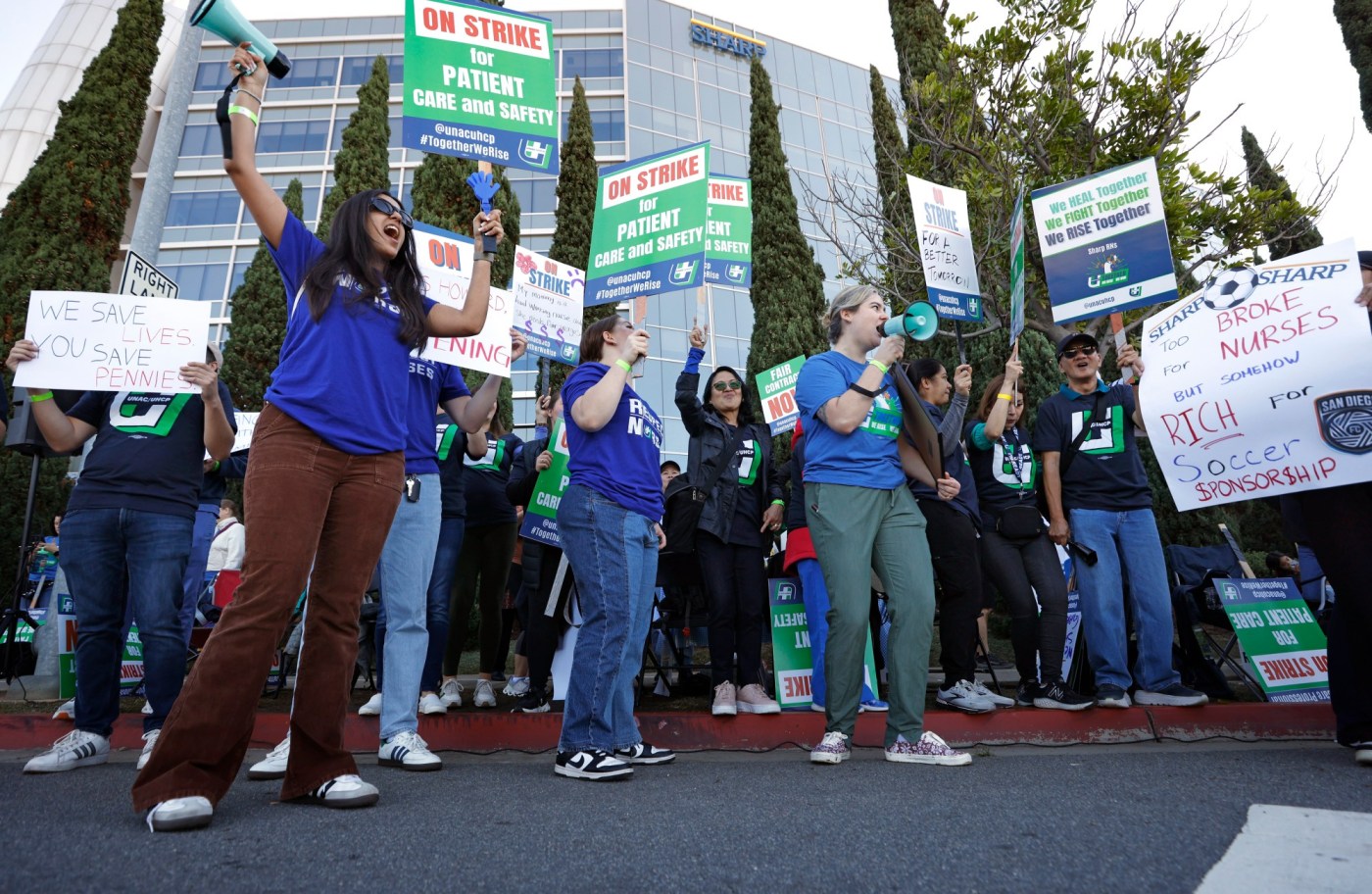
Registered nurses at Sharp HealthCare initiated a three-day strike on November 26, 2025, beginning at 07:00 local time in San Diego, California. The striking nurses, represented by the United Nurses Associations of California, are advocating for improved patient care and safety, as well as fair wages. Approximately 5,800 nurses are expected to participate, with the strike set to conclude at 07:00 on November 29.
While picket signs prominently displayed slogans focusing on patient care, many participants also highlighted demands for fair wages. Sharp’s Chief Nursing Executive, Susan Stone, addressed the media, asserting that the strike’s messaging inaccurately reflects the situation. She emphasized that Sharp HealthCare maintains safe nurse-to-patient ratios and has a strong reputation for clinical excellence.
In her statement, Stone remarked, “We received a 10-day strike notice citing unsafe staffing and patient safety concerns. I want to be very clear: Sharp maintains safe, legally mandated nurse-to-patient ratios across all of our hospitals and, oftentimes, exceeds those mandated ratios.” She also highlighted that Sharp’s proposal includes substantial pay increases totaling over 16% over four years, with nearly 10% of that increase occurring in the first two years.
Despite these claims, many nurses contest the accuracy of the proposed wage increases. Anna Lawler, chair of the Sharp bargaining unit and a registered nurse with 24 years of experience, expressed skepticism. “I would love to see their math, because I have no idea where that would come from,” she stated. Lawler emphasized that the average nurse’s salary does not reflect the figures presented by management, arguing that the union’s focus on patient care is justified.
She further explained, “Everything circles back to patient care if our wages aren’t comparable to all other hospitals in the San Diego metro area. If we have a retention crisis like we had in 2022 and we lose tons of nurses, that does create unsafe staffing, and that does create patient safety issues.”
Union representatives, including Pamela Chandran, the unit’s chief negotiator, have voiced concerns about Sharp’s wage proposal. They have analyzed compensation packages at other major medical facilities and found Sharp’s offer lacking. Chandran pointed out, “We are losing nurses to those two places because they pay double-digit percentages higher at the mid- and senior career step.”
The recent collective bargaining agreement reached by nurses at the University of California, which offers an 18.5% wage increase over four years, has further fueled the dissatisfaction among Sharp nurses. Chandran criticized Sharp’s proposal for potentially creating a two-tier wage system, which she believes would harm the morale and unity among nursing staff.
Sharp HealthCare has also faced criticism regarding its sick leave policies. Nurses have expressed frustration with the previous accrual schedule, which required them to work for ten weeks to earn enough sick time for a single shift. In response, Stone stated that the latest proposal would provide each nurse with 70 hours of paid sick time at the start of each year.
As part of their contingency plans during the strike, Sharp HealthCare has brought in 950 temporary workers to ensure that medical facilities continue to operate effectively. Although picketing is planned for Thanksgiving Day, union leaders have encouraged members to prioritize family time in the afternoon and evening, with a return to picketing on Friday morning.
This strike marks the first significant labor action by Sharp nurses since they unionized in 1996. As the strike progresses, both nurses and management face the challenge of reaching an agreement that addresses the pressing concerns surrounding wages, staffing, and overall patient care in the healthcare system.