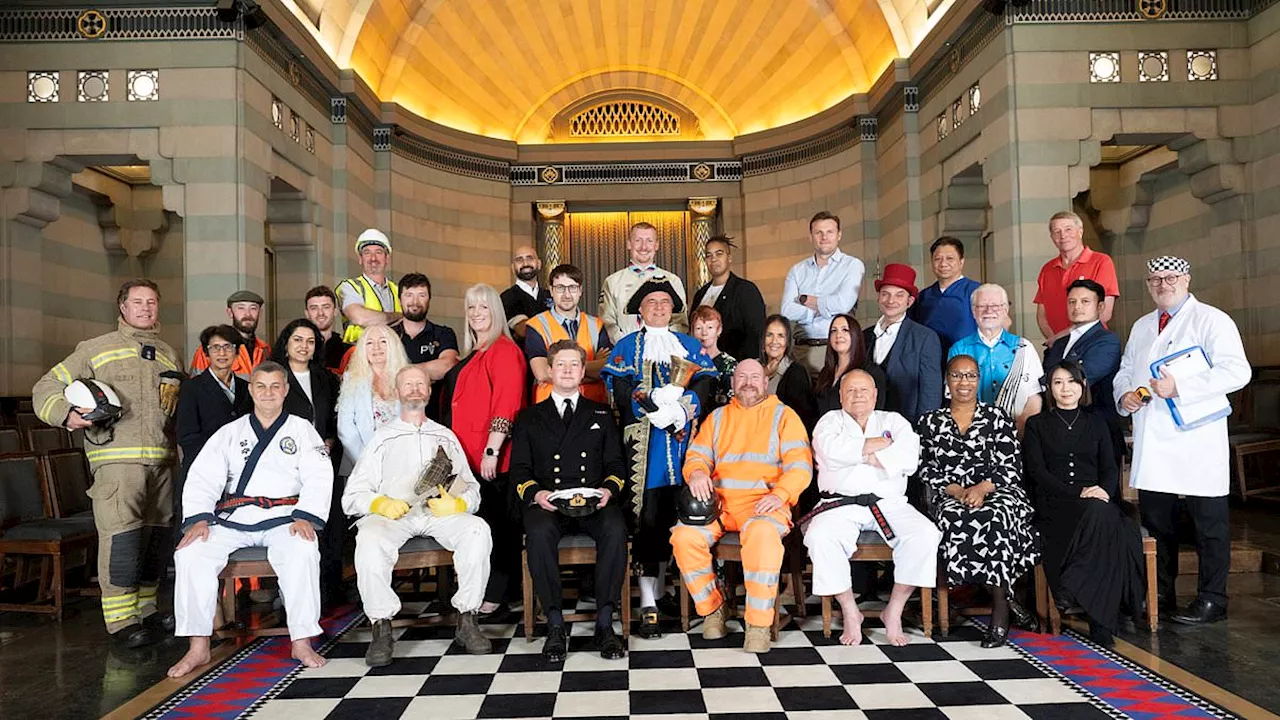
The veiled world of Freemasonry is opening up for the first time in centuries, as 30 members share powerful stories of brotherhood, mental health support, and charity shaping their lives today.
Despite centuries of myths and conspiracy theories, Freemasons from across the UK are breaking their silence on the transformative impact of their centuries-old guild. These men and women represent diverse backgrounds—from firefighters and train drivers to actors and bankers—all united by values of moral improvement, fellowship, and community care.
At the heart of the revelations is a collective testimony: membership in this once secretive brotherhood has quelled loneliness, combated depression, and in some cases, even aided in recovery from dementia.
From Crisis to Community
Matthew Wintle, a 52-year-old first responder from Chichester, described Freemasonry as his sanctuary—a place offering peace amid the chaos of his emergency work. “It’s like coming to church,” he said. “We support each other, especially with mental health first aid.”
Ben Evans, a 33-year-old train driver from Penzance, highlighted Freemasonry’s inclusivity. As one of the only openly gay masons in his lodge, he recounted how the group helped him endure homophobia outside their circle, and provided financial backing during his frontline work in Ukraine.
Breaking Stigma, Building Confidence
For others, like Jayson Read, a horse feed manufacturer from Essex, Freemasonry was a life reset. “I was on a road to ruin and chaos,” Read stated. “Now I have friends worldwide and purpose.”
Mark Freeman, a mechanical engineer, reflected on joining during a turbulent personal period. “I heard jokes about Freemasons, but it gave me a sense of brotherhood I didn’t have before,” he said.
For women masons, historic invisibility is fading fast. Mary Spillane, a 60-year-old charity worker, said the organization embodies what a church should be: community, spirituality, and charitable action. Likewise, Mia Cameron-Dungey, a former Navy team leader, emphasized rising female membership and increased confidence fostered by the lodge.
Charity and Unseen Acts of Kindness
Freemasonry’s commitment goes beyond fellowship. Many members detailed extensive charity work, youth engagement, and personal support systems within their lodges.
Josh Lee-Taylor, a scout leader from Nottingham, noted connections between over 40 lodges and scouting organizations, providing fundraising and hands-on help for youth groups nationwide.
Nando Caicedo, a charity director, shared how the fraternity rallied during a personal family health crisis—standing “like family” when it mattered most.
Several members stressed how the network offers a rare emotional outlet for men, where vulnerabilities are noticed and help offered without judgment, setting a model of “positive masculinity”.
Dispelling Myths and Secrecy
Despite longstanding conspiracy theories linking Freemasons to shadowy plots and power games, members insist the secrecy surrounding rituals is symbolic—designed to foster trust and confidentiality among peers rather than hiding sinister acts.
Oliver-Rupert Pelendrides, a Royal Navy warfare officer, underscored this clarity: “We’re not hiding dark secrets, the secrecy is about reliability.”
The Grand Temple in London remains the spiritual hub, where members ranging from students to retirees gather, united by timeless traditions but engaged in real, modern issues—from supporting mental health to advancing charity at home and abroad.
Why It Matters for Colorado and Beyond
As questions about community, mental health, and social support remain urgent across the US and Colorado, the evolving story of Freemasonry holds significance. It challenges stereotypes, highlights enduring charitable work, and demonstrates a model of belonging that could inspire similar grassroots support networks locally.
In an era hungry for connection and positive role models, the Freemasons’ public step forward reveals an unexpected ally in community resilience and personal growth.
The Colorado Daily will continue to monitor this unfolding narrative as more members share their experiences and the fraternity enjoys a renewed public conversation on its role in modern society.