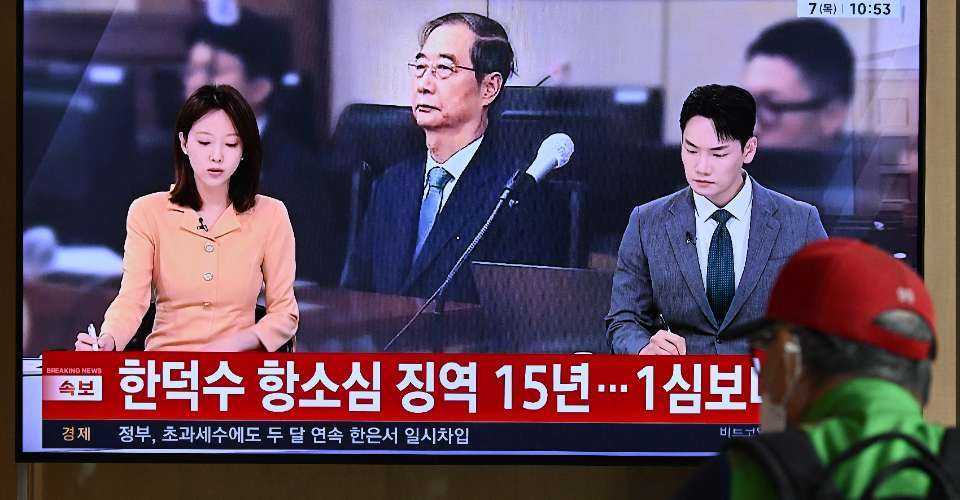
A South Korean appeals court sharply reduced former Prime Minister Han Duck-soo‘s prison sentence from 23 to 15 years on May 7 for his involvement in the controversial martial law declaration under ex-President Yoon Suk Yeol. This dramatic ruling intensifies ongoing political turmoil over the brief six-hour suspension of civilian government in December 2024 that nearly plunged South Korea into chaos.
The Seoul appeals court upheld most charges against Han but cut his penalty by eight years, citing his long-standing public service career spanning over five decades. “Evidence does not show that the defendant conspired or led the insurrection systematically,” the presiding judge explained, though he condemned Han for abandoning his official duties by siding with the insurrection attempt.
“He had experienced unconstitutional and unlawful martial law measures and insurrectionary situations himself, and was therefore well aware of the extensive damage and chaos such events could cause,” the judge added.
Han, aged 76, who has been jailed since January, refused to oppose Yoon’s martial law despite his firsthand experience with South Korea’s authoritarian past. After the National Assembly swiftly voted to revoke martial law, Han convened a cabinet meeting on Yoon’s behalf to formally rescind the decree, the court confirmed.
This appeal verdict closes one of several high-profile trials linked to Yoon’s regime. Last week, the court also increased Yoon’s prison sentence for obstructing justice from five to seven years, while the former president remains incarcerated for insurrection-related charges, including a life sentence. Similarly, Yoon’s wife, former first lady Kim Keon Hee, had her corruption sentence enhanced to four years for bribery and stock manipulation offenses.
The martial law controversy has reverberated far beyond Seoul, raising alarm worldwide about the fragility of democratic institutions amid political crises. For U.S. and Colorado readers tracking global stability, the South Korean court’s ruling underscores how past and present authoritarian tactics remain potent threats to governance and civil liberties in democracies worldwide.
As investigations and appeals continue, all eyes remain on the South Korean justice system’s handling of those implicated in the rapid breakdown of civilian rule last December. The 15-year sentence sends a strong message about accountability but also sparks debate over military authority and political loyalty during emergencies.
For now, Han Duck-soo must serve the reduced term while the country reckons with the long-term impact of this unprecedented martial law episode—and the political fallout that keeps unfolding in its courts.