Gulf of Panama’s Seasonal Upwelling Fails for First Time in Four Decades
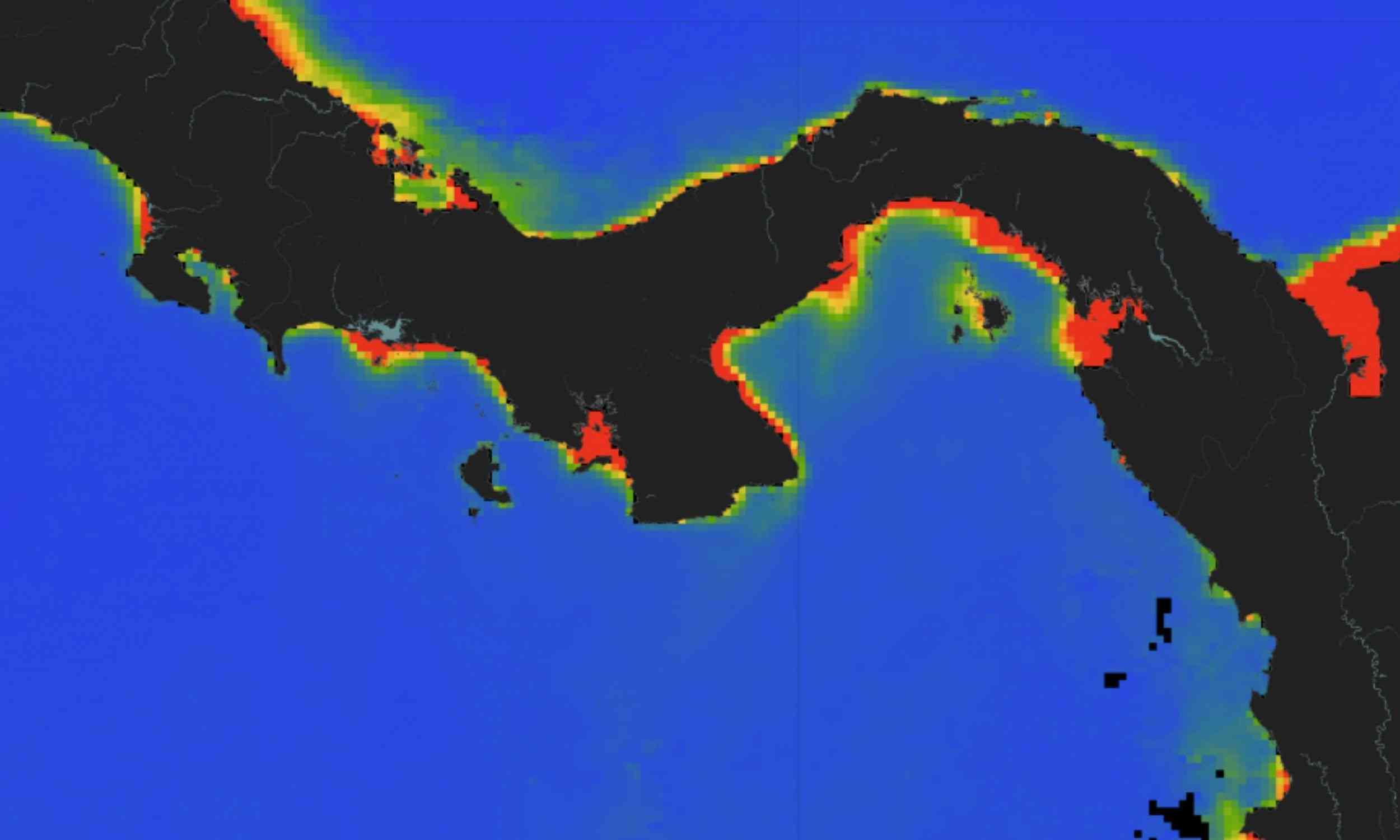
New data confirm a startling ocean shift as the Gulf of Panama’s seasonal upwelling failed to appear in 2025 for the first time in at least 40 years, breaking a critical natural cycle that sustains marine ecosystems.
This disruption removed the crucial seasonal pulse of cold, nutrient-rich water that normally cools coastal waters and fuels plankton blooms, a foundation of the Pacific food chain along Panama’s shore. Scientists warn this failure could dramatically alter the region’s marine productivity and the livelihoods that depend on it.
Long-Standing Ocean Pattern Breaks, Ocean Stays Warm Through Dry Season
Aaron O’Dea, leading the research team, documented that the expected annual drop in ocean temperature failed to arrive by the usual January 20 benchmark, instead appearing only on March 4, more than six weeks late and lasting just 12 days rather than the typical two months. The water also never reached the cold temperatures recorded over the past four decades.
Scientists attribute this anomaly primarily to a sharp 74% drop in the frequency of the northerly winds that generally push surface water offshore to trigger upwelling. While individual wind bursts remained strong, the long lulls between them deprived the ocean surface of sustained force required to bring colder, deeper water upward.
Temperature profiles showed layered warmth replacing the usual cold surge, confirming the system’s rare breakdown. The S/TRI (Smithsonian Tropical Research Institute) scientists relied on satellite data reaching back to 1985 and direct temperature logs since 1995 to identify this unprecedented shift.
Immediate Threats to Coral Reefs and Coastal Fishing Communities
Panama’s coral reefs, which depend on the upwelling-driven cooling as a seasonal heat buffer, were left exposed to prolonged thermal stress. Previous studies showed these cold water pulses help corals survive intense warming events like El Niño. Without this relief, reefs face elevated risks of bleaching and damage from sustained heat.
Marine food webs also took a hit as the missing surge of cold water halted expected phytoplankton blooms — the ocean’s primary producers. That disruption ripples up the chain, threatening fish stocks that coastal communities rely on both for food and income.
O’Dea emphasized the human impact, noting that families who sell or consume fish will feel the damage immediately, even before scientists can measure longer-term trends.
Climate Signals Point to Complex Regional Dynamics, Not Just Global Trends
The anomaly occurred during a weak La Niña, a climate pattern that historically did not prevent upwelling in this region. The failure signals that local weather and ocean dynamics are shifting potentially due to factors beyond typical Pacific climate cycles.
“Panama’s 2025 upwelling failure underscores that regional-scale dynamics, rather than blanket global predictions, are essential for understanding these tropical upwelling systems,” O’Dea wrote.
This insight stresses the urgency for localized, high-resolution monitoring rather than relying solely on broad climate models for predicting ocean conditions. Many tropical upwelling zones remain under-monitored globally, meaning failures like Panama’s upwelling collapse could be going unnoticed in other critical regions.
Looking Ahead: Close Monitoring, New Data Needed to Track Future Upwellings
The STRI team is tracking the 2026 dry season closely on a public monitoring dashboard, with early reports showing signs of strong cooling returning. While this offers hope that 2025 was a one-time event, scientists caution that more frequent failures could indicate a longer-term shift.
For local communities and ecosystems, knowing whether this lull in upwelling signals a permanent change will be vital for adaptation strategies — from fishing management to coral conservation efforts.
This urgent development highlights how quickly sensitive ocean systems can falter, with immediate consequences for marine life, coastal economies, and regional climate feedbacks.
The full study detailing this discovery is published in the Proceedings of the National Academy of Sciences.