Largest 3D Universe Map Reveals 47 Million Galaxies as Climate Alarm Sounds Over AMOC
New scientific revelations are unfolding right now with the unveiling of the largest-ever 3D map of the universe, capturing a staggering 47 million galaxies from our Milky Way to the distant epoch known as “cosmic noon.” This monumental achievement delivers unprecedented insights into our universe’s vast structure and the cosmic distribution of matter — a breakthrough transforming how we understand space and time.
Simultaneously, a critical development unfolds closer to home: researchers are reporting alarming signs that the Atlantic Meridional Overturning Circulation (AMOC), a pivotal global ocean current regulating climate, is nearing a potential collapse. Such a failure would drastically reshape weather patterns across the United States and globally, threatening ecosystems, agriculture, and coastal communities. Scientists urge urgent attention to this developing crisis as data from ocean currents and climate models intensify concerns.
Artemis II Crew Shares Earth’s Vanishing Act, Stunning Moon Images Inspire Awe
The Artemis II mission crew recently revealed a profoundly moving moment: witnessing Earth disappear from view, a haunting reminder of our planet’s fragility and uniqueness in the vast cosmos. Their journey accompanies fresh, breathtaking images from the moon’s far side, including rare views of an “Earthset” eclipse from space. These awe-inspiring perspectives deepen humanity’s connection to our celestial neighbor as NASA’s Artemis program pushes the boundaries of exploration.
Meanwhile, skywatchers across several U.S. states anticipate a spectacular Northern Lights display sparked by a massive hole opening in the sun’s atmosphere. This solar phenomenon promises vibrant auroras lighting up Colorado skies and beyond, tantalizing both amateur and seasoned observers alike.
Hubble Telescope Delivers Stunning Cosmic Portraits After Decades of Discovery
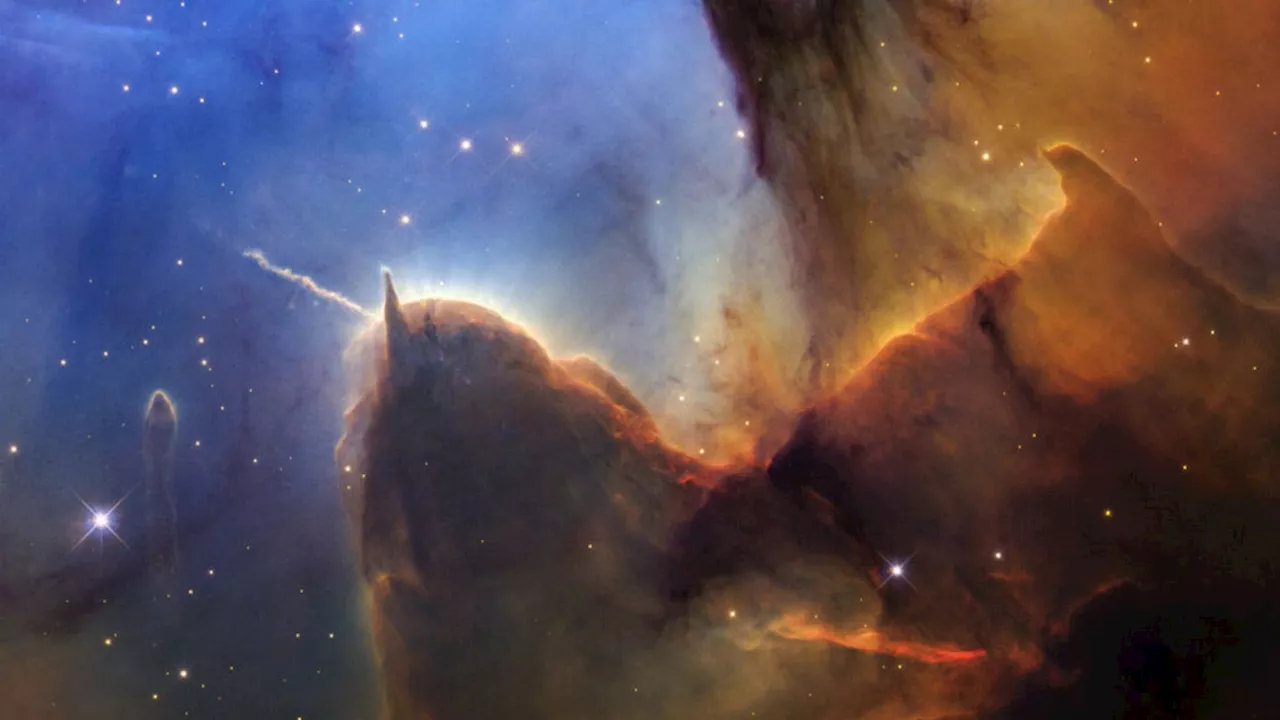
The Hubble Space Telescope strengthens its legacy with dazzling new images of the Trifid Nebula, revisiting a star-forming region 5,000 light-years away 30 years after its initial observation. Nicknamed the “Cosmic Sea Lemon,” this vibrant nebula reveals glowing ridges, jets of energized material from infant stars, and dynamic interactions of ultraviolet light, stellar winds, and dust. Bright orange stars illuminate space cleared for future generations, while shrouded, nascent stars await their turn to emerge over millions of years.
Equally significant, comparative images of the Crab Nebula taken 25 years apart expose dramatic changes in this supernova remnant, allowing astrophysicists to study the ongoing cosmic evolution at an unprecedented scale.
Advances Beyond Space: Artificial Neurons, Ancient Texts, and Disease Research
Scientific breakthroughs surge not only in outer space but also within cutting-edge biomedical and archaeological fields.
Researchers have engineered artificial neurons, marking a pivotal step forward for bio-integrated tech and promising treatments for neurological disorders, including Parkinson’s and Alzheimer’s disease. In archaeology, an extraordinary find inside an Egyptian mummy revealed a copy of Homer’s “Iliad,” shedding light on ancient cross-cultural literary exchanges previously unknown. Meanwhile, urgent efforts continue to combat the deadly threat of brain-eating amoebas, rare infections that remain difficult to treat but demand rapid medical advancement.
Why These Discoveries Matter to Colorado and the U.S. Today
For Coloradans and Americans nationwide, these developments carry immediate relevance. The looming AMOC collapse threatens climate extremes impacting agriculture from the Midwest to the Rockies, while solar-induced Northern Lights offer rare, breathtaking natural spectacles visible in Colorado’s night skies.
The Artemis II mission advances human spaceflight, inspiring STEM efforts and potential commercial opportunities. Simultaneously, Hubble’s vibrant images deepen appreciation for cosmic origins, enriching science education across U.S. institutions.
As scientists race to decode the universe and preserve Earth’s climate stability, The Colorado Daily remains committed to delivering rapid updates on these critical advances.
What’s Next?
Expect new data on the AMOC’s status in the coming months as oceanographic monitoring intensifies. NASA will share further Artemis mission insights along with moon and space environment images. Hubble’s ongoing surveys promise more revelations about stellar life cycles and galactic history. Meanwhile, research into artificial neurons and rare infections will push forward with implications for Colorado’s leading medical research centers.
Stay tuned for immediate updates and subscribe to resources focused on science, technology, and skywatching here in Colorado and across the nation.