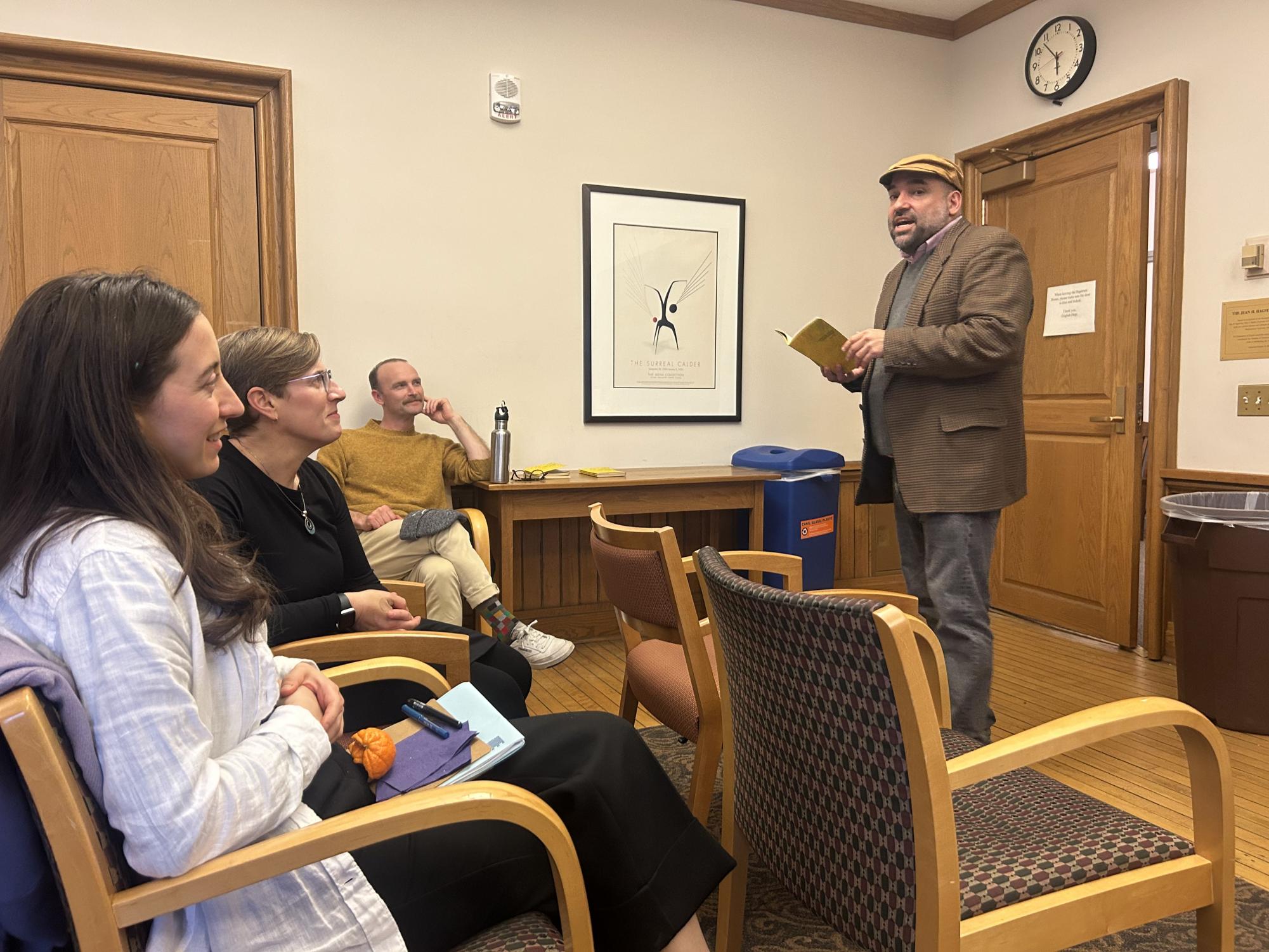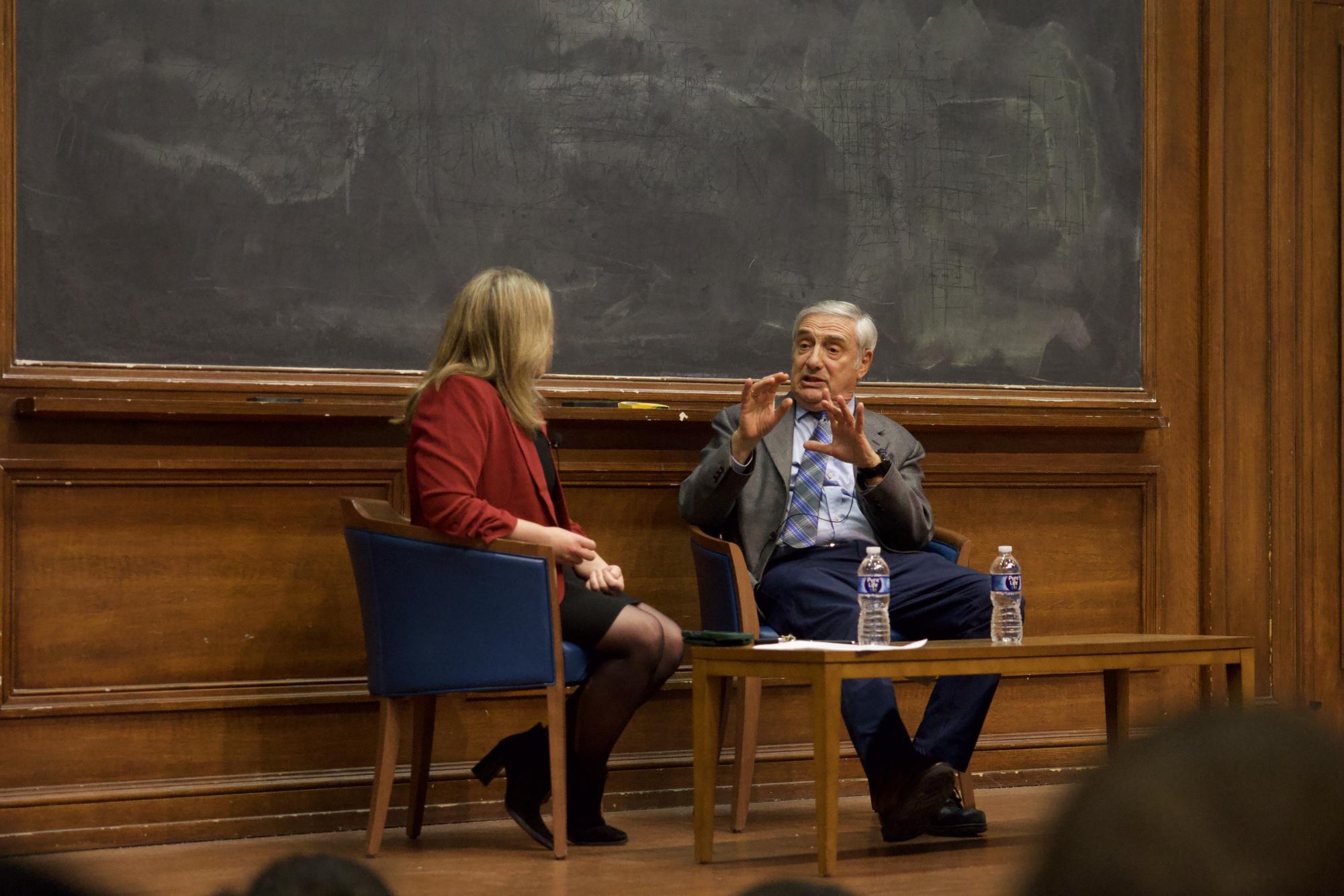
On a recent evening, Nobel laureate and professor of economics and history, Joel Mokyr, engaged with students during a Q&A session focused on technology, economic growth, and human advancement. The event, moderated by Amy Stanley, a professor of history, took place at a university known for its strong academic programs. Mokyr, who has received acclaim for his work on the interplay between innovation and economic development, praised the caliber of students in attendance, noting, “This is some of the finest bodies of undergraduates to find at any university in the United States.”
The session was organized by the university’s history and economics departments alongside the Roberta Buffett Institute for Global Affairs. Stanley remarked on the unique opportunity for students to interact with Mokyr, describing it as a “wonderful model for learning.” She highlighted Mokyr’s openness to dialogue, stating, “He will make very bold claims, and if you disagree with him, he is fine with that.”
Much of the discussion revolved around the theme of progress. Mokyr responded to questions about evolving technology and the pace of human advancement, citing the Industrial Revolution as a key turning point in human history. He asserted, “The entire biological structure of human life is changing before our eyes.” Mokyr elaborated on the improvements in living standards, claiming that humanity is now capable of feeding, dressing, and heating itself better than ever before. He expressed optimism about the future, stating, “The best is still to come,” despite acknowledging that some believe we have exhausted our capacity for innovation.
Mokyr encouraged students to view technological changes as necessary adaptations. He compared historical innovations, such as the printing press, to contemporary advancements like artificial intelligence. He explained that while such innovations may lead to displacement, they are ultimately essential for societal progress. “There will be some victims, and we have to have safety nets,” he said, emphasizing the importance of supporting those affected by change. “But we can’t stop it, and we shouldn’t stop it, because this is what progress looks like.”
Students also inquired about navigating career paths in an era of rapid change. Mokyr advised against overspecialization, urging students to develop agility and flexibility in their skill sets. He cautioned that focusing solely on one area could render individuals vulnerable to being replaced by technology, citing the example of radiologists potentially being supplanted by AI systems. Mokyr, now 79, expressed a preference for being born in 2026, citing the myriad opportunities and the potential for a fulfilling life that the future holds.
Sophomore Christina Cha shared her insights from the discussion, stating that Mokyr’s guidance helped her appreciate the interconnectedness of global events. “I just realized how the past connects to the present and also to the future,” she said. Cha emphasized the importance of stepping back to view the world from a broader perspective, recognizing the potential for involvement in significant issues.
Ultimately, Mokyr championed a “free and open market for ideas,” encouraging students to leverage this environment. “We are all living in a world in which ideas pop up,” he remarked. “Take advantage of it. If you have an idea, put it out in the marketplace.”
The enlightening session left attendees with a renewed sense of purpose and curiosity about their roles in shaping the future.