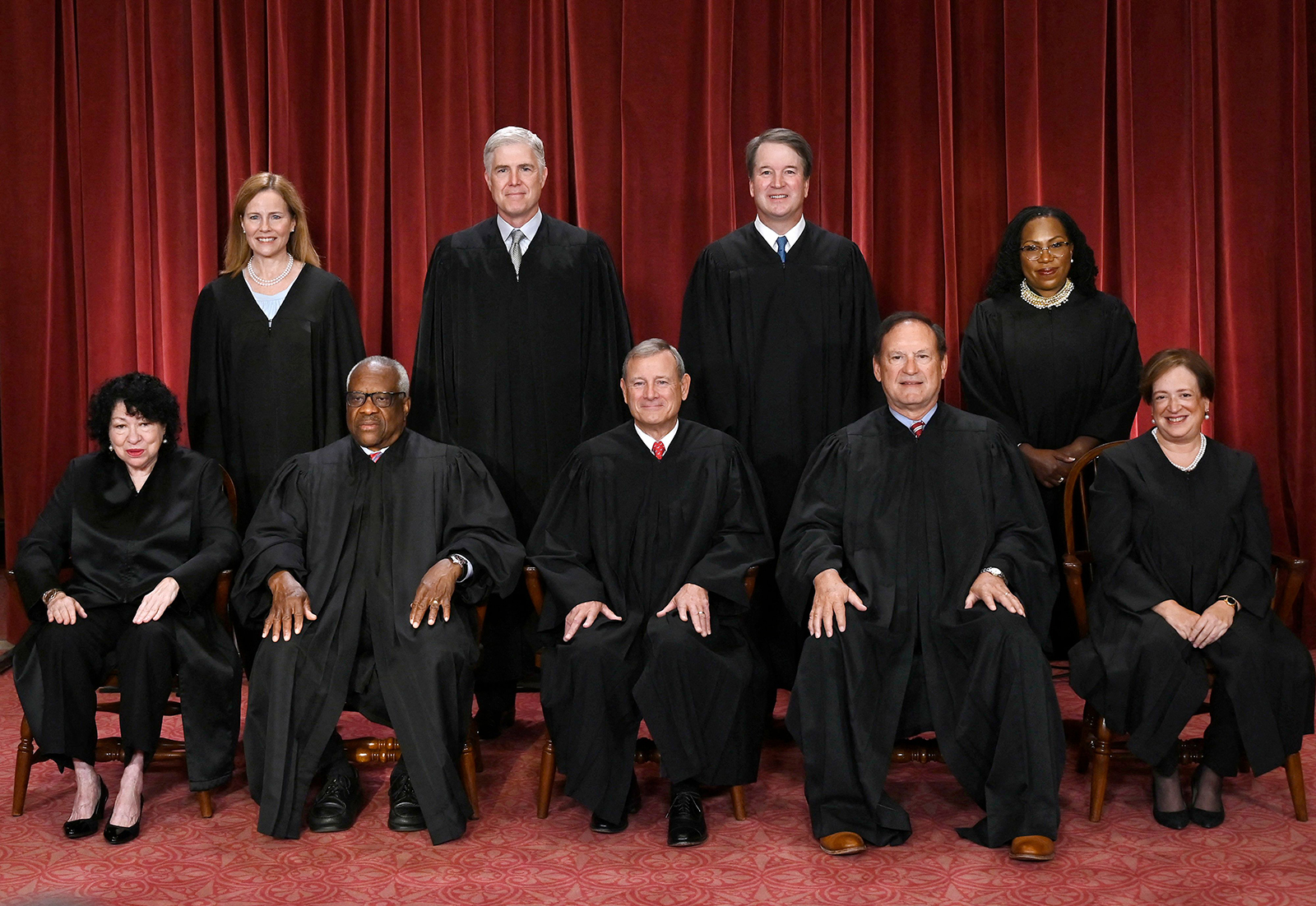
The U.S. Supreme Court delivered a significant ruling on March 15, 2024, striking down a portion of President Donald Trump’s tariff regime. This 6-3 decision emphasizes the Constitution’s separation of powers and reinforces the principle that only Congress has the authority to impose taxes. The ruling could have substantial implications for future trade policies and the powers of the executive branch.
In the case, the Court addressed the legality of tariffs that Trump had implemented under the International Emergency Economic Powers Act (IEEPA), a law enacted in 1977. While the Court did not evaluate whether the tariffs were beneficial or detrimental, Chief Justice John G. Roberts Jr. asserted that tariffs are a form of taxation. He noted that raising revenue is a distinct power that belongs solely to Congress, underscoring the historical American principle of “no taxation without representation.”
Trump had argued that the IEEPA authorized him to impose tariffs by interpreting its provisions on the regulation of importation. However, Roberts challenged this reasoning, stating, “Based on two words separated by 16 others, the President asserts the independent power to impose tariffs on imports from any country, of any product, at any rate, for any amount of time. Those words cannot bear such weight.” The ruling indicates that the executive branch cannot unilaterally seize hundreds of billions of dollars in revenue without clear congressional approval.
The implications of this decision extend beyond legalities. The Court’s opinion reflects concerns over Trump’s frequent alterations to tariff rates, which have caused significant lobbying activity as companies sought exemptions. The ruling noted that under Trump’s interpretation of the IEEPA, he was “free to issue a dizzying array of modifications at will,” contributing to a chaotic tariff landscape.
Congress has established laws that precisely grant the executive the authority to impose tariffs, but these laws include procedural requirements and limits on the duration and scope of tariffs. By attempting to circumvent these regulations through the IEEPA, Trump’s actions were viewed as arbitrary, leading to the Supreme Court’s intervention.
The administration is expected to pursue the restoration of several tariffs under existing laws, with Trump announcing a new 10 percent global tariff effective for up to 150 days immediately following the Court’s decision. This announcement coincided with economic news revealing a quarterly growth rate of just 1.4 percent, which was below expectations. The ruling may prompt Trump to reassess his tariff strategy ahead of the upcoming midterms.
Dissension within the Court was notable, with Justice Brett M. Kavanaugh authoring a dissenting opinion joined by Justices Samuel A. Alito Jr. and Clarence Thomas. Their dissent, considerably longer than the majority opinion, sought various justifications for allowing broader presidential powers regarding tariffs, particularly in matters deemed as involving foreign affairs. Kavanaugh suggested that the “major questions doctrine,” which limits the executive’s ability to bypass congressional authority, applies primarily to domestic issues, a stance that has attracted scrutiny given the nature of tariffs impacting U.S. companies.
Moreover, Justice Neil M. Gorsuch, in a separate opinion, pointed out that the Supreme Court has applied the major questions scrutiny in cases involving environmental regulations and public health, which also intersect with foreign relations. This highlights the complexity of interpreting the scope of executive power in international economic matters.
The Supreme Court’s ruling serves as a noteworthy reaffirmation of the separation of powers, illustrating that the judiciary remains independent from executive overreach. The decision has frustrated Trump’s efforts to assert control over tariffs, a key aspect of his economic policy. The Court’s stance signals a crucial moment in the ongoing dialogue about the balance of power in the U.S. government and the essential role of Congress in tax-related matters. As the political landscape evolves, the responsibility now shifts to Congress to assert its legislative authority effectively.