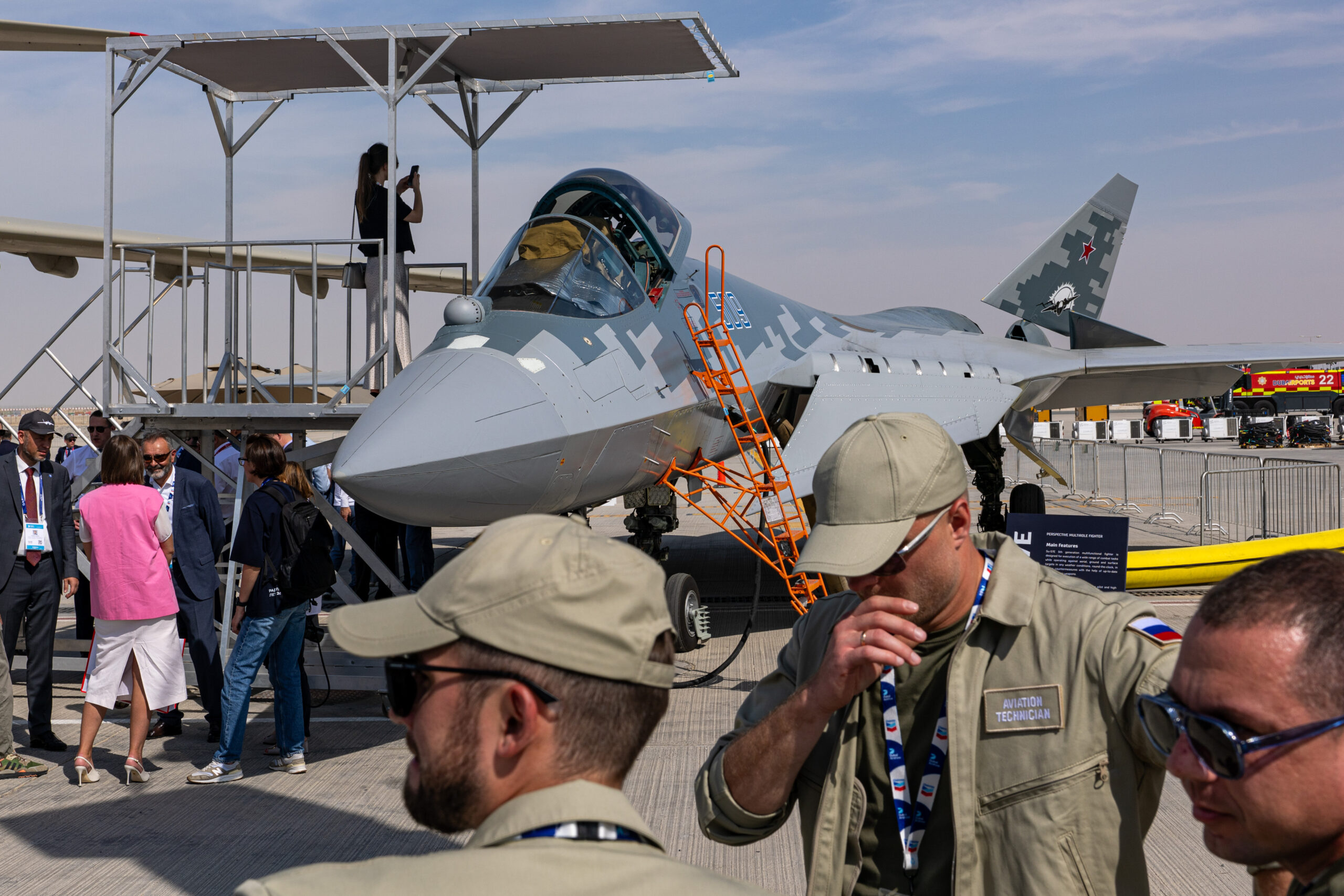
A video recorded by an Algerian potato farmer has confirmed that Algeria is the first country outside of Russia to receive the fifth-generation Su-57 stealth fighter jet. The footage shows the aircraft flying over northern Algeria, capturing the distinctive silhouette of Russia’s most advanced military jet. This significant development suggests that Algeria is strengthening its military capabilities amidst ongoing regional tensions.
The video, shared by the Arabic-language TikTok user doz.kbran, reportedly originates from near the Oum El Bouaghi Air Base, located close to the town of Ain Beida. The landscape visible in the video is consistent with the geography surrounding the air base, reinforcing its authenticity. Algeria’s interest in the Su-57 began after the country attended the 2019 MAKS air show in Moscow, where the export variant of the jet was first unveiled.
In October 2025, a cyberattack by the hacker collective Black Mirror leaked documents from Russia’s state-owned Rostec Corporation, revealing that Algeria had placed an order for 12 Su-57 aircraft. The leaked data also indicated an order for 14 Su-34 fighter-bombers. The avionics packages for the Su-57 were valued at approximately $200 million for twelve aircraft, with the total order for the Su-57 estimated at around $2 billion.
Confirmation of the deal was later provided by Russia’s state-owned Sputnik news agency, citing Algerian sources in late 2020. While the details regarding the exact number of aircraft and total costs remain unclear, Russia indicated that two Su-57 fighters had been delivered to an unnamed foreign customer, presumed to be Algeria, as of November 2025.
This arms deal marks a significant milestone for Russia, particularly as it seeks to sustain its arms sales amid the economic challenges posed by the ongoing conflict in Ukraine. The Kremlin has increasingly turned to authoritarian nations, especially in Africa and the Middle East, as reliable customers, largely due to their resistance to Western criticism of Russia’s actions.
The implications of this arms deal extend beyond just military sales. According to Robert Palladino, head of the U.S. State Department’s Bureau of Near Eastern Affairs, this transaction is viewed as problematic in U.S.-Algerian relations. Palladino testified before a Senate committee, stating that such purchases may trigger sanctions under the Countering America’s Adversaries Through Sanctions Act (CAATSA).
The introduction of advanced fighter jets into Algeria’s arsenal is a critical component of the country’s military modernization program. This development could alter the regional balance of power, particularly in relation to Morocco, with whom Algeria shares a long-standing rivalry.
Tensions between Algeria and Morocco have escalated in recent years, with both nations engaged in a military buildup. In November 2024, Moroccan Foreign Minister Nasser Bourita warned that Algeria’s military advancements indicate intentions for escalation, suggesting a potential for conflict. Algeria has dismissed these claims as unfounded provocations, labeling them as “projection.”
As Algeria enhances its military capabilities with the introduction of the Su-57, the potential for an arms race in North Africa looms, raising concerns about stability in the region. This arms deal not only reinforces Algeria’s military position but also highlights the intricate dynamics at play in North African geopolitics, where historical disputes and modern military acquisitions intersect.