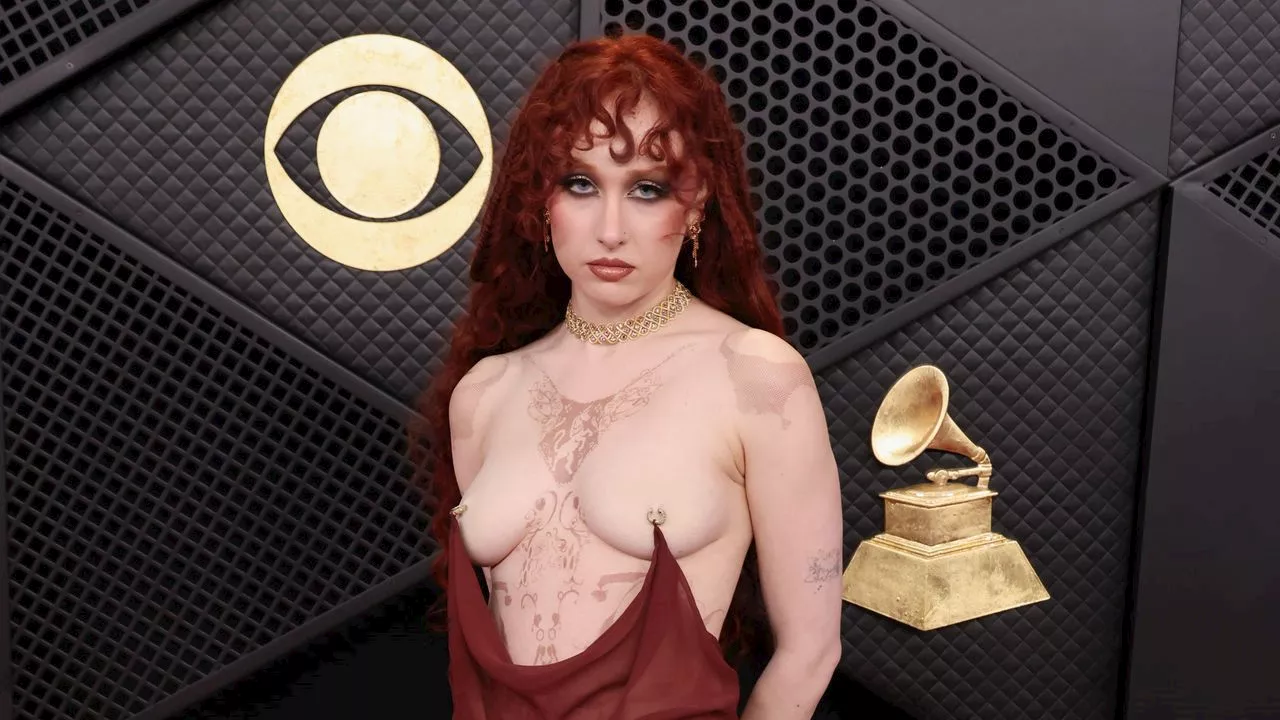
The 2026 Grammy Awards witnessed a striking fashion moment as singer Chappell Roan graced the red carpet in a daring sheer dress that pushed the limits of social media’s nudity policies. Roan’s ensemble, a reinterpretation of a classic piece from Mugler’s 1998 spring/summer collection, featured a sheer burgundy fabric supported by small silver rings, artfully designed to create a near-naked aesthetic without breaching Instagram’s stringent guidelines.
Roan’s appearance on February 1, 2026, became a captivating topic of discussion, not only for its boldness but also for how it navigated Instagram’s complex censorship landscape. The dress, complemented by a flowing sheer cape, was covered extensively on social media, allowing fans to view her outfit from multiple angles. Yet, the key to this visibility lay in a clever detail: Roan’s actual nipples were concealed. Instead, she sported realistic peel-and-stick pasties, crafted by prosthetic artist Sasha Glasser, which provided coverage while adhering to the platform’s rules.
This fashion statement highlights the ongoing debate surrounding social media’s policies on nudity, especially concerning female bodies. Instagram’s regulations explicitly prohibit “visible female nipples, except in a breastfeeding or act of protest context.” This policy, rooted in outdated definitions of gender and human anatomy, frequently leads to inconsistencies and frustrations among users and advocates alike.
Roan’s choice of pasties instead of traditional piercings raises questions about the absurdities of these guidelines. The image of a woman confidently displaying her body, albeit with modifications, sparks conversations about societal attitudes toward nudity and the sexualization of female anatomy. The irony remains that breasts without nipples are deemed acceptable online, while those with visible nipples are often flagged as explicit content.
As the Free the Nipple movement has long advocated for a reevaluation of such policies, Roan’s appearance at the Grammys serves as a vivid reminder of the ongoing struggle for body positivity and acceptance in the digital age. While she skillfully navigated the rules, the incident emphasizes the need for platforms like Instagram to reconsider their approach to nudity and gender representation.
The layered meanings behind Roan’s striking look extend beyond mere fashion; they challenge perceptions and invite dialogue around the complexities of gender and body image in contemporary society. As social media continues to shape public discourse, the conversation surrounding the representation of women’s bodies in digital spaces remains as relevant as ever.
In a time when self-expression is paramount, Roan’s fashion choice at the Grammys exemplifies a bold stand against outdated norms and invites others to rethink what is deemed appropriate for public consumption. While some may view her outfit as simply a spectacle, it ultimately serves as a powerful statement about autonomy, creativity, and the evolving landscape of social media.